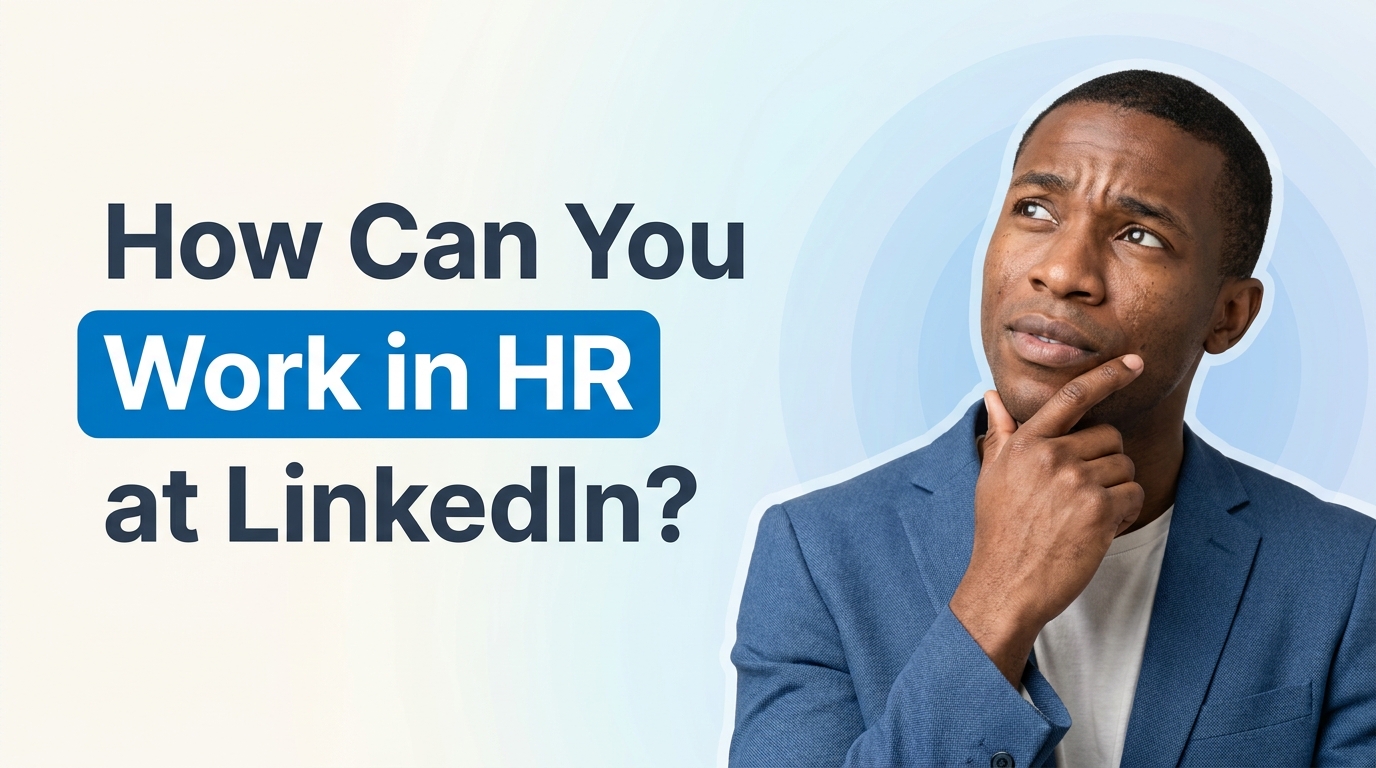
If you want to work in HR at LinkedIn, the short answer is yes, there are opportunities — but it helps to understand what kind of HR role you want, what LinkedIn usually looks for, and how to position yourself in a way that actually gets noticed.
A lot of people say, “I want to work as HR in LinkedIn,” but there are usually a few deeper questions behind that:
- Do you want to work at LinkedIn as an HR professional?
- Do you want to use LinkedIn to find HR jobs?
- Or do you want to build an HR career that is visible on LinkedIn?
If your goal is to join LinkedIn as part of its Human Resources or People team, this post will walk you through what that path can look like in a simple and realistic way.
What does “HR at LinkedIn” usually mean?
At companies like LinkedIn, HR is often called People Operations, Talent Acquisition, People Programs, Employee Experience, or Learning and Development. So if you only search for “HR,” you might miss relevant openings.
That matters a lot. Big companies do not always label jobs in the most obvious way. You may find roles such as:
- Recruiter
- Talent Acquisition Specialist
- HR Business Partner
- People Operations Analyst
- Compensation and Benefits Specialist
- Learning and Development Partner
- Diversity, Inclusion, and Belonging Program Manager
- Employee Relations Partner
So yes, there can absolutely be HR-related jobs at LinkedIn. The key is searching with the right terms.
Where should you check for real openings?
The best place to start is LinkedIn’s official careers page. That gives you the clearest and most current information about open roles, locations, and qualification requirements.
Helpful places to check:
- LinkedIn Careers
- LinkedIn Jobs
- Microsoft Careers — LinkedIn is owned by Microsoft, so understanding their talent ecosystem can help
When searching, try keywords like People, Talent, Recruiting, Employee Experience, and HR Business Partner.
What qualifications do you usually need?
This depends on the role, but most HR-related jobs at a company like LinkedIn will usually expect some mix of the following:
- A degree in Human Resources, Business Administration, Psychology, Communications, or a related field
- Relevant work experience in recruiting, HR operations, people management, or employee support
- Strong communication skills because HR is people-centered work
- Familiarity with HR systems like Workday, SAP SuccessFactors, or applicant tracking systems
- Knowledge of employment policies, workplace practices, and hiring processes
- Data awareness since modern HR often includes reporting, analytics, and process improvement
For some roles, certifications can help too. If you are still building credibility in HR, resources from organizations like SHRM and HRCI are worth exploring.
If you are just starting, what should you do first?
If you do not have HR experience yet, that is okay. A lot of people enter HR through recruiting, coordination, administration, or employee support roles before moving into more strategic positions.
Here is a practical starting point:
- Build a clean LinkedIn profile with a clear headline like “Aspiring HR Professional” or “HR Coordinator | Talent Acquisition Support | People Operations”
- Add relevant skills such as recruiting, onboarding, employee relations, interview scheduling, HR administration, communication, and HRIS tools
- Take short courses in HR fundamentals, recruiting, and workplace communication
- Apply for entry-level roles such as HR Assistant, Recruiting Coordinator, Talent Sourcer, or People Operations Coordinator
- Network with HR professionals already working in tech companies
A good learning option is LinkedIn Learning. You can find HR and recruiting courses there that help you understand current hiring practices and workplace trends. You might also find useful videos on YouTube, like career advice for HR beginners from established career educators such as Life After Layoff.
How do you make your LinkedIn profile stronger for HR roles?
This part is important because if you want to work at LinkedIn, your own LinkedIn presence should already look thoughtful and professional.
Try this profile breakdown:
- Profile photo: clear, professional, approachable
- Headline: not just “Student” or “Job seeker” — say what area of HR you are aiming for
- About section: briefly explain your interest in people operations, hiring, employee experience, or learning and development
- Experience section: describe work in terms of outcomes, not just duties
- Skills section: include HR, recruitment, onboarding, communication, scheduling, policy support, and analytics if relevant
- Featured section: add certificates, projects, resume, or a short post about your HR learning journey
For example, instead of writing “Responsible for interviews,” write something like, “Coordinated interview scheduling across multiple stakeholders, improving candidate communication and reducing delays in the hiring process.” That sounds more focused and credible.
What kind of mindset helps when applying to LinkedIn?
Honestly, companies like LinkedIn get a lot of applications. So it is not just about wanting the job. It is about showing that you understand the role and can add value.
Ask yourself:
- Do I understand how HR works in a tech company?
- Can I explain why I want to work in People Operations, not just “because I like talking to people”?
- Do I have examples of solving problems, supporting teams, handling sensitive information, or improving processes?
- Am I tailoring each application, or sending the same resume everywhere?
That last one matters more than people think. A tailored application often performs much better than a generic one.
How can you improve your chances?
Here are a few realistic ways to improve your odds:
- Follow LinkedIn recruiters and HR leaders to understand the company culture and hiring language
- Engage thoughtfully on LinkedIn by commenting on workplace topics, recruiting trends, and employee experience discussions
- Use job alerts so you can apply early
- Reach out politely to people in similar roles for informational advice, not just referrals
- Practice interviewing for behavioral questions like conflict handling, confidentiality, candidate experience, and stakeholder communication
If you want a useful guide on building a stronger profile and job search strategy, LinkedIn itself often shares career tips through its newsroom and help resources: LinkedIn News.
What if there are no HR openings right now?
That can happen. It does not mean the path is closed. It usually just means timing is part of the process.
If you do not see a direct HR opening at LinkedIn today, you can still:
- Apply for HR roles at other respected companies and build experience first
- Work in recruiting or coordination and move closer to People roles over time
- Keep your profile active and updated
- Set alerts for future openings at LinkedIn
- Grow your professional network in HR and talent acquisition
Sometimes the best route to a dream company is not a direct first step. It is a few smart steps in the same direction.
A simple action plan you can follow this week
If you are serious about working in HR at LinkedIn, here is a simple plan:
- Update your LinkedIn headline and About section for HR goals
- Search LinkedIn Careers using terms like People, Talent, Recruiting, and Employee Experience
- Create a resume tailored to HR or recruiting roles
- Take one short HR or recruiting course
- Connect with 5 professionals working in HR or talent roles
- Apply to entry-level HR jobs, even outside LinkedIn, to build experience
That is a much better strategy than waiting and hoping a perfect role appears.
Final thoughts
So, is there any opportunity to work as HR in LinkedIn? Yes, there can be. But the smarter question is: how do you prepare yourself for that opportunity? Once you focus on that, the process becomes clearer.
Start by understanding the role names, improving your profile, building relevant HR skills, and applying consistently. Keep it practical. Keep it steady. And do not get discouraged if it takes time.
Write better LinkedIn content with EXEED AI
EXEED AI is an AI tool that helps you ideate, draft, and schedule content for your LinkedIn. Turn raw ideas into polished posts and stay consistent without the guesswork. Try EXEED AI.