
If you’re trying to stay consistent on LinkedIn, this is one of the most common questions you’ll run into: should you batch and schedule your posts ahead of time, or write in the moment when you actually have something to say?
Honestly, both approaches can work. The better question is usually: which one helps you show up consistently without burning out?
If you keep disappearing from LinkedIn for a week or two, then coming back with a burst of motivation, you’re not alone. A lot of people do that. The real issue usually isn’t creativity. It’s having a system that fits your energy, your schedule, and the way you naturally think.
So let’s break it down in a simple, useful way.
What’s The Real Difference Between Scheduling and Posting In The Moment?
At a basic level, the difference is this:
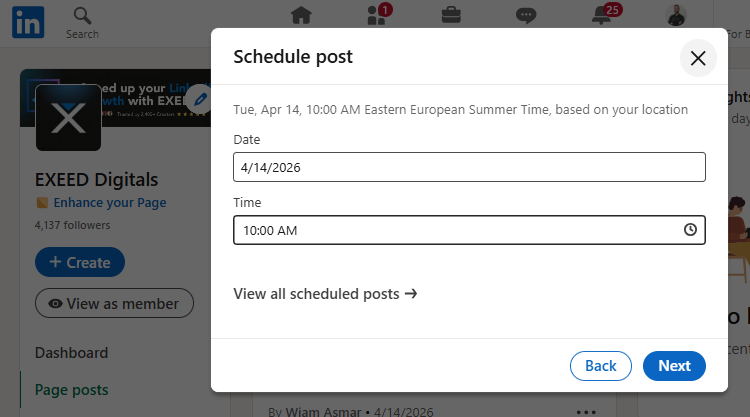
Scheduling ahead means planning content in advance, writing it early, and using LinkedIn’s native scheduler or a social media tool to publish later.
Posting in the moment means writing when an idea feels fresh, timely, or emotionally real, then posting it right away.
Neither option is automatically better. They solve different problems.
Scheduling helps with consistency. Writing live helps with freshness and authenticity.
That’s why a lot of experienced LinkedIn creators don’t actually choose one or the other. They build a hybrid system.
When Scheduling Ahead Works Best?
Scheduling is usually the better option if you:
struggle to post consistently
have a busy work week
create better when you have uninterrupted time
want to think strategically instead of reactively
manage content for a personal brand, team, or company page
Let’s be real. Most people are not going to wake up every morning full of brilliant LinkedIn ideas. Some days are packed with meetings, client work, travel, family stuff, or plain mental fatigue. On those days, a scheduled post can be the reason your content doesn’t disappear.
There’s also a quality benefit. When you batch write, you usually have more room to edit your hook, tighten your structure, and make sure your post actually says something useful.
LinkedIn even offers native post scheduling, which can make planning easier. You can read more about that here: LinkedIn Help: Create and schedule posts.
When Posting In The moment Works Best?
Now let’s talk about the other side.
Writing when inspiration hits can lead to some of your best content because it often feels more personal, current, and natural. If something happened in a client call, on a sales call, during a hiring interview, or after a lesson you just learned, that insight may come out better while it’s still fresh.
Posting live tends to work well if you:
get your best ideas from daily work
write better when you feel momentum
want your content to respond to current conversations
prefer sounding spontaneous instead of polished
This style can feel more human because it often is. You’re not forcing content. You’re sharing a thought that actually matters to you right now.
That said, it can also be unreliable if you depend on motivation alone. Inspiration is helpful, but it’s not always a solid content strategy.
So What Actually Works For Most People?
For most professionals, founders, consultants, recruiters, and marketers, the best answer is: plan the core, leave room for fresh posts.
In other words, use a mixed system.
Here’s what that can look like:
Schedule 2 to 3 posts per week in advance
Leave 1 or 2 open slots for spontaneous posts
Keep a notes app full of ideas from your real workday
Review performance monthly so you know what’s worth repeating
This gives you structure without making your content feel robotic.
Think of scheduled posts as your baseline. They keep your presence active. Then your in-the-moment posts add personality, relevance, and real-time perspective.
Questions To Ask Yourself Before Choosing Your Approach
If you’re unsure what suits you best, ask yourself:
Do I stop posting when life gets busy?
Do my best ideas come during focused planning or during real work moments?
Am I trying to build a brand, generate leads, or just stay visible?
Do I need a system that reduces decision fatigue?
Can I realistically write every day, or am I setting myself up to quit?
Your answers matter more than generic advice from random threads.
A Simple Weekly LinkedIn Content Routine That Feels Manageable
If consistency is the goal, here’s an easy routine you can actually stick with:
Sunday or Monday: brainstorm 5 to 10 post ideas
Write 2 or 3 posts: keep them short, useful, and focused on one idea each
Schedule those posts: spread them through the week
During the week: if a fresh insight comes up, post it manually
Spend 10 to 15 minutes engaging: reply to comments and join conversations
That’s enough for a lot of people. You do not need a huge content machine to make LinkedIn work.
If you want help creating better content structure, HubSpot has a helpful guide on social content planning here: How to Create a Social Media Content Calendar.
One Mistake To Avoid: Sounding Too Scheduled
Scheduling isn’t the problem. Stiff content is the problem.
A lot of people blame scheduling when what’s really hurting performance is that the posts feel generic, over-edited, or disconnected from real experience.
If you schedule content, make sure it still sounds like a person wrote it. That means:
use language you’d actually say out loud
share specific examples
avoid trying to sound impressive in every line
focus on one clear takeaway
edit for clarity, not for corporate perfection
People connect with perspective, not polish alone.
What about performance? Does One Get Better Results?
Sometimes in-the-moment posts perform better because they feel immediate and relevant. But scheduled posts can perform just as well when the idea is strong and the message is useful.
What usually matters more is:
the strength of your opening line
whether the topic is actually relevant to your audience
how clearly the post is written
whether it sparks conversation or reflection
how consistently you show up over time
If you want to understand what makes LinkedIn content more engaging, this video may help:
If You Keep Falling Off, Your System Is Probably Too Hard
This part matters a lot.
If you’re always falling off LinkedIn, the answer usually isn’t “try harder.” It’s “make the process easier.”
You may not need a full month of content mapped out. You may just need:
a repeatable weekly writing block
a list of post prompts
a realistic posting frequency
a way to capture ideas when they happen
For many people, posting three times a week consistently is much better than aiming for daily posts and disappearing after eight days.
Final Thoughts
So, should you schedule LinkedIn posts ahead or write them when inspiration hits?
The most useful answer is: schedule enough to stay consistent, but leave room for fresh ideas when they come naturally.
That gives you reliability without losing your voice.
If you love writing in the moment, keep doing it, but build a small safety net. If you prefer batching content on Sunday, that’s completely fine too. The goal is not to follow someone else’s perfect system. The goal is to create one you can actually maintain.
Read More on our blog and follow us on LinkedIn:
Write better LinkedIn content with EXEED AI
EXEED AI is an AI tool that helps you ideate, draft, and schedule content for your LinkedIn. Turn raw ideas into polished posts and stay consistent without the guesswork. Try EXEED AI.