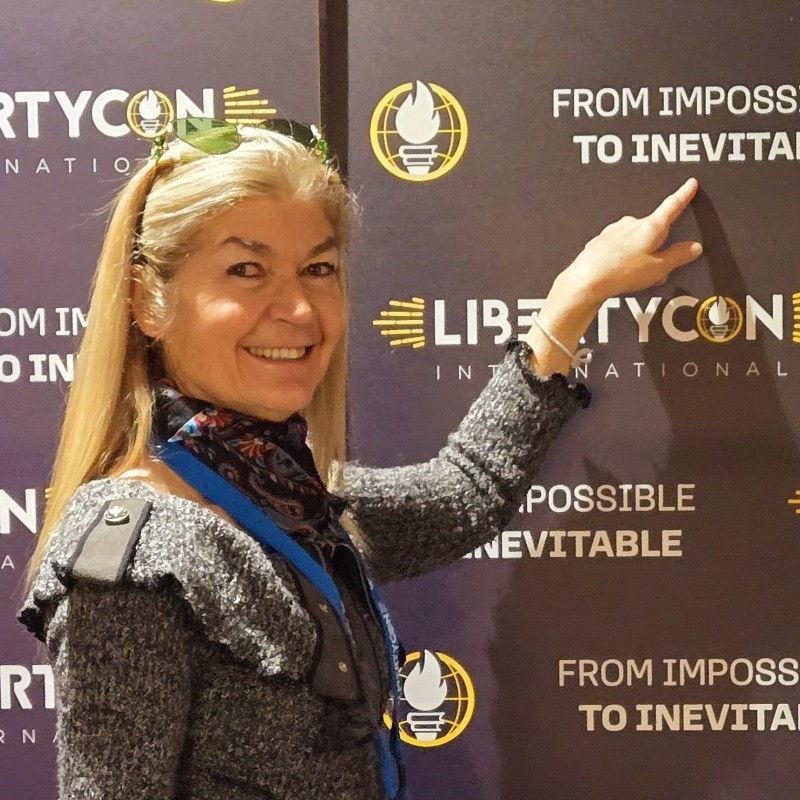
I’m still electrified by Dr. Tatiana Shavrina, PhD’s groundbreaking Opening Keynote at #AGI25, “Frontier in #LLM Agents for Science Acceleration.” From her vanguard role at Meta, this fearless #ML researcher extended a bold, generative invitation: to reimagine science itself as an evolving, automatable process where LLM agents don’t just assist, but actively ideate, test, refute, and iterate at the edge of discovery, right alongside us.
She anchored her vision in a timeline that reveals how far we’ve come: From the infamous SCIgen paper of 2005, a parody of academic publishing that snuck past peer review, to 2025, where systems like AI Scientist v2 have authored papers accepted under double-blind review at respected workshops like ICLR. The arc from prank to peer review is real, and it changes the stakes. A vivid testament that science itself, as dynamic as the subjects it studies, is becoming co-authored by #AI.
At the core of her proposal lies a radical respect for the scientific method, but reframed for the age of #agents. She drew on the great epistemologists: Popper, with his call to falsifiability; Kuhn and Lakatos, with their paradigms and research programmes; and even Feyerabend, reminding us that sometimes progress demands a touch of anarchism.
Tatiana’s insight: these aren’t just ideas for historians of science, they are design principles for a new breed of autonomous research systems. She mapped this new territory with precision:
- Ideation: #LLMs generating bold, novel hypotheses where idea proliferation may outpace traditional accumulation
- Experimentation: Environments like Meta’s MLGym and the high-velocity culture of NanoGPT speedruns, turning method development into testable, trackable loops
- Refutation: The Popper Agent, built to challenge LLM outputs not to affirm rigorously, but to falsify. Survival is the new signal!
- Self-improvement: The Darwin–Gödel Machine, an architecture for open-ended learning, agents that can rewrite themselves and evolve based on what endures.
- Cumulative memory: Platforms like AgentRxiv, where agentic researchers publish, build upon each other’s results, and avoid cycling through forgotten insights.
Together, these form the scaffolding for a scientific ecosystem populated by meta-scientists: Darwin–Popper, Darwin–Kuhn, Darwin–Lakatos agents, each embodying distinct philosophies of progress, evolving through productive disagreement.
The goal?
To make every link in the scientific chain: hypothesis → experiment → evaluation → publication → critique, agent-accessible, auditable, and reproducible.
Tatiana’s vision is not speculative. It’s strategic, actionable, and already unfolding. Her question lingers with me: Is idea proliferation more important than knowledge accumulation? In an era ruled by scale, should we nurture wild gardens of hypotheses, or carefully tend the trees of established theory?
Let’s build science worth trusting: auditable, falsifiable, generative, and alive!
#AGI