How Can You Write Better LinkedIn Comments That Feel Human and Actually Bring Profile Views and Leads?
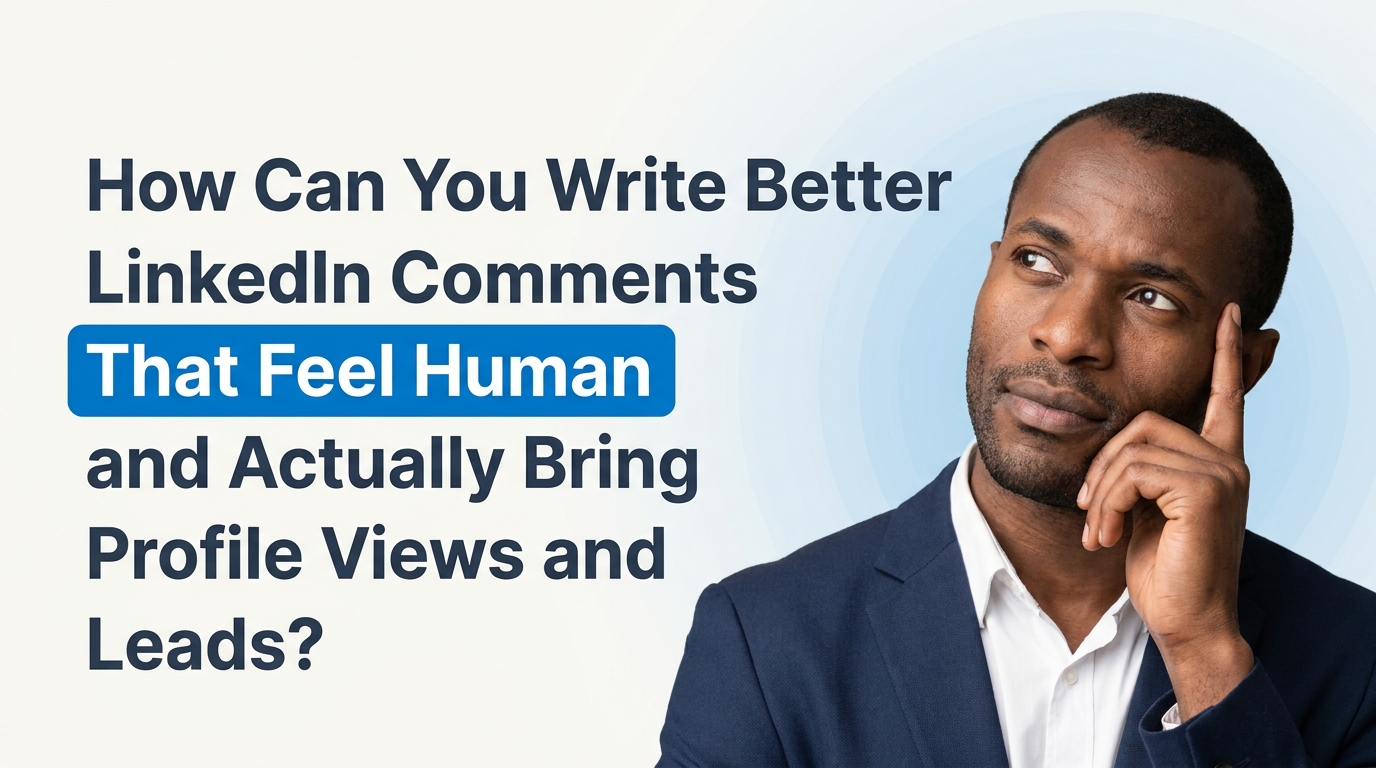
The Reddit post makes a very practical point: LinkedIn comments can quietly become one of the easiest ways to get attention, profile views, trust, and even leads. And honestly, that’s true for a lot of people. You do not always need a big audience, a viral post, or some polished thought-leadership thread to get noticed. Sometimes, a well-timed comment under the right post does more for visibility than your own content.
But there’s an important catch too: people can tell when a comment feels fake, generic, or written like AI filler. If every reply sounds like “Great insights. Thanks for sharing,” it starts blending into the background. The comments that actually work tend to sound like a real person. Some are supportive. Some are curious. Some disagree respectfully. Some are short and warm. That human mix is what makes commenting effective.
So if you’re wondering how to comment on LinkedIn in a way that feels natural and still helps grow your presence, here’s a clearer breakdown.
Why do LinkedIn comments matter so much?
Comments do a few things at once:
- They put your name in front of someone else’s audience.
- They create familiarity. People start seeing you repeatedly and remembering you.
- They drive profile visits. If your comment is interesting, people click your profile.
- They can lead to conversations, connection requests, and inbound messages.
This is one reason LinkedIn experts often talk about “comment strategy” as a growth channel. It is not just engagement for the sake of engagement. Done well, comments become lightweight visibility assets.
If you want background on how LinkedIn’s algorithm tends to reward engagement and relevance, LinkedIn’s own official blog is a useful place to start: https://blog.linkedin.com/.
What kind of comments actually work?
The Reddit post is right that comments do not have to sound smart every time. In fact, trying too hard often makes them worse.
Good LinkedIn comments usually fall into a few categories:
- Supportive: “This is such a helpful way to explain it. Especially the point about trust before pitching.”
- Curious: “Interesting take. Have you noticed this works better for founders than for agency owners?”
- Contrarian but respectful: “I see the logic here, but I think this breaks down when the audience is too broad.”
- Personal: “I tried something similar last quarter and the response was way better than expected.”
- Simple and human: “Honestly, this is really cool.”
That variety matters because real people are not one-note. If every comment sounds polished, uplifting, and carefully neutral, it stops feeling real. A human voice has texture.
How do you avoid sounding like AI-generated comment spam?
This is the big concern now. There’s a lot of “AI slop,” and many users notice it instantly.
Here are a few ways to avoid that:
- Reference something specific from the post instead of writing a vague compliment.
- Use your natural tone. If you usually speak simply, write simply.
- Add a point, question, or perspective. Don’t just react. Contribute.
- Keep some comments short. Not every reply needs to be a mini-essay.
- Don’t over-format everything. Too many em dashes, buzzwords, or forced “frameworks” can feel robotic.
For example, compare these:
- Weak: “Excellent insights. Thank you for sharing this valuable perspective.”
- Better: “The point about comments driving profile views is underrated. A lot of people focus only on posting.”
The second one sounds more grounded because it reacts to the actual idea.
How many LinkedIn comments should you post each day?
The Reddit post mentions doing this 10–50 times a day. That can work, but it depends on your energy, quality, and available time.
A better question might be: How many quality comments can you write consistently without sounding forced?
For most people, a realistic range looks like this:
- 5–10 comments a day: Good for consistency and manageable for most professionals.
- 10–20 comments a day: Strong if you’re actively building visibility.
- 20+ comments a day: Only worth it if quality stays high and your targeting is intentional.
The goal is not just volume. The goal is showing up in the right rooms. A thoughtful comment on a post from someone in your niche is more valuable than ten random replies on unrelated content.
What should your profile look like before you start commenting heavily?
This is another smart part of the Reddit post: if comments bring people to your profile, your profile needs to make sense fast.
Ask yourself:
- When someone clicks my profile, do they immediately understand what I do?
- Is it clear who I help?
- Do I mention the result or value I help create?
- Does my headline sound specific, not vague?
- Is there a next step if someone wants to message me?
If your comments are doing their job but your profile is unclear, you’re leaking opportunity.
LinkedIn has a helpful guide to profiles and visibility here: https://www.linkedin.com/help/linkedin.
What does a simple LinkedIn comment strategy look like?
If you want a structure that feels easy to follow, try this:
- Pick 20–30 people in your niche whose audiences overlap with the people you want to reach.
- Check their posts daily or a few times a week.
- Comment early when possible, because early comments often get more visibility.
- Write comments with one of three goals: add insight, ask a useful question, or show personality.
- Review your profile so it clearly explains your offer.
That’s it. It does not need to become complicated.
If you prefer video explainers, there are also useful YouTube breakdowns on LinkedIn engagement strategy, including this platform-wide search you can explore: https://www.youtube.com/results?search_query=linkedin+comment+strategy.
What are some comment examples that feel natural?
Here are a few plug-and-play styles you can adapt:
- Agreement + specificity: “Completely agree with the part about trust. People usually notice your consistency before they ever reply.”
- Question: “Do you think this works better on personal-brand posts than company-page posts?”
- Personal experience: “This matches what I’ve seen too. The shortest comments sometimes bring the most profile clicks.”
- Respectful disagreement: “I get the point, but I think volume without relevance can hurt more than help.”
- Short reaction: “This is a solid reminder.”
The key is not copying templates word for word forever. It’s understanding the types of responses that sound human.
Are there mistakes to avoid?
Yes, a few common ones:
- Commenting only to be seen, without actually reading the post.
- Being overly promotional. Nobody likes comments that feel like an ad.
- Forcing intelligence. You do not need to sound academic to sound credible.
- Arguing aggressively. Contrarian is fine; combative usually is not.
- Ignoring profile optimization. Visibility alone is not enough.
A useful external read on thoughtful engagement and professional networking is Harvard Business Review’s networking section: https://hbr.org/topic/networking.
So, can LinkedIn comments really lead to leads?
Yes, they can. Not every comment turns into a client conversation, of course. But over time, consistent commenting does something powerful: it builds familiarity, credibility, and curiosity. People see your name enough times, read a few smart or honest comments, click your profile, and decide whether to reach out.
That’s why the Reddit post’s main idea lands: comments are not just random reactions. They are a low-friction way to express your perspective in public.
And if you do this consistently with a clear profile, the result can absolutely be more impressions, more profile views, and more inbound interest.
Final thoughts
If you want LinkedIn comments to work, think less about sounding impressive and more about sounding real. Some days your best comment will be thoughtful. Some days it will be sharp. Some days it will just be a quick human reaction. That range is normal, and honestly, it’s part of what makes people pay attention.
Write better LinkedIn content with EXEED AI
EXEED AI is an AI tool that helps you ideate, draft, and schedule content for your LinkedIn. Turn raw ideas into polished posts and stay consistent without the guesswork. Try EXEED AI.