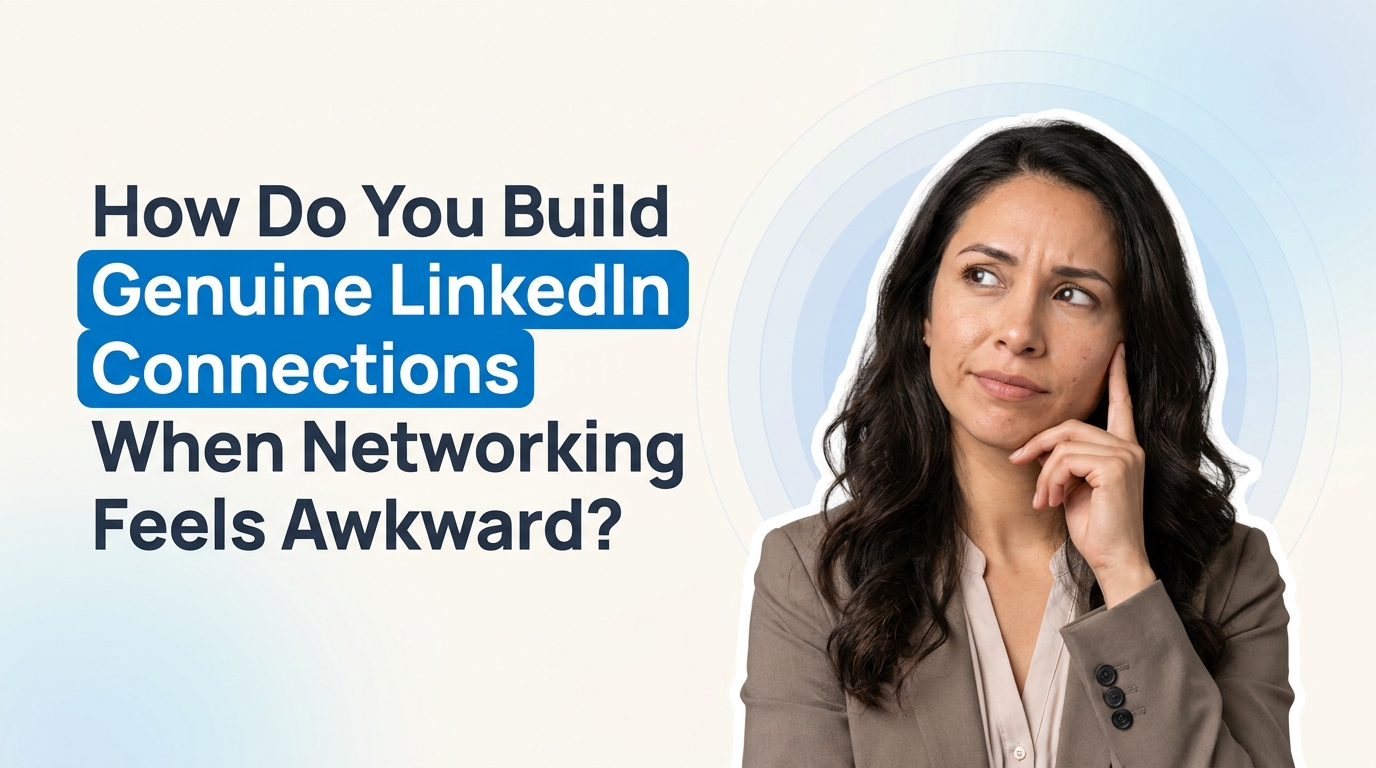
How Do You Build Genuine LinkedIn Connections When Networking Feels Awkward?
Use LinkedIn as a conversation tool, not a stage. Become visible, start small conversations and stay consistent, even without local meetups.
If you have been working from home for a few years and now feel a little socially out of practice, you are definitely not the only one. A lot of people in tech, marketing, design, product, and remote-first roles have had the same experience. When your daily conversations happen through Slack, email, and Zoom, it can start to feel strangely difficult to reach out to real people again, especially on a platform like LinkedIn where everyone seems polished and confident.
So if you are thinking, “How am I supposed to build connections when messaging strangers feels uncomfortable?” the short answer is this: you do not need to “network” in the old-school, forced, salesy way. You just need a simpler and more human system for becoming visible, starting small conversations, and staying consistent.
That matters even more if you live in a smaller city without regular tech meetups, startup events, or conferences nearby. In-person access can help, but it is not the only way to build a strong professional circle. LinkedIn can absolutely work for this. The key is to use it like a real conversation tool, not like a performance stage.
Why LinkedIn Networking Feels So Awkward for So Many People
Before getting into tactics, it helps to normalize the feeling. Why does LinkedIn feel harder than it should?
- It feels public. Every message and post can feel more high-stakes than it really is.
- People fear bothering others. Many professionals worry that reaching out will seem random or annoying.
- Remote work reduces casual practice. When you are not chatting before meetings or bumping into coworkers, social confidence can dip.
- LinkedIn often looks overly polished. It is easy to assume everyone else knows exactly what they are doing.
The reality is that a lot of people on LinkedIn feel the same uncertainty. They may look confident from the outside, but many are also trying to find better ways to connect.
That is why the best approach is not to force confidence. It is to make the process smaller, more natural, and easier to repeat.
How strong is your LinkedIn profile?
Paste your profile link and see your score right away, with clear fixes for your headline, About section and experience. Free to start, no account needed.
Or open the free LinkedIn profile checker
Start With a Better Definition of Networking
One thing that helps immediately is reframing what networking actually means.
Networking is not:
- sending cold messages asking for favors
- pretending to be more outgoing than you are
- collecting random connections
- trying to impress everyone
Networking is:
- finding people in similar industries or interests
- showing up consistently
- offering relevant thoughts
- starting low-pressure conversations
- building familiarity over time
That shift is important. You are not trying to become a different person. You are just learning how to become more visible and approachable online.
A Simple 5-Step Way to Build Connections on LinkedIn
If messaging strangers feels awkward, do not start with direct outreach right away. Build momentum first.
1. Clean up your profile so people know who you are
Your profile does not need to be perfect, but it should feel current and human. Ask yourself:
- Does my headline clearly say what I do?
- Does my About section sound like a real person?
- Have I included skills, projects, or interests that give people conversation starters?
If someone visits your profile after seeing a comment or message from you, they should quickly understand your background and what kinds of topics you care about.
LinkedIn has its own guidance on profile strength here: LinkedIn profile help.
2. Start by commenting, not messaging
This is one of the easiest ways to reduce awkwardness. Instead of jumping straight into someone’s inbox, engage with their content first.
You can comment on posts from:
- people in your field
- founders or hiring managers you admire
- former classmates or coworkers
- small creators in tech who are actively discussing industry topics
A good comment does not need to be brilliant. It just needs to add something. For example:
- “This is a helpful point, especially the part about onboarding remote teams. I have seen that too.”
- “I am glad you shared this. Have you noticed this challenge more in startups or larger teams?”
- “This is interesting. I work remotely too, and the communication part really stood out to me.”
Comments make you visible without the pressure of a cold direct message. Over time, familiar names start recognizing each other.
3. Send connection requests with a very short reason
Once you have engaged a bit, sending a connection request becomes much easier. Keep it short. Do not overthink it.
Examples:
- “Hi, I have been enjoying your posts on product and remote work. Thought I’d connect.”
- “Hey, we both work in tech and I liked your perspective on career growth. Would be great to connect.”
- “Hi, I came across your profile through a discussion on LinkedIn and wanted to add you to my network.”
That is enough. You do not need to write a long introduction unless there is a real reason to.
4. Post occasionally about what you are learning
You do not need to become a full-time content creator. But posting once in a while gives people a reason to engage with you too.
Good post ideas if you feel out of touch:
- something you are learning in your field
- a challenge of remote work and how you are handling it
- a useful article or video with your takeaway
- a question for others in tech
For example: “I have been thinking about how remote work changes professional relationships. For those in tech, what has helped you stay connected outside your immediate team?”
That kind of post is honest, easy to relate to, and likely to attract thoughtful responses.
If you want examples of strong LinkedIn post ideas, HubSpot has useful content on professional social media strategy: HubSpot LinkedIn marketing guide.
5. Focus on a few real connections, not lots of random ones
You do not need 500 meaningful relationships. Start with 10 to 20 people whose work, interests, or career path feels relevant to you.
Ask yourself:
- Who seems approachable?
- Who shares useful ideas consistently?
- Who works in a part of tech I want to understand better?
- Who might genuinely relate to my experience?
That gives your networking some direction. It also makes it feel less like shouting into the void.
What Do You Actually Say When You Want to Start a Conversation?
This is where many people freeze, so here is a simple breakdown. A good message usually includes one of these:
- a shared interest
- a specific observation
- a genuine question
- a quick thank you
Examples:
- “Hey, I saw your post about transitioning into cloud roles. I appreciated how practical it was. How long did it take you to feel settled in that space?”
- “Hi, we are both in remote tech environments, and your post on team communication really resonated. Curious what tools or habits have helped most for you.”
- “I came across your profile while looking for people in product and engineering communities. I liked your perspective and wanted to connect.”
Notice what these do not do: they do not ask for too much too soon. They open a door instead of making a demand.
How to Build Community If You Live in a Small City
If your local area does not offer much, digital-first networking can fill the gap surprisingly well. A few ideas:
- Join LinkedIn groups related to your niche
- Follow creators in tech who host discussions or live sessions
- Look for virtual meetups on platforms like Meetup
- Join professional communities on Discord, Slack, or Reddit alongside LinkedIn
- Attend webinars and comment during Q&A sections
YouTube can also help if you want practical advice in a more casual format. For example, this platform has plenty of networking and LinkedIn communication walkthroughs: YouTube LinkedIn networking videos.
The main thing is this: being in a smaller city does not mean you are cut off from the tech community. It just means your community may be distributed rather than local.
If You Feel Socially Rusty, Keep the Goal Small
You do not need to become the most outgoing person on LinkedIn this month. A much better goal might be:
- leave 3 thoughtful comments a week
- send 2 connection requests a week
- post 1 short update every 2 weeks
- reply to anyone who engages with you
That is manageable. And it works because consistency beats intensity here.
You may also want to ask yourself a few honest questions:
- Am I expecting every conversation to become something big?
- Am I making networking feel more formal than it needs to be?
- Would this feel easier if I treated LinkedIn like a long-term conversation instead of a one-time pitch?
Usually, the answer is yes.
Final Thought
If networking feels awkward right now, that does not mean you are bad at it. It usually just means you are out of practice, and that is fixable. Start small. Comment before you message. Connect with people who genuinely interest you. Ask simple questions. Share what you are learning. Over time, LinkedIn becomes much less intimidating and much more natural.
And if you are trying to grow your presence in a more structured way, this is exactly the kind of challenge that teams like EXEED Digitals help with. Whether it is improving your LinkedIn positioning, building better outreach habits, or creating a more credible brand presence, having expert guidance can make the process feel far less awkward and much more effective. At EXEED Digitals, we usually support brands and professionals through these kinds of LinkedIn growth concerns, and our LinkedIn agency services have helped hundreds of brands build stronger visibility, better engagement, and more meaningful connections on LinkedIn.
en