How Do You Choose a LinkedIn Personal Branding Niche When You Have No Idea What to Post?
Struggling to find your LinkedIn personal branding niche? Discover key questions to define your niche and start posting effectively. Read more now!
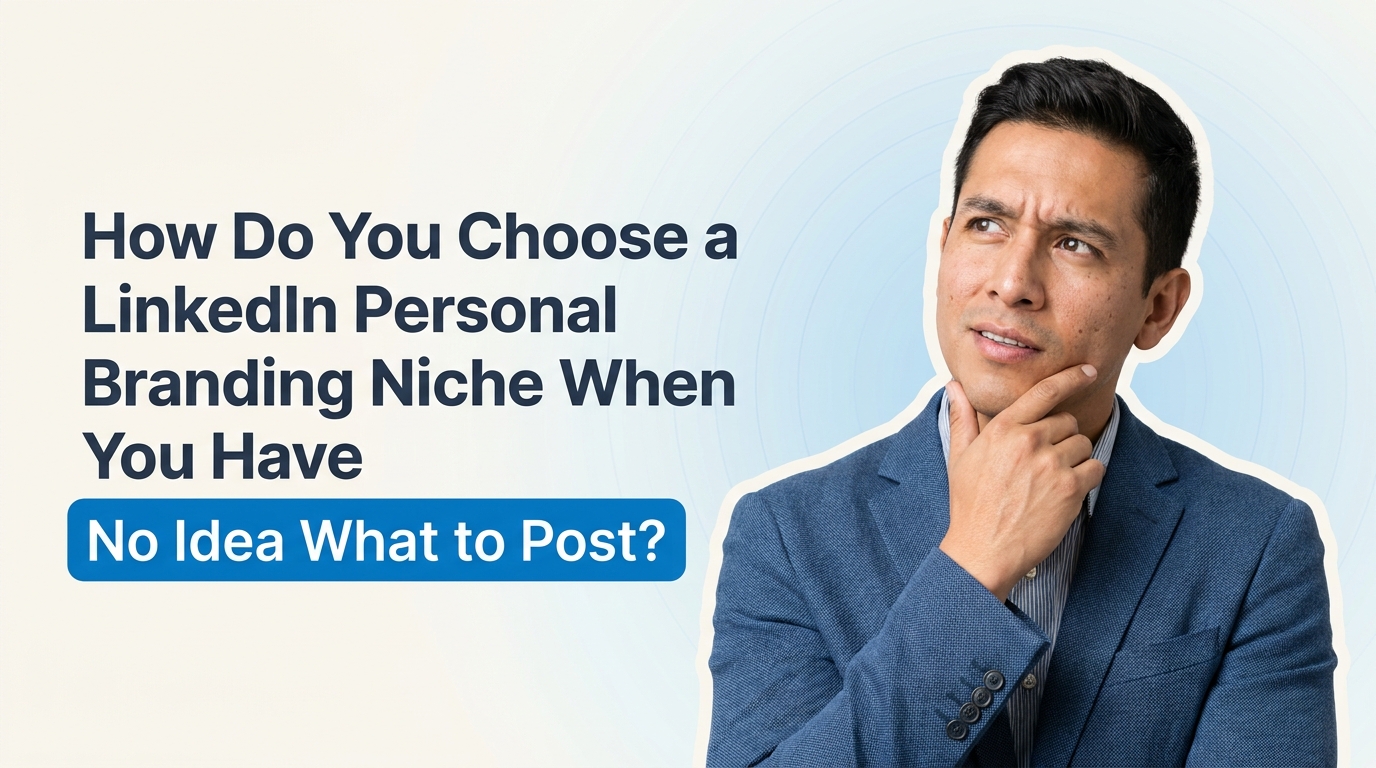
So you want to start building a personal brand on LinkedIn, but you sit down to write and... nothing. One day you feel like posting a quote, the next day a meme sounds fun, and by the end of the week you have posted nothing at all. Sound familiar?
You are not alone. This is probably the most common roadblock for people starting out on LinkedIn. The good news is that the confusion you are feeling is not a sign that you are not ready. It is a sign that you are trying to pick a niche before you understand how niches actually work. Let's fix that together.
Why Does Picking a Niche Feel So Hard?
Most people struggle with this for one simple reason: they think a niche is a topic. It is not. A niche is the intersection of three things:
What you know or are learning (your experience, even if it feels ordinary)
What you can talk about consistently (without burning out in three weeks)
What a specific group of people actually wants to read
When you jump between quotes and memes, you are essentially testing formats, not niches. Formats are how you say something. A niche is what you say and who you say it to. Once you separate those two ideas, everything gets easier.
What Should You Ask Yourself Before Choosing a Niche?
Before you pick anything, sit with these questions for ten minutes. Write the answers down, seriously:
What do people ask me for help with, even casually?
What have I learned in the last two years that past me would have paid to know?
What topic could I talk about for 30 minutes without preparing?
Who do I want to attract? Recruiters? Clients? Peers in my industry?
What am I currently learning that I could document publicly?
That last one is a secret weapon. You do not need to be an expert to build a brand. Documenting your learning journey is one of the most engaging content styles on LinkedIn because people love following progress.
Once you're back in, make your profile count
Paste your profile link and see your score right away, with clear fixes for your headline, About section and experience. No account needed.
Or open the LinkedIn profile evaluator
What Are Some Realistic Niche Ideas You Can Start With?
Since you mentioned you do not want to post pictures of yourself, here is some good news: text posts still perform very well on LinkedIn. You can build an entire brand without ever showing your face. Here are niche directions that work well for faceless, text-first creators:
1. Your Job or Industry, Explained Simply
Whatever you do for work, there are people one or two steps behind you who would love a clear explanation of it. Break down concepts, share lessons from projects, talk about mistakes you made. This is the most sustainable niche because your job feeds you content every single week.
2. Career Lessons and Workplace Observations
Posts about navigating work, dealing with managers, handling feedback, or learning to say no consistently get strong engagement on LinkedIn. You do not need seniority for this. A fresh perspective from someone early in their career is often more relatable than advice from a 20 year veteran.
3. Learning in Public
Pick a skill you want to learn, like copywriting, data analysis, design, or AI tools, and document the process. Share what you tried, what confused you, and what clicked. This builds a natural story arc that people want to follow.
4. Curation and Commentary
If creating original ideas feels overwhelming, become a curator. Find interesting articles, reports, or trends in your industry and add your take. The key word is your take. A link with no opinion is invisible. A link with a strong opinion starts conversations.
5. Storytelling Around a Theme
If you love quotes, do not just post the quote. Post the quote plus a short personal story or observation that gives it context. That small change turns a forgettable post into something people connect with.
Should You Post Quotes and Memes at All?
Honestly? Sometimes, yes. But here is the distinction that matters: quotes and memes are seasoning, not the meal. If your entire feed is generic quotes, the algorithm might give you some likes, but nobody will remember who you are or what you stand for. Engagement without positioning is empty calories.
A good rule of thumb for your content mix:
70 percent core niche content - insights, lessons, breakdowns, stories from your chosen topic
20 percent personal perspective - opinions, hot takes, behind the scenes thoughts
10 percent fun - memes, quotes, lighthearted observations that show personality
This way you get the engagement benefits of fun content without diluting your brand.
How Do You Test a Niche Without Committing Forever?
Here is something nobody tells beginners: your first niche is a hypothesis, not a marriage. Almost every successful LinkedIn creator pivoted at least once. So instead of agonizing over the perfect choice, run a 30 day experiment:
Week 1 and 2: Pick two topic directions and post about each a few times
Week 3: Look at which posts got comments, not just likes. Comments signal real resonance
Week 4: Double down on the direction that felt easiest to write and got the most conversation
Also pay attention to how you felt writing each post. If a topic gets engagement but drains you, it is not sustainable. Consistency beats intensity on LinkedIn every single time. Justin Welsh, one of the most followed solo creators on the platform, has written extensively about how consistency and a focused content system matter more than viral moments.
What Does Good Engagement Actually Look Like?
Quick reality check, because this trips up a lot of beginners. Good engagement in your first few months is not thousands of likes. It looks more like:
A handful of genuine comments from people in your target audience
Connection requests mentioning your posts
DMs asking follow up questions
Profile views trending upward week over week
Those small signals compound. LinkedIn rewards creators who show up regularly and spark conversations, so focus on writing posts that invite replies. End posts with a question. Take a mild stance people can agree or disagree with. Share a specific number or result instead of vague advice.
Practical Tips to Stay Consistent Once You Choose
Choosing a niche is step one. Staying consistent is where most people quit. A few things that help:
Batch your ideas. Keep a running note on your phone. Every time you learn something, get annoyed by something, or explain something to a colleague, that is a post idea.
Create content pillars. Pick 3 to 4 recurring themes within your niche and rotate through them so you never stare at a blank page.
Repurpose ruthlessly. One good idea can become a text post, a list post, and a story post over three separate weeks.
Engage before you post. Spend 10 minutes commenting on others' posts before publishing your own. It warms up your network and gets your name circulating.
If you want a deeper dive into building a posting rhythm, this collection of LinkedIn personal branding videos on YouTube is a solid place to browse different creators' systems and find one that fits your style.
The Bottom Line
You do not need the perfect niche to start. You need a direction, a simple content mix, and 30 days of honest experimentation. Start with what you know, document what you are learning, sprinkle in personality, and let your audience's response guide the refinement. The clarity you are looking for comes from posting, not from planning.
And if you want to make the whole process a lot less overwhelming, this is exactly the kind of thing we built exeedin for. It helps you figure out what to post, keeps you consistent, and takes the guesswork out of growing your personal brand on LinkedIn. So instead of staring at a blank page wondering if today is a quote day or a meme day, you get a clear system that actually moves your brand forward. Give it a look, your future LinkedIn self will thank you.