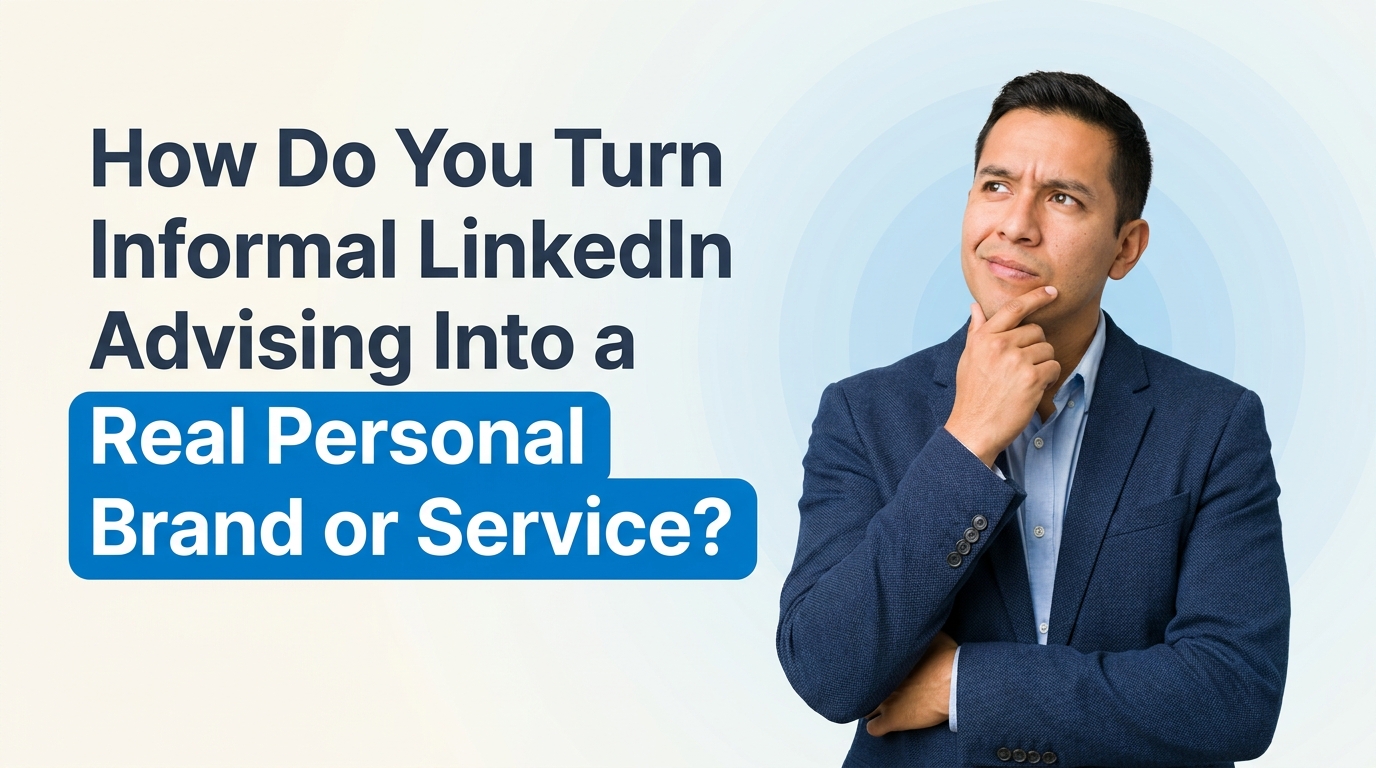
How Do You Turn Informal LinkedIn Advising Into a Real Personal Brand or Service?
Discover how to transform your informal LinkedIn advising into a personal brand. Start building your service today and attract the right audience!
If you’ve spent the last couple of years quietly helping people grow on LinkedIn, land contracts, improve their positioning, and build authority in their niche, then honestly, you’re already doing real advisory work. You may not have called it a business yet, and you may not want to be a public creator yourself, but the results matter more than the label.
That’s really the heart of the Reddit post here: someone has helped professionals grow their audience, sharpen their go-to-market strategy, and turn credibility into revenue. The question underneath it is simple: how do you talk about this clearly, attract the right people, and build something real from it?
If that sounds like you, this is the practical answer.
First, yes — this is a real skill
A lot of people assume you need a huge personal following to advise others on LinkedIn. That’s not always true. Some of the best strategists are not influencers. They’re pattern spotters. They understand positioning, message-market fit, audience psychology, outreach timing, and content angles that travel well.
In other words, you do not need to be famous to be useful.
What you’ve described is valuable because it combines a few things many people struggle with:
GTM thinking — knowing how someone should present their expertise to the market
LinkedIn growth strategy — understanding what gets attention and trust
Monetization support — helping turn visibility into contracts or consulting opportunities
Direct outreach instincts — especially through cold DMs and relationship building
That combination is rare. So instead of asking, “Am I really a professional?” a better question may be: Can I describe the results I help create in a repeatable way?
What are you actually offering?
This is where a lot of talented people get stuck. They know they help, but they don’t package the help in a way others understand.
Try breaking your offer into something clear and human:
I help subject-matter experts grow their LinkedIn presence without becoming generic creators.
I help professionals turn credibility into inbound leads, partnerships, and consulting opportunities.
I advise founders, operators, and thought leaders on LinkedIn content strategy, audience growth, and outreach.
See the difference? That sounds more concrete than saying, “I sort of help with social media.”
You might also want to ask yourself a few useful questions:
Who do I help best: HR leaders, B2B founders, consultants, recruiters, executives?
What part of the process am I strongest at: content ideas, profile positioning, campaign strategy, or outbound messaging?
What outcomes have my clients seen: more followers, more profile views, more calls, bigger deals, better authority?
Do I want to stay behind the scenes, or do I want a visible advisory brand?
You don’t need all the answers on day one. But you do need enough clarity that someone reading your profile or message immediately understands the value.
Social proof matters more than follower count
One of the strongest points in the Reddit post is the outcome: a professional went from under 700 followers to nearly 5,000 in a few months and landed five-figure contracts. That’s the kind of proof people pay attention to.
Now, to make that more compelling, structure it like a simple case study:
Starting point: established expert, but limited LinkedIn growth and monetization strategy
What changed: clearer positioning, stronger content direction, campaign support, better use of tech and outreach
Result: follower growth, stronger influence, real contract value
If you have two or three examples like that, you have the beginning of an offer page, a LinkedIn featured section, or a short portfolio deck.
Even better, if previous clients are comfortable, ask for a short testimonial. It doesn’t need to be polished. A sentence like, “They helped me clarify my LinkedIn strategy and turn my visibility into real business” goes a long way.
How should you position yourself on LinkedIn?
If you want clients, your own LinkedIn profile should explain what you do in plain language. It does not need to be flashy. It just needs to reduce confusion.
A strong profile usually includes:
A headline that says who you help and what outcome you support
An About section with your story, process, and examples of results
Featured content such as case studies, posts, testimonials, or a booking link
A clear call to action so people know whether to DM you, email you, or book a call
For example, your headline could be something like: LinkedIn Advisor for B2B Experts | Helping thought leaders grow influence, authority, and pipeline.
If you don’t want a public-facing personal brand, that’s fine too. You can still create a low-key advisory presence focused on credibility rather than content volume.
Do you need to post content if you’re mostly a strategist?
Not necessarily every day. But posting a little helps people understand how you think.
You could share:
Short breakdowns of why certain LinkedIn posts work
Observations about positioning mistakes professionals make
Lessons from helping experts build authority
Light case-study style posts without oversharing client details
Think of your content as a conversation starter, not a performance. You’re not trying to become an internet celebrity. You’re trying to make qualified people say, “This person gets it.”
If you want guidance on how LinkedIn itself recommends profile and visibility improvements, LinkedIn has its own help resources here: https://www.linkedin.com/help/linkedin.
How do you find the right clients without sounding random?
The original post asks whether anyone who is already a thought leader may want an advisor. That’s a fair question, but in practice, broad asks usually underperform. Specific positioning works better.
Instead of saying, “Anyone want help?” try language like:
I work with niche experts who already have credibility offline but need help building a stronger LinkedIn presence.
I help experienced professionals turn LinkedIn attention into consulting and contract opportunities.
I advise B2B leaders on content strategy, authority building, and warm outbound systems.
You can also use direct outreach, especially since you already seem comfortable with cold DMs. Just keep it thoughtful:
Reference something specific about their work
Point out a missed opportunity or growth angle
Keep the message short and useful
Offer a quick observation, not a hard sell
If you want a deeper look at building thought leadership in a professional setting, this HubSpot resource is a helpful starting point: https://blog.hubspot.com/marketing/thought-leadership.
What could your service packages look like?
You don’t need a giant agency model to start. A simple offer structure is enough:
Strategy Session: profile audit, content direction, GTM alignment, outreach review
Monthly Advisory: content planning, campaign feedback, audience-building support
Executive Positioning Support: for professionals who want authority without managing everything themselves
Each package should answer:
What problem are you solving?
What do they receive?
How long does it take?
What outcomes are realistic?
That last point matters. Be honest. LinkedIn growth is not magic. The best advisors don’t promise virality. They build a system around clarity, consistency, and relevance.
What makes someone trust a LinkedIn advisor?
Usually three things:
Clear thinking
Evidence of results
A process they can understand
So if you’re trying to move from informal help to a real service, focus less on sounding impressive and more on being understandable. That’s what converts.
You may also find it useful to study how professional services firms frame their expertise.
Final thought
If you’ve helped respected professionals grow their reach, sharpen their market presence, and win real business, then you’re not “sort of” a LinkedIn advisor. You already are one. The next step is just packaging the value better, showing proof, and speaking directly to the kind of clients you want more of.
Write better LinkedIn content with exeedin
exeedin is an AI tool that helps you ideate, draft, and schedule content for your LinkedIn. Turn raw ideas into polished posts and stay consistent without the guesswork. Try exeedin.