How to Request a LinkedIn Connection Ethically?
Send one brief, polite request with a clear reason, then let the other person decide. Avoid mass requests, instant pitches and fake personalization.
If you're wondering whether there's a right and wrong way to send a LinkedIn connection request, the short answer is: yes. The platform makes it easy to click "Connect," but ease and ethics aren't the same thing. What separates a good request from a bad one is usually your intention, your approach, and whether you respect the other person's space.
That's the part a lot of people miss. A connection request isn't just a button. It's a small ask you're placing in someone else's day. If your reason for sending it is clear and your approach is low-pressure, you're on solid ground. If you're firing off a hundred requests hoping something sticks, or you're using the connection as a wedge for a pitch, that's a different thing entirely.
So is sending a connection request ever wrong?
In most cases, no. A connection request is a professional invitation, not a demand. The other person is free to ignore it, decline it, or accept it. The platform is built around that choice. If your message is calm, respectful, and not manipulative, you aren't crossing a line just by reaching out.
What makes it ethical or unethical is usually how you do it:
Ethical: a brief, polite invitation with a clear or obvious reason
Less ethical: mass-blasting requests, immediately pitching after acceptance, using automation to fake personalization
Best approach: send one considered request and let them decide without pressure
The "ball in their court" principle is a healthy way to think about it. If they choose not to engage, that answer should be respected.
How strong is your LinkedIn profile?
Paste your profile link and see your score right away, with clear fixes for your headline, About section and experience. Free to start, no account needed.
Or open the free LinkedIn profile checker
What should you ask yourself before sending it?
Before clicking "Connect," it helps to slow down and ask a few honest questions:
Why do I want to connect with this person, specifically?
Would this request make sense from their point of view, or would it look random?
Am I connecting to build a relationship, or to extract something immediately?
If they ignore it, can I leave it there and move on?
Am I reaching out because it's useful, appropriate, and timely.. or because I'm padding a number?
That last one matters more than people admit. Follower counts and connection counts create a quiet pressure to treat people as inventory. If your only reason is "more is better," the request probably isn't worth sending.
When a connection request is clearly appropriate
Here are situations where sending the request is usually reasonable:
You've worked together, studied together, or shared a client
You met at an event, on a call, or in a comment thread
You're in the same field and may cross paths professionally
You've been reading their work and want to follow it more closely
Someone you both know suggested the connection
You have a specific, respectful reason for reaching out
You don't need a deep relationship to justify a request. Shared industry, shared context, or genuine interest in someone's work are all legitimate reasons. LinkedIn is full of useful connections that started as nothing more than "we do similar things."
When you should probably hold back
There are also situations where not sending is the better move:
You have no actual reason beyond growing your number
You're planning to pitch them the moment they accept
They've previously asked for distance or made disinterest clear
The person is far outside your field and you can't articulate why you're reaching out
You're using an automation tool to send at volume without reading who you're sending to
That last point deserves attention. Bulk-connecting tools make it possible to send hundreds of requests a week, and a lot of them dress up the messages to look personal. Even when this doesn't violate platform rules outright, it turns a personal invitation into spam, and people can usually tell.
There's also the case where you've had friction with someone in the past.. a disagreement, an awkward exit, a strained project. That doesn't automatically rule out connecting. Professional disagreement isn't permanent exclusion, and plenty of people reconnect civilly later. But if the conflict was severe or personal, or if you'd be sending the request hoping to reopen a conversation rather than to network, it's better to leave it.
Should you include a note?
Usually, yes.. and keep it short. A custom note makes your intention clear and reduces the chance the request feels random. The key is not to overexplain.
Good connection notes are:
Brief
Specific
Professional
Non-demanding
For example:
"Hi [Name], we both work in [field] and I've been following your posts on [topic]. Would be glad to connect."
"Hi [Name], we met at [event] last week.. enjoyed the conversation about [topic]. Connecting here to keep in touch."
"Hi [Name], [Mutual contact] mentioned your work on [project]. Sending a connection request in case it's useful down the line."
"Hi [Name], we worked in similar circles at [company/industry]. Thought it made sense to connect professionally."
Notice what these do: they give a reason, they're easy to read in three seconds, and they leave room for the other person to decline without any drama.
What not to say in your note
Avoid language that creates pressure, obligation, or false familiarity:
"I have an opportunity you'd be perfect for" (before they've accepted)
"Quick question.. got 15 minutes this week?"
"I've been trying to reach you"
"Please don't ignore this"
Anything that reads as a template with a name pasted in
The fastest way to make a request feel unethical is to make it feel like the first step in a funnel. If your note is a soft opening for a sales message, people notice, and the connection starts from a position of distrust.
What if they ignore the request?
Then that's your answer. Not a dramatic answer, just an answer.
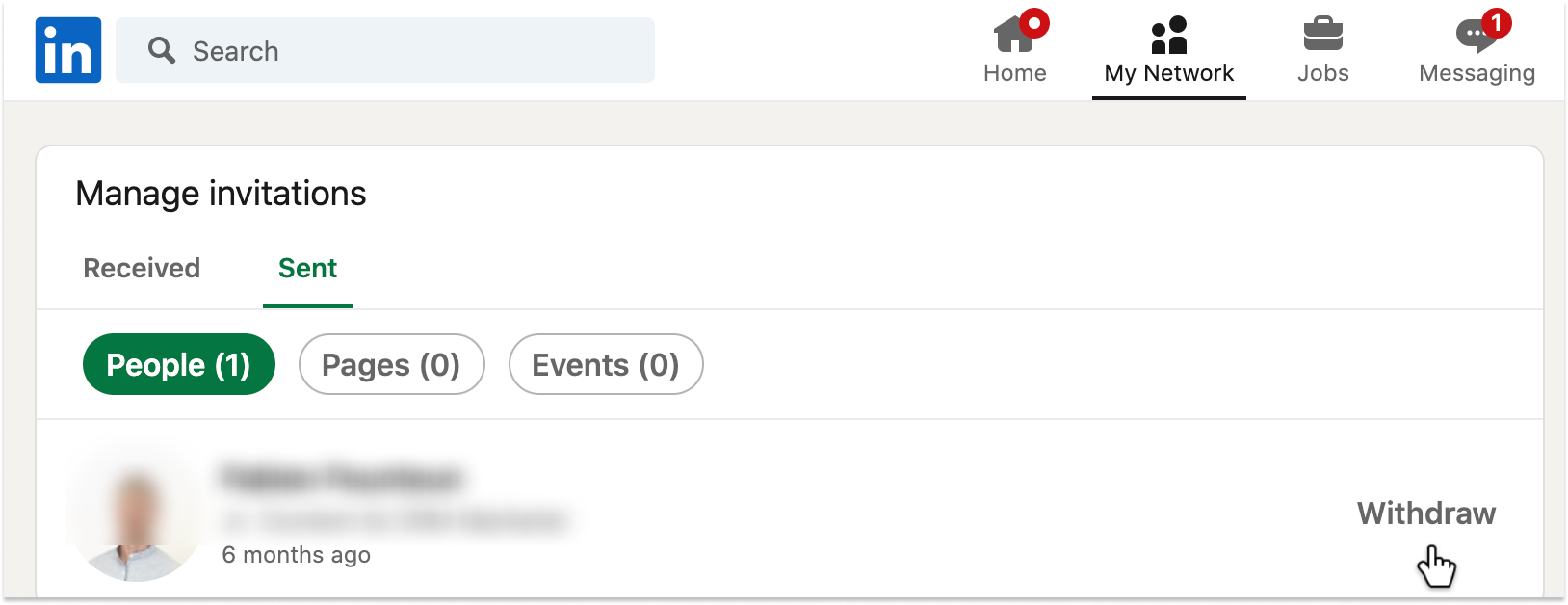
This is where ethics comes back in. If you send one respectful invitation and let it rest, you've behaved professionally. If you follow up repeatedly, message them on other platforms, or withdraw and resend the request hoping for a different result, that's where it starts to feel intrusive.
A good rule: one request, one decision, no chasing.
What about after they accept?
Ethics doesn't stop at the accept button. A lot of the damage on LinkedIn happens in the thirty seconds after someone says yes.
If your first message after acceptance is a pitch, you've essentially used the connection request as a delivery mechanism. It's legal, it's common, and it's still a small breach of the implied agreement. Accepting a connection means "I'm open to being in the same professional room." It doesn't mean "I've opted into your sales sequence."
If you do want to sell to someone eventually, the honest version is to say so up front rather than smuggling it in behind a friendly note.
A simple decision framework
If you're still unsure, this checklist helps:
Can I name a specific reason? If yes, continue.
Would this make sense from their side? If yes, continue.
Am I being brief and respectful? If yes, continue.
Will I accept no response? If yes, continue.
Am I okay if they never become a customer? If yes, it's probably fine to send.
If any of those answers are no, it may be better to wait or not send at all.
Why this matters on LinkedIn specifically
LinkedIn has its own etiquette. It isn't the same as texting someone, cold emailing, or following on a personal platform. A connection request is closer to saying, "I'd be open to being in the same professional room." That framing is why a request can be appropriate even when there's no existing relationship.. and why it becomes a problem when you treat it as something more forceful than it is.
LinkedIn encourages professional networking and gives users full control over whom they accept. You can read more about connection etiquette through LinkedIn's official resources and broader career platforms like Harvard Business Review and Indeed.
Final thought: respectful intent matters more than perfect wording
If your reason is real, your tone is steady, and you're genuinely okay leaving the decision to them, sending a connection request is a fair and ethical move. It doesn't guarantee a response, and it doesn't obligate anyone to anything. That's the point.
The main thing is this: don't force meaning into it. Offer the connection, keep it brief, and let them choose.
Helpful resources
Write better LinkedIn content with exeedin
exeedin is an AI tool that helps you ideate, draft, and schedule content for your LinkedIn. Turn raw ideas into polished posts and stay consistent without the guesswork. Try exeedin.