Is It Weird to Feel Annoyed When Your LinkedIn Connections View Your Profile but Don’t Like Your Posts?
Discover why LinkedIn profile views can feel frustrating. Learn to navigate your feelings and boost engagement. Read more now!
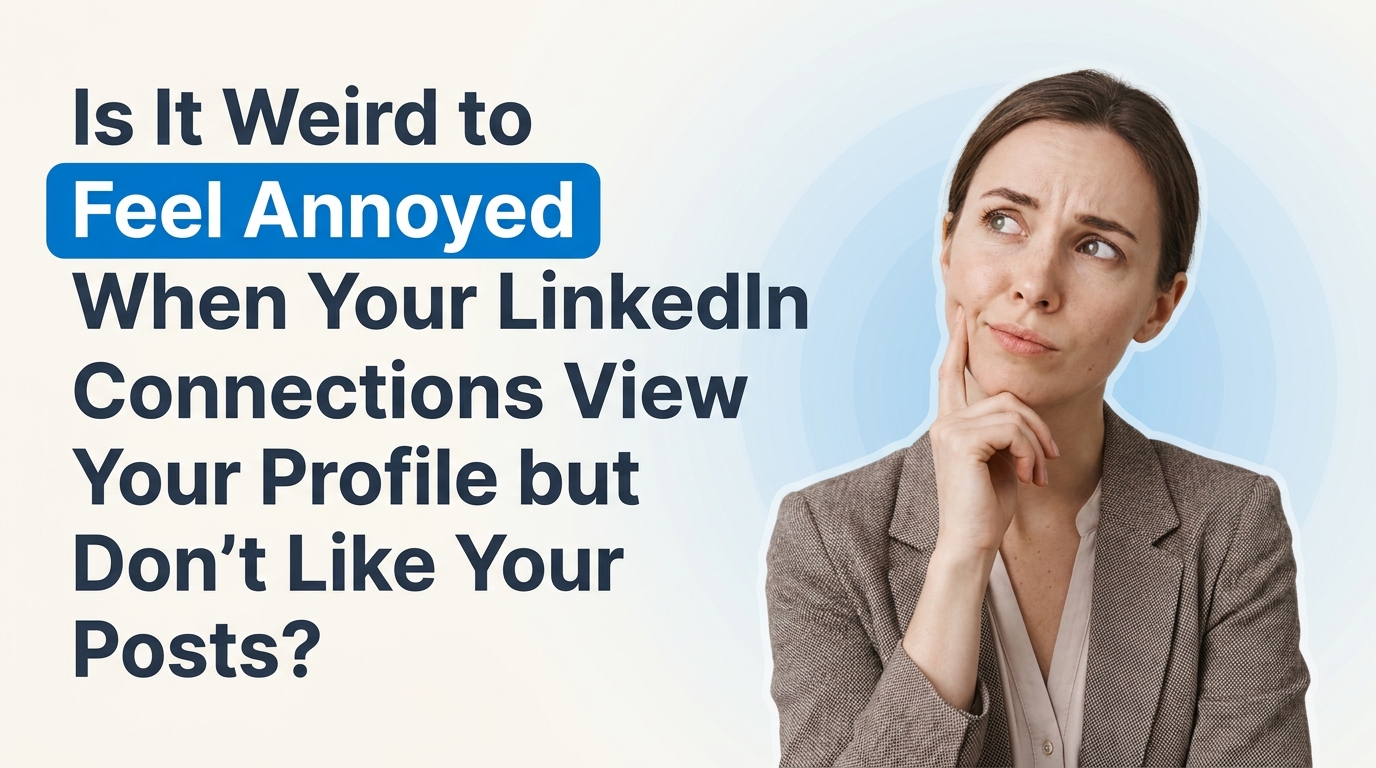
Short answer: no, it’s not weird.
A lot of people feel this way, even if they don’t say it out loud. You post something on LinkedIn, you notice profile views coming in, and then... not much happens on the post itself. No like. No comment. No repost. Just silence. That can feel oddly personal, especially when you know people are seeing you.
If you’ve been thinking, “Why are they checking my profile but not supporting my content?” — you’re honestly asking a very human question. And on a platform like LinkedIn, where personal brand, visibility, and professional validation all overlap, that feeling can hit harder than people expect.
Let’s break it down in a normal, useful way.
Why this feels annoying in the first place
What usually makes this frustrating is not just the missing like itself. It’s the meaning we attach to it.
You posted with intention. Maybe you shared a career update, a thoughtful opinion, or something you worked hard on.
You can see people are curious enough to look. Profile views suggest some level of interest.
But they don’t publicly engage. So it can feel like they’re watching, but not supporting.
That gap creates a story in your head. Maybe they didn’t like it. Maybe they don’t want to help. Maybe they’re comparing themselves. Maybe they’re just being passive.
The truth is, sometimes it means something. But most of the time, it probably means less than you think.
Profile views and post engagement are not the same thing
This is the first thing worth remembering: a profile view is not a vote against your content.
People view profiles on LinkedIn for all kinds of reasons:
They saw your post and wanted context about who you are.
They vaguely recognized your name.
They’re hiring, networking, comparing backgrounds, or just browsing.
They meant to engage but got distracted.
They consume content quietly and rarely like anything at all.
A lot of LinkedIn users are private observers. They read, scan, and move on. They may even appreciate your post and still never click the like button.
If that sounds strange, think about how people behave on other platforms too. Many people watch Instagram stories and never respond. They read posts on X or Reddit and never vote. Digital attention and visible engagement are not always connected.
So, are your feelings valid?
Yes. Totally valid.
It makes sense to feel irritated when effort seems to go unnoticed, especially on a professional platform where engagement can affect reach, credibility, and even opportunities. If you’re actively trying to build a presence on LinkedIn, likes and comments can feel like signals that people support you.
And when someone seems interested enough to visit your profile but not interested enough to engage, it can feel one-sided.
That said, there’s a difference between feeling annoyed and building a belief system around that annoyance. The feeling is normal. The assumption that everyone who doesn’t engage is intentionally withholding support? That’s where it can become unhelpful.
A few questions worth asking yourself
If this has been bothering you, these questions can help you look at it more clearly:
Do I want support, or do I want visible validation? Sometimes we want both, but it helps to know which one feels missing.
Am I expecting people to engage just because we’re connected? On LinkedIn, a connection does not always mean an active relationship.
Do I regularly engage with their content? If not, they may not feel a strong reason to interact with yours either.
Is my content easy to engage with? Some posts are interesting but don’t naturally invite likes or comments.
Am I reading too much into passive behavior? Many professionals are cautious about public interaction online.
None of this means your frustration is wrong. It just helps you move from reaction to perspective.
Why people don’t like posts even when they notice them
There are more reasons than most people realize. Here are some common ones:
They’re lurking. A lot of people use LinkedIn quietly.
They’re busy. They may scroll between meetings and forget to engage.
They don’t want to publicly attach themselves to every opinion. This is especially true for people in corporate roles.
They like you, but the post didn’t move them enough to react.
They’re thinking in professional terms, not social terms. Some people treat LinkedIn more like a directory than a community.
They may be competitors, recruiters, or casual observers. Curiosity does not always equal support.
In other words, a profile view is often just that: a profile view.
What to do if this is affecting your motivation
If this pattern is starting to make you resent posting, it’s probably time to shift how you measure success on LinkedIn.
Here are a few healthier and more strategic ways to look at it:
1. Focus on outcomes, not just reactions
Ask yourself: are your posts leading to anything useful?
More profile visits?
Connection requests?
Relevant DMs?
Opportunities?
Recognition in your niche?
Sometimes the people who never like your post are still the ones remembering your name later.
2. Make your posts easier to respond to
If you want engagement, help people engage. Instead of only sharing a statement, ask a clear question. Instead of posting vaguely, give people something specific to react to.
For example:
“Has this happened to anyone else?”
“What would you have done in this situation?”
“Do you agree, or do you see it differently?”
Sometimes people need an opening.
3. Engage first if you want stronger reciprocity
LinkedIn is still a relationship platform, even if it doesn’t always feel like one. If there are people whose support matters to you, try being visible in their world too. Not in a fake way. Just consistently.
Comment on their posts. Share useful thoughts. Congratulate them when appropriate. Over time, that often creates more mutual interaction.
4. Don’t over-monitor who did what
This part is hard, but it helps. The more closely you track who viewed, who liked, and who stayed silent, the easier it is to become cynical. That mindset can quietly damage your content quality and your willingness to show up.
You want to post from clarity, not scorekeeping.
What LinkedIn engagement actually means today
LinkedIn engagement is a messy signal. It can reflect interest, agreement, timing, algorithm behavior, company culture, personal caution, and plain old scrolling habits.
So if someone viewed your profile but didn’t like your post, it does not automatically mean they’re unsupportive, fake, jealous, or judging you.
Could it mean that sometimes? Sure. People are people. But treating every low-effort interaction as emotional evidence usually creates more stress than insight.
If you want a deeper look at how LinkedIn content and engagement work, these resources are useful:
The more grounded takeaway
It’s not weird to be annoyed. It’s a pretty understandable reaction.
But it may help to reframe what’s happening. A profile view often means you got someone’s attention. That’s not nothing. And a missing like doesn’t always mean rejection. It may just mean they stayed in observer mode.
If LinkedIn is important to you, the better move is to keep improving your content, make it easier to engage with, build actual relationships, and stop letting silent viewers define your confidence.
Write better LinkedIn content with exeedin
exeedin is an AI tool that helps you ideate, draft, and schedule content for your LinkedIn. Turn raw ideas into polished posts and stay consistent without the guesswork. Try exeedin.