What Really Happens If You Buy Fake Followers or Connections on LinkedIn?
Discover the truth about buying fake followers on LinkedIn. Learn why it backfires and how it affects your profile. Read more now!
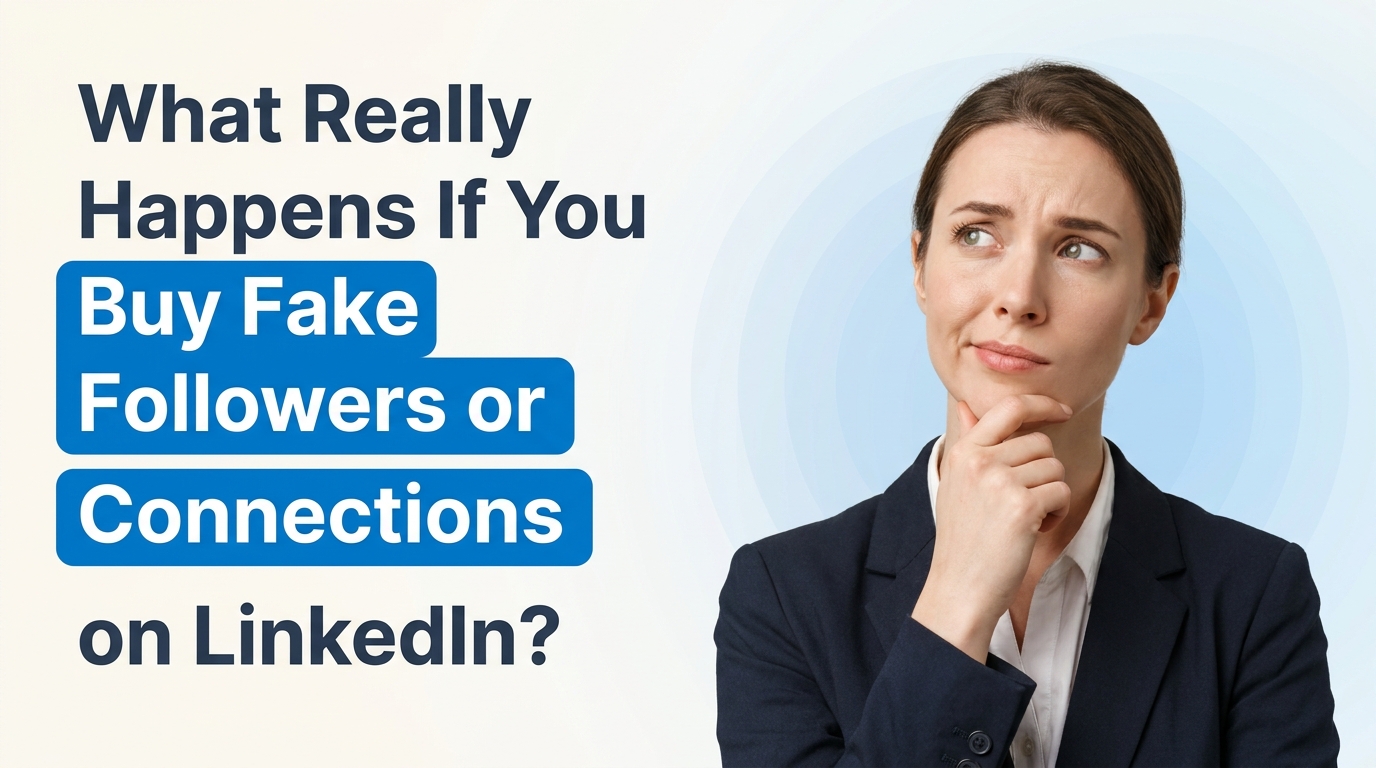
Someone asked this question on Reddit recently, and honestly, it deserves a proper answer. If you buy fake followers or connections on LinkedIn, what actually happens? Is it a shortcut to credibility, or a quiet way to sabotage your own profile?
Short answer: it almost always backfires. But the interesting part is why it backfires, and how quickly. Let's walk through it together, because once you understand how LinkedIn actually works under the hood, buying followers starts to look like paying money to make your account worse.
First, What Are You Actually Buying?
When you pay for followers or connections, you're usually getting one of two things:
Bot accounts: automated profiles with stolen photos, generic names, and empty activity feeds. They exist purely to inflate numbers.
Click farm accounts: real humans in low-cost regions who follow thousands of accounts per day for pennies. Technically real people, but they will never read, like, or engage with anything you post.
Neither of these will ever comment on your posts, refer you a client, or offer you a job. They are decoration. Expensive, risky decoration.
Does LinkedIn Actually Detect Fake Followers?
Yes, and it's better at it than most people assume. LinkedIn runs constant automated sweeps for inauthentic behaviour. In its own Community Report, LinkedIn shares that it stops tens of millions of fake accounts every six months, and the vast majority are caught by automated systems before a human ever flags them.
What does that mean for you? A few things:
The followers you paid for tend to vanish in waves as LinkedIn purges bot networks. People often watch their count drop by hundreds overnight.
Your account gets associated with those networks. If a cluster of fake accounts all follow you within a short window, that pattern is easy for the algorithm to spot.
Buying engagement is a direct violation of the LinkedIn User Agreement, which explicitly prohibits creating fake profiles and using bots or automation to inflate metrics.
What Are the Actual Consequences?
Here's the realistic breakdown of what tends to happen, roughly in order:
1. Your engagement rate collapses
This is the sneaky one. LinkedIn's feed algorithm decides how far to distribute your post based on how your existing audience reacts to it in the first hour or so. If 5,000 of your 6,000 followers are bots who never engage, your posts look boring to the algorithm. It sees a big audience ignoring you and concludes your content isn't worth showing to anyone else. So, buying followers doesn't just fail to help your reach, it actively suppresses it.
2. You risk restrictions or a ban
LinkedIn's enforcement usually escalates: a warning, then temporary restrictions (like being blocked from sending connection requests), then in repeat or severe cases, permanent account closure. For anyone who uses LinkedIn professionally, losing years of connections and history over a $30 follower package is a terrible trade.
3. Smart people can tell
Recruiters, clients, and partners who live on LinkedIn develop a radar for this. A profile with 15,000 followers and posts that get 2 likes is a red flag you can spot in three seconds. Instead of looking influential, you look like someone who tried to fake influence, which is arguably worse than having a small audience.
4. Your analytics become useless
If you ever want to actually grow on LinkedIn, you need to know what content resonates with your real audience. Fake followers poison that data. You can't learn from an audience that doesn't exist.
Why Do People Still Do It?
Fair question. Usually, it comes down to social proof. There's real psychology behind the idea that people trust accounts that already look popular. The problem is that LinkedIn is not Instagram. On LinkedIn, your follower count sits right next to your work history, your posts, and your engagement, all of which tell the real story. Social proof only works when it survives a closer look, and bought followers never do.
Is There Ever a Scenario Where It "Works"?
Honestly, almost never. The only situation where inflated numbers create even a temporary illusion is if nobody ever checks your activity, and on LinkedIn, people always check. Recruiters read your posts. Prospects scroll your comments. The moment anyone looks past the number, the illusion breaks.
And even in the best case where nobody notices, you've still paid money for an audience that generates zero leads, zero conversations, and zero opportunities. That's the whole point of LinkedIn gone.
What Should You Do Instead?
Growing a real LinkedIn audience is slower, but every follower you earn is a person who might actually hire you, buy from you, or refer you. Here's the playbook that consistently works:
Post consistently, not constantly. Two to four thoughtful posts a week beats daily filler. Consistency teaches the algorithm and your audience what to expect from you.
Pick a lane. Write about the intersection of what you know and what your target audience struggles with. Specificity builds followings, vagueness doesn't.
Comment before you post. Leaving genuinely useful comments on bigger accounts in your niche is still one of the fastest organic growth levers on the platform.
Optimize your profile first. A clear headline, a real photo, and an About section written for your reader (not your resume) convert profile visitors into followers.
Send personalized connection requests. Ten thoughtful requests a day compound into a real network faster than you'd think.
Engage with everyone who engages with you. Replies to comments count as engagement signals and build actual relationships.
If you prefer video, this YouTube search for growing on LinkedIn organically has plenty of creators walking through their exact systems step by step.
Common Questions People Ask About This
Will LinkedIn ban me immediately if I buy followers?
Not always immediately, but the risk compounds. LinkedIn's detection runs continuously, and many people who bought followers years ago got flagged during later purges. It's a debt that can come due at any time.
Can I remove fake followers I already bought?
You can't mass-remove followers easily, but LinkedIn's purges will remove most bots over time. You can also remove connections manually. The best move is to stop the behavior, focus on organic growth, and let your engagement rate recover.
What about buying likes or comments instead of followers?
Same category, same risks, arguably easier to detect. Bought engagement comes in unnatural bursts from unrelated accounts, which is exactly the pattern spam detection systems are built to catch.
How long does real growth actually take?
Most people who post consistently and engage daily see meaningful traction within three to six months. That sounds slow until you realize a real audience of 2,000 people in your niche is worth more than 50,000 bots in every way that matters.
The Bottom Line
So, back to the original question: what's the outcome of buying fake followers or connections on LinkedIn? You pay money to shrink your reach, risk your account, and damage your credibility with the exact people you're trying to impress. There's no version of it that ends well.
The real move is building a genuine presence, and that's a lot easier when you have the right system behind you. That's exactly why we built exeedin, a LinkedIn SaaS designed to help you grow your presence the right way, with real strategy and real engagement instead of empty numbers. If you're serious about turning LinkedIn into an actual asset for your career or business, give exeedin a look. Real growth takes a bit longer, but it's the only kind that pays you back.