Why Does LinkedIn Engagement Look Good but Still Fail to Bring in Clients?
Discover why LinkedIn engagement may not lead to clients. Learn how to attract your ideal audience and convert engagement into inquiries today!
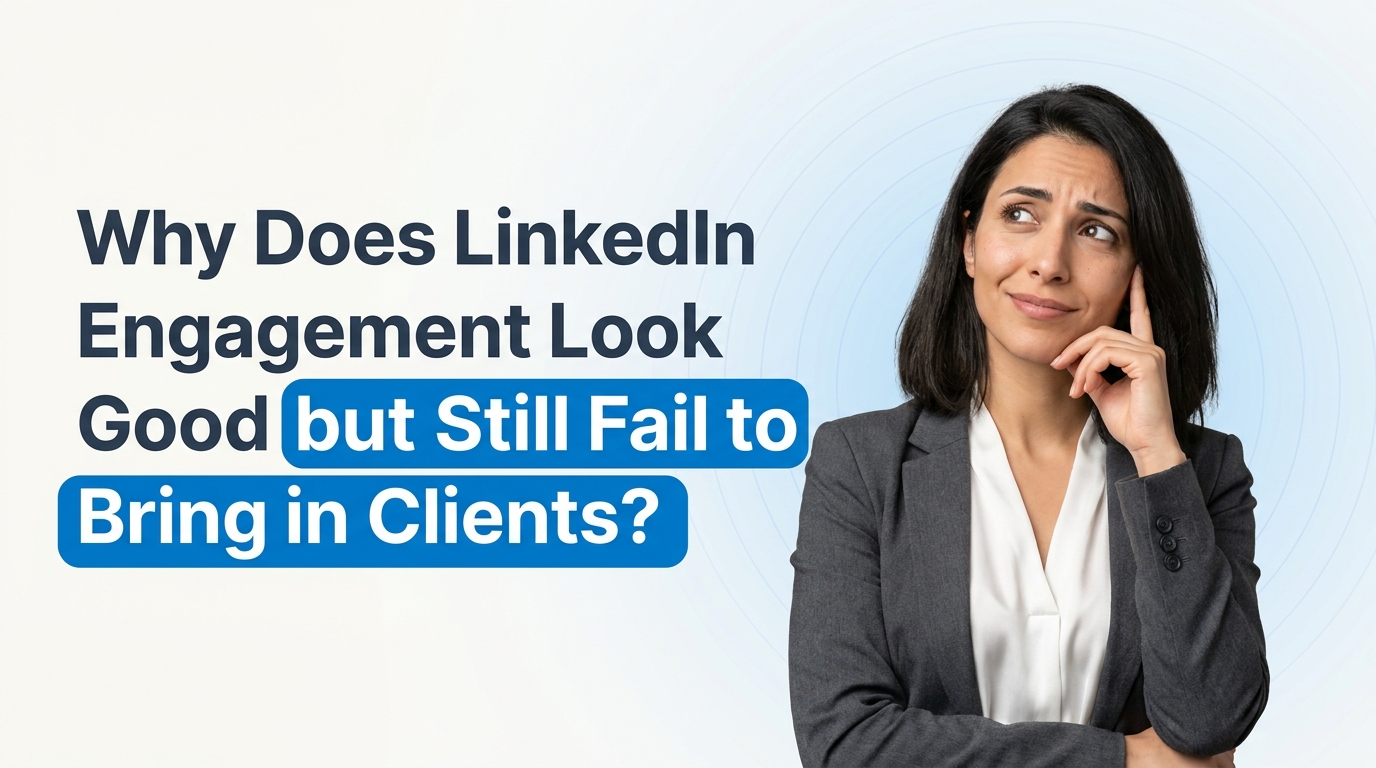
If you have ever looked at your LinkedIn posts and thought, "My engagement is decent, so why am I still not getting clients?" — you are definitely not the only one.
It is a frustrating place to be. On paper, things look fine. People are liking your posts. Some are commenting. A few are even sharing thoughtful takes. But when you zoom in, you realize something important: the people engaging are not the people who buy.
That is the core issue behind the Reddit post above, and honestly, it is one of the most common LinkedIn problems for coaches, consultants, service providers, and freelancers. You can build visibility without building demand. You can create conversations without creating conversions. And yes, you can accidentally train the algorithm to keep showing your content to the wrong audience.
Let’s break this down in a simple, practical way.
What is actually happening when only peers engage with your content?
Usually, it starts innocently. You post about your work, your process, your lessons, your mindset, or your industry opinions. Other people in your field relate to it, because they live in the same world. They understand the language. They enjoy the nuance. They comment because it speaks to them.
That feels like momentum, but it can quietly become an echo chamber.
Here is the issue: your peers are not always your buyers. They might support you, learn from you, or even admire your content. But if they are not your ideal client, their engagement can create a misleading signal.
You feel visible, but not valuable to buyers.
You get interaction, but not inquiry.
You build familiarity, but in the wrong circle.
And on LinkedIn, this matters because the platform tends to show your content to similar people who engage with it. So if coaches engage, more coaches see it. If consultants engage, more consultants see it. The cycle keeps feeding itself.
Why does this happen so often on LinkedIn?
Because LinkedIn rewards relevance, not just quality.
A post can be well-written and thoughtful, but if it is relevant mainly to people in your profession, it will attract them first. That is not a content failure. It is an audience alignment problem.
Ask yourself a few honest questions:
Am I writing to impress people in my industry?
Am I using language my clients actually use?
Would a decision-maker care about this topic today?
Does this post speak to a business problem, or just my own expertise?
That last question is usually where the breakthrough happens.
Many people post from the angle of “Here is how I think” when they need to post from the angle of “Here is what my client is struggling with right now.”
What should you write about instead?
The Reddit post makes a strong point: things changed when the focus shifted from “what do I want to say?” to “what is my client losing sleep over?” That is such a useful filter.
Your ideal content should connect to real situations, not just good ideas.
For example, instead of posting:
“My 5-step coaching framework for growth”
“Why most consultants position themselves badly”
“The importance of authentic personal branding”
You might post:
“Why your sales team is getting profile views but no demos booked”
“What usually causes a founder’s LinkedIn content to attract peers instead of buyers”
“3 signs your LinkedIn strategy is visible but not converting decision-makers”
See the difference? One sounds like expert commentary. The other sounds like it belongs in the world of a buyer.
Clients respond when they feel seen. Not when they feel taught at.
How do you know if your content is attracting the wrong audience?
Here are some signs that usually show up:
Your comments mostly come from people in the same job title or service category as you.
Your inbound messages are from collaborators, not prospects.
Your best-performing posts do not lead to profile visits from target buyers.
Your content gets praise like “great insight” but not questions like “can you help with this?”
Your follower growth looks healthy, but pipeline growth does not.
If that sounds familiar, you may not need more content. You may need a better audience signal.
How can you rebuild your LinkedIn content around actual clients?
You do not need to start from scratch. You just need to become more specific.
1. Define the buyer clearly
Who actually hires you? Not who likes your content. Who signs the contract, approves the budget, or starts the conversation?
Be specific:
Founder?
CMO?
HR leader?
Sales director?
Small business owner?
Then ask: what are they trying to fix, improve, avoid, or prove?
2. Write in client language
Most service providers accidentally post in industry language. That is normal, but it creates distance.
Clients often do not describe their problems the way experts do. They say things like:
“We are posting but nothing is happening.”
“Leads are not qualified.”
“Our brand looks active online, but it is not turning into revenue.”
“We do not know what to say without sounding repetitive.”
That wording is gold. Use it.
3. Build content around moments, not theories
Some of the best LinkedIn posts are built around very specific moments:
When a founder realizes their audience is full of peers, not buyers
When a consultant gets engagement but no discovery calls
When a brand team cannot tell whether LinkedIn is helping pipeline at all
These are relatable because they feel real. Buyers respond to reality.
4. Spend time where your audience already is
This part from the Reddit post is especially practical: spend 20 minutes a day engaging where actual decision-makers are already posting.
That means:
Following people in your target market
Turning on notifications for a shortlist of relevant voices
Leaving thoughtful comments that add perspective
Avoiding generic replies like “Great post” or “Totally agree”
Good comments create recognition. Recognition builds trust. Trust brings profile visits from the right people.
If you want to understand how LinkedIn itself frames meaningful participation, LinkedIn’s own marketing resources are useful: https://business.linkedin.com/marketing-solutions.
What kind of comments actually attract prospects?
Usually, the best comments do one of three things:
Add context — “We saw something similar when…”
Share a practical observation — “One reason this stalls is…”
Ask a smart follow-up — “Have you noticed whether this issue starts before or after…?”
You are not trying to steal attention. You are showing how you think, in a space your buyer already trusts.
This is one reason social selling works so well when done properly. LinkedIn’s Sales Solutions pages explain some of this buyer visibility dynamic too: https://business.linkedin.com/sales-solutions.
Should you stop posting for peers completely?
Not necessarily.
Peer engagement is not bad. It can help with reach, credibility, and relationships. The problem starts when peer attention becomes your main signal of success.
A healthier goal is balance:
Some posts can build authority among peers
Most posts should speak directly to buyer pain points
Your engagement activity should happen in front of the right audience
So the answer is not “ignore your industry.” It is “do not confuse industry applause with market demand.”
A simple content filter you can use before posting
Before you hit publish, ask:
Who is this really for?
Would a potential client immediately recognize themselves in it?
Does this highlight a business problem they care about?
Is the wording easy for a non-expert to understand?
Could this naturally lead someone to view my profile or start a conversation?
If the answer is mostly no, the post may still be good, but it may not be client-facing.
Final thought
The biggest takeaway from that Reddit post is simple: engagement is not the same as traction. If the wrong people keep engaging, LinkedIn will keep sending more of the wrong people. So sometimes the fix is not posting more. It is posting with better audience intent and showing up consistently in the spaces where your buyers already pay attention.
For a broader look at social selling and audience relevance, these may also help: HubSpot on LinkedIn social selling and a practical YouTube breakdown on LinkedIn content strategy.
Write better LinkedIn content with exeedin
exeedin is an AI tool that helps you ideate, draft, and schedule content for your LinkedIn. Turn raw ideas into polished posts and stay consistent without the guesswork. Try exeedin.