
EXEED AI

Chris Guillebeau's Recent LinkedIn Posts
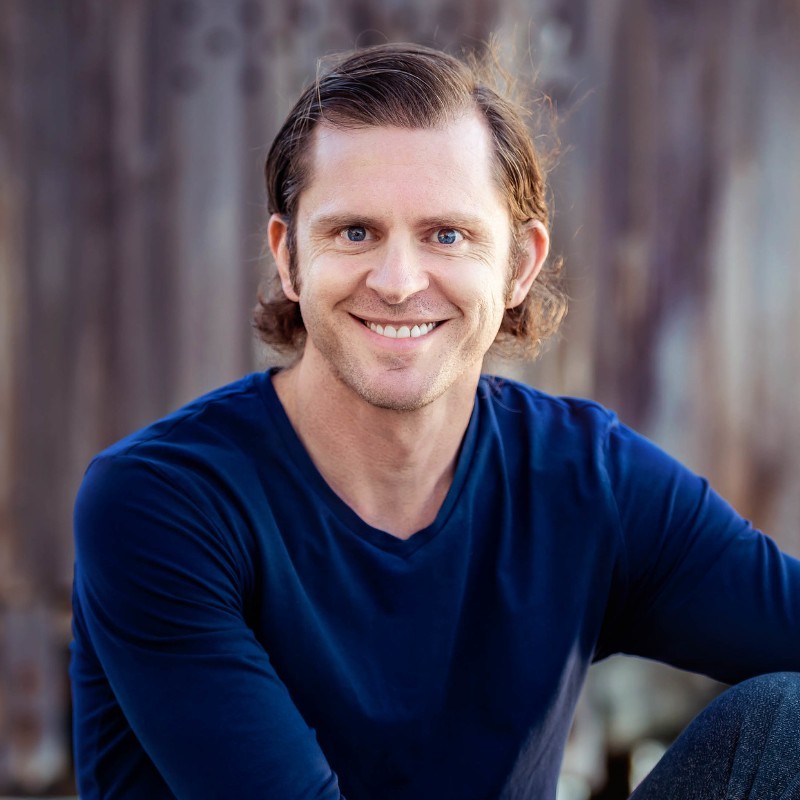
Chris Guillebeau

Chris Guillebeau

@chrisguillebeau

Neurodivergent author of THE ART OF NON-CONFORMITY, THE $100 STARTUP, and other books. Writing every day on ADHD, entrepreneurship, and purposeful productivity. đź§ 

en23 postsLinkedIn

Posts

Chris Guillebeau

Entrepreneurship

5mo

Looking for neurodivergent founders đź‘€ Hi friends, I'll be facilitating an online event with the The New York Public Library in early March. Our working title is How Neurodiverse Minds Create the Future of Entrepreneurship. This event will be FREE for everyone (nothing for sale before or after) and I'm looking for 3-4 people to join me for a 90-minute panel discussion. There will be a sizable audience watching live, and NYPL will promote throughout their channels. Let me know who I should invite! Feel free to nominate yourself or anyone else. (Specifically: neurodiverse founders, small business owners, and successful entrepreneurs who can speak to the challenges AND strengths of neurodiversity.)
108

Chris Guillebeau

Entrepreneurship

4mo

Most businesses don’t break when they grow. They just get harder to understand. #Sponsored I’ve talked to thousands of business owners over the years, and this comes up again and again: the work increases, but clarity disappears. Here are three signs a small or mid-sized business may be ready for an upgrade to a business platform like QuickBooks Online Advanced: 1. You don’t really know how your business is performing The data exists *somewhere*, but it’s delayed, fragmented, or hard to trust. Decisions start relying more on instinct than insight. By centralizing financial data and automating reporting, leaders get a clearer, more reliable view of performance, without waiting on manual updates. 2. Opportunities are unclear When reporting is slow or incomplete, it’s difficult to see what’s working, what’s not, or where to focus next. With real-time reporting and AI-powered insights, you can get built-in insights. 3. Your tools don’t talk to each other Disconnected systems create friction, manual work, and blind spots that compound as the business scales. Learn more about how QuickBooks Online Advanced can help growing businesses lead with clarity instead of guesswork. Intuit QuickBooks https://intuit.me/4kfAULe
1.1K

Chris Guillebeau

Entrepreneurship

3mo

I used to “learn” by collecting notes. It felt productive, but nothing really changed. What finally helped was closing the loop: pick one thing, apply it the same week, then write down what happened. If it didn’t work, I keep a tiny note and try a different angle the next week. It’s slower than binge‑learning, but it sticks. *And* it turns curiosity into progress. What have you learned lately? #learning #continuousimprovement
21

Chris Guillebeau

Entrepreneurship

3mo

My worst work pattern isn't procrastination—it's over-opening. I tell myself I'm "setting up," then I end up with twelve tabs, three half-written notes, and no actual progress. So I've been trying a hard rule this month: two tabs max when I'm writing. If I need something else, I close one first. It felt annoying for the first few days. Then it felt like breathing room. I think we underestimate how much mental drag comes from visual clutter. Our attention is not unlimited, so we should stop pretending it is. Simple rule, noticeable difference. Try it out! 🙏
49

Chris Guillebeau

Entrepreneurship

8mo

Last March, I watched more than 300 people gather in Austin for the first-ever NeuroDiversion. What happened over those three days exceeded everything I hoped for. People who'd spent years feeling misunderstood finally found their community. Introverts who usually dread events told me it was the first conference where they felt comfortable being themselves. Conversations went deep instead of staying surface-level. Now we're doing it again. NeuroDiversion 2026 is March 20-22 in Austin, and early bird tickets are available now. If you've ever felt like your brain works differently than everyone else's—and wished you could spend time with people who simply get it—this is for you. Speakers include Jessica McCabe, Tiffany A. Yu, MSc, Scott Barry Kaufman, Hayley Honeyman, Gary Ware, and Dani Donovan. Plus we're adding "ND Expo"—a curated marketplace of products actually designed for neurodivergent minds. Early bird pricing ends soon: neurodiversion.org
60

Chris Guillebeau

Entrepreneurship

4mo

The hardest part of working for yourself isn’t building something. It’s deciding what counts as success. No manager or rubric or "objective" outcome you can point to—just you and your standards. Lately I've been defining success as “progress I can sustain.” This definition has kept me saner than any metric ever did. Do you have a definition of success?
23

Chris Guillebeau

Entrepreneurship

3mo

I've been working on this event with an incredible team for the past 9 months. In just a few weeks we'll all be together in Austin. It's almost sold out—if you'd like to join us, I hope you'll get one of the last few tickets. Pass it on to someone who might want to be there. 🙏
24

Chris Guillebeau

Entrepreneurship

3mo

Hot take for my past self: routines didn’t fix my consistency. Identity did. I used to tell myself “I should do this every day,” and then I’d feel guilty when it didn't happen. It became a loop of planning, missing, and resetting. What changed was the story I told myself. When I started saying, “I’m the kind of person who finishes things,” my behavior shifted. Not overnight, but it shifted. Routines still help, but they’re fragile. When my week goes sideways, the routine breaks. The identity doesn’t. That’s why I keep coming back to this. I can miss a day and still feel like the same person, not a failure. It sounds small, but it’s the only real reason that I’ve finished anything over the last year.
55

Chris Guillebeau

Entrepreneurship

6mo

Hi friends, last year I founded a new event called NeuroDiversion. It's very special to me and I'm working with a great team to bring together the neurodivergent community. ✨ Check out our LinkedIn page (also new!) and follow along if you'd like!
25

Chris Guillebeau

Entrepreneurship

4mo

Hot take: motivation is overrated for everyday life. We keep waiting for the right mood to show up, but brains don’t always cooperate on schedule. If we need to pay a bill or answer a message, “feeling ready” isn’t a reliable plan. What does help: making the start tiny and obvious. Put the file on the desktop. Draft the first sentence only. Set a 3‑minute timer and promise ourselves we can quit afterward. When the entry ramp is gentle, momentum often shows up on its own. Not always, of course—but more often than when we just try to willpower it. We’re not broken, at least not all the time. We’re just wired differently! 💪
29

Chris Guillebeau

Entrepreneurship

4mo

Neurodivergence didn’t give me a single answer, but it gave me a reference point. Once I stopped trying to pass as “normal,” I could make clearer choices: what kinds of work I thrive in, what kinds of environments help, and what kinds of expectations quietly drain me. It wasn’t a dramatic shift. It was a series of small permissions, and it's made a huge difference. #Neurodiversity
24

Chris Guillebeau

Entrepreneurship

4mo

Hot take: **motivation is overrated** for everyday life. We keep waiting for the right mood to show up, but neurodivergent brains don’t always cooperate on schedule. If we need to pay a bill or answer a message, “feeling ready” isn’t a reliable plan. What does help: making the start tiny and obvious. Put the file on the desktop. Draft the first sentence only. Set a 3‑minute timer and promise we can quit afterward. When the entry ramp is gentle, momentum often shows up on its own. Not always—but more often than when we just try to willpower it. We’re not broken. We’re just wired for different triggers. Let’s build for those. 🧠
29

Chris Guillebeau

Entrepreneurship

4mo

Focus sounds easy in theory. In practice, it’s a series of awkward conversations with myself. When I’m pulled in five directions, I try to name the cost of each “yes.” What slips if I take this on? What gets smaller? What gets rushed? That clarity makes the tradeoffs real. I’m also learning that saying no doesn’t have to be permanent. It can be “not now,” with a specific revisit date. That simple shift helps me stay focused without burning bridges or my own curiosity. Looking back, the deepest work I’m proud of came from fewer priorities, not more ambition. I try to remind myself of that every week. 💚
20

Chris Guillebeau

Entrepreneurship

4mo

ADHD often feels like a constant negotiation with yourself. “Just five minutes.” “Maybe later.” “Okay, now.” For a long time I treated that as a moral failure. But it turned out ... it was INFORMATION. The real breakthrough was learning to design around how my brain actually works. Less shame, and more structure I can live with. What's been helpful for you? #adhd #neurodivergent #productivity
21

Chris Guillebeau

Entrepreneurship

8mo

"If you're a deep thinker, you might not be a quick thinker." I heard someone say this recently and it made so much sense to me. If you're a sensitive person who needs time to respond after taking in new information, you might relate too! How do you feel about this concept—and do you ever think of the right thing to say *after* the conversation is over?
55

Chris Guillebeau

Entrepreneurship

3mo

Yesterday I stared at a to-do list that was way too long. My ADHD brain wanted to do all of it, right now, because novelty feels urgent. Instead, I picked ONE THING and crossed out the rest. Not for forever, but definitely for the day. It felt like a small betrayal AND a small relief. I'll try to focus on the relief part. 🙂 #ADHD #productivity #neurodivergent
33

Chris Guillebeau

Entrepreneurship

4mo

The most important part of focus isn’t what I say yes to. It’s what I say no to—especially the “good” ideas that would quietly drain attention. Every yes creates invisible no’s: less room for deeper work, fewer cycles for quality, and less recovery between pushes. I’ve been asking a different question lately: “What decision makes tomorrow easier?” If a task doesn’t reduce future complexity or increase future leverage, I let it wait. That shift makes prioritization feel less like sacrifice and more like stewardship. Another change: I try to separate urgency from importance. Some things feel urgent because they’re loud, not because they’re meaningful. When I step back and measure impact over a longer horizon, the right priorities become calmer—and maybe even a little clearer.
9

Chris Guillebeau

Entrepreneurship

5mo

Following up on this! I have our panel mostly set (The New York Public Library and I will announce more soon) but we'd love to add an autistic voice to the mix. If you're a neurodivergent founder with autism or AudHD—or if you have a recommendation—please let me know. This is an online event, so you don't actually have to be in NYC.
12

Chris Guillebeau

Entrepreneurship

3mo

I stopped doing weekly reviews the "proper" way because I never kept up with them. Now I do one honest check-in on Friday: * What drained me? * What helped? * What should I do less of next week? That last question changed the most for me. I used to plan by adding; now I plan at least as much by removing. The goal isn't perfect balance. (Balance is overrated!) It's leaving enough room for the real energy, not the imaginary version I keep planning for.
17

Chris Guillebeau

Entrepreneurship

3mo

I used to think focus was about saying no fast. Now I think it is about saying no in a way I can stand behind, especially when the "no" affects someone else’s work. A quick no can still leave a mess. The person feels dismissed, I feel a little guilty, and the work floats back later when priorities drift. What helped me was writing the tradeoff down in plain language: what does this push out, what do we protect instead, and what risk are we willing to take by waiting? That tiny note changes the tone of the no. It is less defensive and more honest. It also gives me a record I can revisit if it comes up later. Saying no is still hard, but saying no with a reason I can explain has made it feel less like avoidance and more like "the right thing to do." #focus
15

Chris Guillebeau

Entrepreneurship

4mo

I used to chase novelty in my workflows. New tools, new templates, new "systems"—I tried it all. It felt productive, but it didn't stick. The turning point was building small, repeatable steps that I could do even on a low-energy day. The magic wasn't in the tool. It was in the repeating process I learned to use, over and over. Now I ask: "Can I do this thing the same way tomorrow?" If the answer is no, I simplify. *That question* has saved me more time than any automation or hack. #workflows #productivity
16

Chris Guillebeau

Entrepreneurship

4mo

**Simple things aren’t always simple.** We can fully understand a task, care about it, and still find ourselves stuck. The gap between “I know what to do” and “I did it” is real, especially when it comes to executive functioning. What’s helped me is treating friction like something to notice, not a burden. If a step feels heavy, don’t always push harder—make it lighter. Sometimes the most productive move is making the task **ridiculously easy** on purpose. If we need to “open the doc” and stop, that still counts. It’s not laziness. It’s understanding your brain. 🙂
13

Chris Guillebeau

Entrepreneurship

3mo

“Why is this so hard?” is sometimes the most honest question we can ask. We’re told that simple tasks should be easy, so when they aren’t, we assume something’s wrong with us. It’s like everyone else opens the app and starts working—while we have to configure the settings every single time. The shift that helps me: stop comparing my output to someone else’s process. If our brain needs a checklist, a timer, a body double, or a little routine to do what others do “naturally,” that’s not a deficit—it’s a workaround that works. We get to design for the brain we actually have, not the one we think we should have. Anyone else trying to be kinder to their own operating system? 💛
12