
EXEED AI

Sachin H. Jain, MD, MBA's Recent LinkedIn Posts
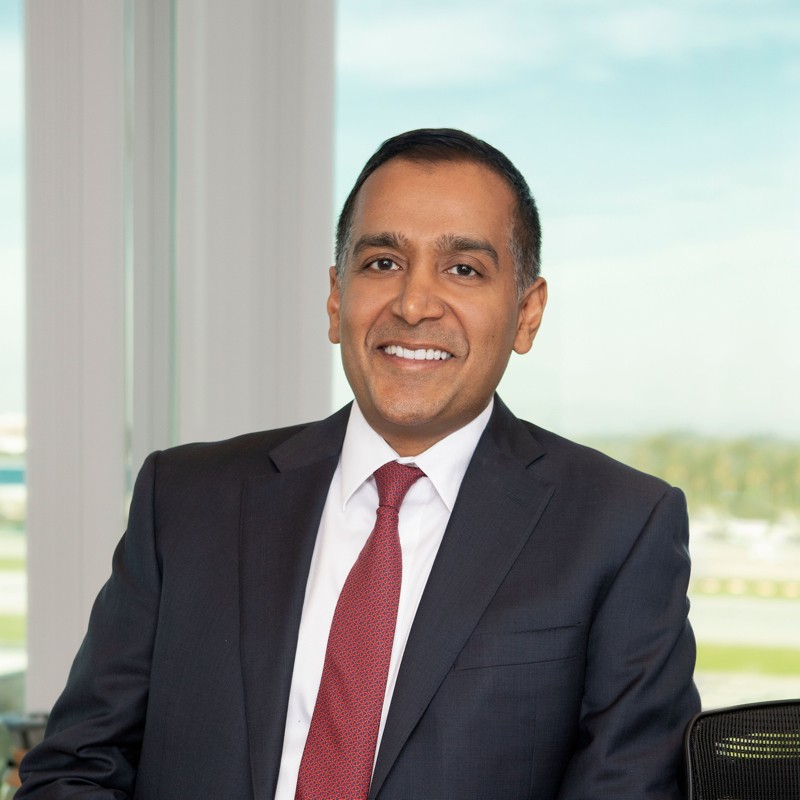
Sachin H. Jain, MD, MBA

Sachin H. Jain, MD, MBA

@sachinhjain1

President and CEO, SCAN Group & Health Plan

en25 postsLinkedIn

Posts

Sachin H. Jain, MD, MBA

Coaching & Leadership

2mo

Enjoyed a extraordinary recent dinner discussion with fellow Harvard Medical School Southern California alumni hosted by Bernard S. Chang and Paul O. Miller. Dr. Chang, the school’s Dean for Medical Education, outlined some of the current challenges and opportunities for the school at a time when society and technology are changing dramatically: 1) more rigorous, robust, and fair models of assessment of clinical skills and clinical reasoning 2) thoughtful integration of artificial intelligence into medical education 3) the enduring primacy of professionalism in a time when knowledge is increasingly commoditized 4) the need to maintain focus on medical education in a turbulent and changing macroenvironment. I came away impressed and inspired—and was also so happy to see fellow alumni—Bobak "Bobby" Azamian, MD, PhD, JiYeon K., Jorge Castellanos, Patricia Garcia, Alejandra Cassilas, Nader Nassif, and Wells Wulsin.
219

Sachin H. Jain, MD, MBA

Coaching & Leadership

2mo

When I was in college, I scored fine on my medical college admissions test, but not as well as I thought I thought I might. After a summer of studying, I was a bit crestfallen. And the idea of taking it again felt exhausting. I told someone a few years ahead of me in college (who had scored better on his MCAT) and he suggested I rethink my whole life: “Maybe medicine isn’t really for you.” This was an impressive, well-intentioned senior who seemed to have his act together and know what he was talking about. Maybe he was right. Maybe I didn’t belong. A few years later, I applied anyway—electing not to retake the test—and had several great opportunities. Turns out, my MCAT score was fine after all. And I’ve since enjoyed a career at the interaction of medicine, policy, and business. I sometimes think back to that inflection point and am reminded that advice is only as good as the people from whom you solicit it. So many of us—particularly early in our lives—get caught up in what other people think that we don’t even pause to consider the source. And very often the source has no idea what they are talking about! No matter how confidently they spew “wisdom.”
301

Sachin H. Jain, MD, MBA

Coaching & Leadership

4mo

I heard from an administrative colleague about a meeting that made his jaw drop. He was summoned to an “emergency summit” to discuss his health system’s decline in heart failure admissions. The cardiology department had been focused on reducing heart failure admissions and readmissions The focus of the “summit” would make anyone with a consicence blush: How do we increase our heart failure admissions? The most benign view is that the system wanted to get a larger share of a shrinking pie of admissions in the community. But the subtext of the meeting was unmistakeable: when patients win, hospitals lose. In many ways, outpatient management of heart failure was “too effective.” High margin heart failure admissions and ICU stays were shrinking in number. And, yet, rather than declaring victory and the stunning success of the cardiology team, the hospital was in a panic. Revenue was declining—and the hospital’s finances were suddenly in disarray. They needed more admissions—and fast. Said another way, they needed more sick people to need their services. Traditional administrators would say the dynamic is an outgrowth of our broken fee-for-service health systems. That incentives from value-based care do not make up for loss of volume. But there’s something more nefarious in this short vignette: it’s the unquestioned institutional focus on finance over health. “No margin, no mission,” some might glibly say. But has the mission been fundamentally corrupted? 
Is our mission: Keeping our beds full? Our margins high? Our doors open? 
Our teams employed at all costs? Or is our mission to promote the health and well-being of the community? We have clearly lost our way in important respects. For if it was the latter, the emergency heart failure admissions meeting would not be an institutional crisis, but a celebration. Celebration of community health. 
Celebration that patients were able to spend more time at home than in the hospital. Celebration that patients were healthier and so needed services less, not more. But, yet, health service organizations too often measure themselves by traditional business metrics: Volume. Revenue.
 Profit. Which of course are the wrong metrics for (mostly not-for-profit) health systems and hospitals who are chartered to serve the public good. It is the (hard) work of hospital administration to work proactively with payers to ensure that they are financially rewarded for doing the right thing. Not to blame the system and perverse incentives. I discuss this conundrum in my latest Forbes column.
314

Sachin H. Jain, MD, MBA

Coaching & Leadership

3mo

For too long, Medicare Advantage has treated brokers as transactional middlemen. That misses their real value. At SCAN, we’re launching a new model that reframes brokers as health navigators—trusted partners who help members actually access care, not just choose a plan. As recently covered by Fierce Healthcare, this program equips brokers to support things that truly move the needle: -Welcome calls that drive early engagement -Annual wellness visits -Preventive care like flu shots -Ongoing navigation of the healthcare system And importantly — compensation tied to real health actions, not just enrollment volume. This is what value-based thinking should look like. If Medicare Advantage is going to justify its role as a public-private partnership, it has to deliver: -Better experiences -Better outcomes -Not just better marketing Brokers already sit at the center of trust in many communities. The opportunity is to align that trust with health. This is one small but meaningful step toward an MA ecosystem focused less on transactions and more on impact.
160

Sachin H. Jain, MD, MBA

Coaching & Leadership

3mo

When Elevance Health announced yesterday that Pete Haytaian would be departing the company, I felt something simple and enduring: gratitude. Pete took a chance on me and I’ll never forget it. With encouragement from Leeba Lessin, he appointed me to lead CareMore Health during a period of growth and transformation — at a point when I was early in my career and far from a conventional choice. That decision altered my trajectory and changed my life. What distinguished Pete wasn’t just that he made the bet on me. It’s that he stood behind it. In high-stakes operating reviews, he would listen quietly, take meticulous notes, and then ask a handful of questions that went straight to the core of the issues. Questions that clarified strategy, strengthened decision-making, and elevated the conversation without diminishing anyone. Accountability without theatrics. Standards without ego. He just wanted to win. And he set an extraordinary example for an early-career executive. Through difficult personnel decisions and intense business pressure, he didn’t waver. He expected leaders to own their calls. He gave them air cover when it counted. And he made clear that integrity and performance travel together. Pete didn’t cultivate managers who managed up. He cultivated leaders who led. Many of us who had the privilege of working with him still carry his imprint. In how we prepare, how we decide, and how we show up when performance is on the line. I’m deeply grateful to have been a part of Pete’s “coaching tree” and for the confidence he placed in me and for the example he set. Wishing him the very best in what comes next.
559

Sachin H. Jain, MD, MBA

Coaching & Leadership

3mo

My cousin Tikam Jain recently documented the life of our grandfather, Dr. Sardarmal Duggar. Reading his account, I was struck by something humbling. Much of what we now call “modern” thinking about health and wellness was already understood, deeply and intuitively, by generations before us. My grandfather was a pioneer of naturopathy in Rajasthan, India. He was born in 1937 in Nagaur, into a Jain business family. But instead of continuing in the family trade, he chose a different path, one shaped as much by loss as by conviction. Tuberculosis took the lives of his father and two sisters. That experience set him on a search for a different understanding of health. He became focused not only on treatment, but on prevention, discipline, and living in harmony with nature. He trained under the renowned naturopath Venkatarav, an experience that cemented his commitment to this work. In 1957, he helped establish the Sarv Seva Trust, meaning “service to all,” to promote natural healing and a life of simplicity and discipline. He believed that food, yoga, movement, and daily habits were not adjuncts to health. They were health. Medicine could intervene when things went wrong. But his deeper question was simpler, and harder. What if we could prevent things from going wrong in the first place? Over time, word spread. Patients began traveling from across Rajasthan to see him, many after exhausting options in traditional medical settings. My grandfather passed away in 2000. But the ideas he lived by, and the ideas of his contemporaries, have not only endured, they have reemerged with new language and new urgency. Every generation likes to believe it is inventing something new. More often, we are rediscovering truths that were already lived, quietly and rigorously, and adapting them to the moment we find ourselves in. And if we are paying attention, we might realize that what feels like innovation or revolution is sometimes just remembrance.
223

Sachin H. Jain, MD, MBA

Coaching & Leadership

3mo

Today we bid farewell to Robbie Pottharst, CEO of SCAN’s myPlace Health. Robbie and I first met at CareMore Health (when we were both young men— thinner, with more hair, and less handsome:). Working together, I developed a deep respect for his intellect and industriousness and his passion for making healthcare better for people who most need it. Years later, when I joined SCAN, Robbie was one of my first phone calls. We were beginning to contemplate an entry into PACE and Robbie was exactly the person to do it. Through many challenges and obstacles, he passionately led MyPlace to where it is today: with two growing sites (in Compton and Downtown LA), hundreds of satisfied participants and, importantly, an enduring culture that is an extension of his personal values: a profound conviction around doing things the right way. As a testament to Robbie’s leadership, his team presented him with a plaque with pictures of our two buildings and a meaningful inscription: “A leader's legacy isn't measured in buildings, but in the lives they change within them.” Thanks Robbie for setting MyPlace on a great founding course. Wishing you only the best! Until our paths cross again, old friend.
507

Sachin H. Jain, MD, MBA

Coaching & Leadership

3mo

Healthcare leaders: We’ve been sugar-coating our way into dysfunction. We love mission statements. We love “purpose-driven culture.” But what if the reason healthcare hasn’t transformed isn’t lack of ideas…it’s lack of courage? In an interview with Marie DeFreitas of HealthLeaders, I unpack why too many leaders lean into “toxic positivity:” celebratory language that masks structural friction between what we say we care about and the reality patients actually experience. We deny claims. We make access harder. We reward spreadsheets while normalizing ethical erosion. That’s not leadership. That’s comfort masquerading as purpose. True leadership isn’t about saying the right thing perfectly. It’s about backing the right idea even when it’s inconvenient, uncertain, or unflattering. If we don’t confront what’s broken—honestly and operationally—we risk losing trust, not building it. And in healthcare, trust matters more than ever.
185

Sachin H. Jain, MD, MBA

Coaching & Leadership

3mo

One of the worst leadership mentalities I’ve seen in my career is what I call “split the baby” leadership. It’s what happens when leaders manage conflict through lazy compromise instead of principled decision-making. It sounds like: “You two aren’t getting along — you’re both at fault. Figure it out.” “You have different solutions? Let’s compromise.” That isn’t leadership. That’s avoidance. “Split the baby” thinking assumes every problem has a 50/50 answer. Most don’t. Some are 100/0. Others are 90/10. Many are 70/30. But 50/50 is usually the wrong call. Why do leaders do it? Because it feels fair. Because it avoids taking sides. Because it minimizes discomfort. But leadership isn’t about appearing neutral. It’s about: Taking a stand. Making hard calls. Being willing to disappoint someone. Standing for what’s right, not what’s evenly divided. Splitting the baby isn’t wisdom. It’s often cowardice dressed up as fairness. High-performing organizations don’t run on compromise. They run on clarity, conviction, and principled decisions.
330

Sachin H. Jain, MD, MBA

Coaching & Leadership

2mo

The Medicare Advantage program is changing. I am hosting a Health Affairs virtual event on April 20 with Grace Mackleby (née McCormack) and David J. Meyers, PhD to explore the evolution of Medicare Advantage and market implications. I’ll be sharing insights from SCAN and broader observations from the Medicare Advantage marketplace. I hope many of you will join us!
165

Sachin H. Jain, MD, MBA

Coaching & Leadership

2mo

Thrilled to share that SCAN was again named to the Fortune 100 Best Places to Work in the United States alongside many respected companies within and outside of healthcare. I’m the first to say that our culture isn’t perfect. We have work to do to continue to improve our employee experience; to make sure everyone feels like they have a competent manager who knows and cares for them; to continue to integrate technology thoughtfully to improve our work. But I think what’s sets SCAN apart—is that we always striving to get things right. Like our founders, the 12 Angry Seniors, we aren’t complacent. We aren’t resting on our laurels. We are willing to challenge our own (and healthcare’s) broken status quo. And it’s very gratifying that our 3000+ employees see that striving and recognized it in a national survey that includes thousands of other companies.
258

Sachin H. Jain, MD, MBA

Coaching & Leadership

2mo

Someone recently asked me why I often wear neck ties. Even though fewer and fewer people still wear ties—especially in California, where I now live. It got me thinking. It really comes back to my Mom and Dad. They enforced a perspective that how you dress demonstrates your respect for the moment. And so more often than not, when others were wearing polos and khakis, my parents, new to this country, were dressed up—not down. My Dad’s typical outfit was a suit. My Mom’s an elaborate saree. They didn’t try to fit in. Rather, they tried to set a tone. So picking up on their example, even though norms have changed, I’m still often a necktie guy. And putting one on, I’m often reminded of them both.
577

Sachin H. Jain, MD, MBA

Coaching & Leadership

2mo

Excited to share that Aman Bhandari has joined SCAN as our inaugural Chief AI Officer. Aman and I go back many years—to our time working together at Centers for Medicare & Medicaid Services and subsequently building digital health and data teams at Merck. Even then, what stood out about Aman was his rare ability to cut through noise and navigate change at the intersection of policy, technology, and real-world execution. Since then, he’s gone on to build and lead world-class AI capabilities across industry (most recently at Vertex Pharmaceuticals) and government, including serving as a key leader in the The White House, where he helped shape the national conversation on health technology and data. That combination of technical depth, policy fluency, and enterprise leadership is incredibly rare—and exactly what this moment in healthcare demands. At SCAN, we’ve been clear-eyed about AI: this isn’t about hype. It’s about impact. It’s about helping our teams do their jobs better. It’s about simplifying complexity in care delivery. It’s about building tools that actually improve the lives of the people we serve. Aman will lead our enterprise AI and analytics strategy as we scale this work across the organization. Embedding AI not just in technology, but in how we operate, make decisions, and deliver care. Importantly, this role sits within our People and Transformation organization reporting to Lindsay Crawley-Herbert. Because if there’s one thing we believe, it’s this: AI transformation is fundamentally about people. Aman brings the kind of leadership that doesn’t just build systems. It builds capability. I can’t wait to see him partner with our incumbent IT, AI, and data leaders, Vinay K., Praveenkumar Devarajan, Dave Wollenberg, Corinne Stroum, and many others. Welcome to SCAN, Aman. More in Paige Minemyer’s Fierce Healthcare story: https://lnkd.in/gphgJJcH
413

Sachin H. Jain, MD, MBA

Coaching & Leadership

2mo

Every year at “Happy Doctors’ Day” l find myself feeling a bit like the Grinch. Because while the sentiment is appreciated, it also raises a harder question: What does it actually mean to value doctors? For too long, we’ve answered that question with gestures. Cards. Cookies. Emails. Maybe a social media post. But the reality is that many physicians don’t feel valued in the places that matter most. They feel it when: Their time is consumed by documentation instead of patients. Their clinical judgment is second-guessed by algorithms and prior auths and thoughtless administrative directives. Their schedules are overbooked and understaffed. Their work is measured in RVUs instead of human impact. You can’t paper over that with pro forma annual appreciation days. If we’re serious about valuing doctors, it requires something harder and more honest: Reducing administrative burden. Restoring professional autonomy. Designing systems that reward care, not clicks. Investing in the environments where medicine is actually practiced. In other words, valuing doctors isn’t about what we say one day a year. It’s about how we design the system they work in every day. So, by all means, thank a doctor. But let’s do the work of building a system that actually deserves them.
130

Sachin H. Jain, MD, MBA

Coaching & Leadership

3mo

When I was 13, my friends and I took a very ambitious trip to the Paramus Park Mall on a random day off from school. We had no money. We had no plan. We had absolutely no intention of buying anything. (Techincally I did end up spending $3 on a Bryan Adams CD single of “Everything I do” that I proceeded to leave behind for some other pre-teen in the food court, but I digress) We were there to do the most sacred ritual of suburban adolescence: “hang out.” When I got home, my parents and my aunt were sitting there with concerned look—like I had just returned from a diplomatic incident. My dad leaned forward. “What did you do all day… at the mall?” Me (confidently, at first): “Hung out?” “And what did you learn… hanging out?” This felt like a trick question. I needed to answer it carefully. I scanned my brain for something educational. “Uhm… nothing?” That was the wrong answer. “These are precious years,” he said. “You should be learning. Being productive. It’s very easy to waste time. Don’t waste time.” I remember thinking: It was a very long day. It genuinely did feel like we bent time just leaning against a railing near Sears. Then came the closer: “Be careful. You can waste your whole life hanging out.” Fast forward a few years. I’m in high school. Over-scheduled. Hyper-focused. Grinding. Mildly allergic to leisure. Now my parents are concerned again. “Why don’t you spend more time with friends?” Ah. So apparently the correct amount of hanging out for my Indian immigrant parents was somewhere between “none” and “too much” and I have yet to find the precise dosage. Sometimes you just can’t win.
384

Sachin H. Jain, MD, MBA

Coaching & Leadership

3mo

Change takes time. But at what point do the insurgents transform into the usual suspects? At what point do we become more focused on holding on to what we have than building what we must? At what point do we become part of the problem rather than the solution? What is the exact moment? And how do we delay its near inevitable arrival? The uncomfortable reality is that there was never any such moment. There was no single decision. No single compromise. No single day when the insurgents quietly became the establishment. More often, our resolve was never quite as strong as we imagined. We get distracted by practical considerations. We begin to rationalize the status quo. And if we’re being honest, the status quo often works reasonably well—for us. Even if there are countless others for whom it doesn’t work at all. Which is why the real work—the real mandate—is something simpler and harder: To look ourselves in the mirror and see ourselves clearly. Without veneers. Without reality-distorting lenses. Just realism. And humility. Because people rarely lose their way overnight. They drift. And the most dangerous drift of all is the one we cannot see in ourselves.
87

Sachin H. Jain, MD, MBA

Coaching & Leadership

3mo

With the release of new Medicare enrollment data, we are thrilled to announce 3 major SCAN milestones: With 440,000+ members, we are now: -A Top 10 Medicare Advantage plan in the country -The #1 Non-Kaiser Medicare Advantage plan in California And -SCAN Embrace is the #1 ISNP in California and Arizona by membership. Major milestones like these aren’t achieved in a year or even a few years. I want to especially express my gratitude to SCAN employees and board directors past and present; Our provider partners; Our broker partners; Our vendor partners; And everyone who contributed to SCAN achieving this momentous growth while delivering 4+ Star quality for 100% of our rated membership. We did this together! And we are just getting started. https://lnkd.in/gu6yijtB
554

Sachin H. Jain, MD, MBA

Coaching & Leadership

3mo

Twenty-five years ago, Congress launched what would become Medicare Advantage originally called Medicare+Choice. Today, more than half of all Medicare beneficiaries receive their coverage through it. Few health policy experiments have reshaped American healthcare this profoundly or this quickly. I just published a new piece in Health Affairs Forefront reflecting on what Medicare Advantage was designed to fix, what it has achieved, and where its incentives have quietly drifted. Having led Medicare Advantage organizations for the past decade at CareMore Health and now SCAN, I’ve seen both sides: -Coordinated care -Predictable costs -Benefits aligned with how people actually age …and also: -Risk adjustment becoming a revenue strategy -Star Ratings volatility divorced from lived patient experience -Growing complexity that benefits administrators more than beneficiaries My core argument is simple: Medicare Advantage doesn’t need to be dismantled. It needs to be realigned with its original purpose: delivering high-quality, coordinated care efficiently and equitably while stewarding public dollars responsibly. At 25 years in, we’re at an inflection point. Will Medicare Advantage mature into a durable pillar of American social insurance or drift further from the mission that made it successful?
158

Sachin H. Jain, MD, MBA

Coaching & Leadership

3mo

Meet Robert, a veteran of the US Armed Forces. I challenge you to watch this video and not get emotional.
137

Sachin H. Jain, MD, MBA

Coaching & Leadership

3mo

Every once in a while, you get the chance to pause and reflect out loud on the work you’re doing and why it matters. I recently sat down for a conversation with Padmaja Patel, MD, FACP, FACLM, DipABLM, CPE for the about healthcare, leadership, and the strange reality of trying to improve a system that is simultaneously full of extraordinary people and deeply frustrating outcomes. If you’ve spent any time in healthcare, you know the feeling: We have world-class clinicians, incredible science, and breathtaking innovation—and yet the experience for patients can still be confusing, impersonal, and expensive. That gap is what motivates me. In this conversation, I talk about a few things that have shaped my own journey: • Why I believe healthcare has an authenticity problem—too much “everything is fine” when it isn’t. • Why radical common sense is still the most underrated management principle in healthcare. • And why organizations that serve vulnerable people—especially seniors—have a special obligation to be impatient with mediocrity. Leading SCAN Group has only reinforced my belief that meaningful change in healthcare rarely comes from grand theories. It comes from people who are willing to look at problems clearly and keep pushing, even when the system pushes back. Healthcare doesn’t need more slogans. It needs more people willing to tell the truth about what isn’t working—and then do something about it. https://lnkd.in/gagQjZqB
89

Sachin H. Jain, MD, MBA

Coaching & Leadership

2mo

I recently joined Amar Rewari, MD, MBA, FASTRO and Anthony Paravati, MD, MBA for a wide-ranging and candid conversation on two issues that don’t get discussed honestly enough in health care: First, why health systems remain deeply ambivalent about Medicare Advantage (and what they can do about it). Second, the industry’s growing leadership crisis: what’s driving it, and why it matters more than most people realize. Both topics get talked about in fragments. Rarely do we connect the dots. We tried to do that here. Take a watch—and would welcome your reactions, especially where you disagree. https://lnkd.in/gC7kZmJ2
73

Sachin H. Jain, MD, MBA

Coaching & Leadership

3mo

I first met Ari Simon when we were in college. Even then, Ari had a way of asking questions that most people weren’t asking yet. About impact, responsibility, and what it really means to give back. While many of us were still trying to figure out our own paths, Ari was already thinking deeply about how institutions and individuals could use their resources to make a difference. Over the years, life took us in different directions, as it often does. But recently we reconnected, and it’s been a joy to see how those early instincts have evolved into serious thinking about philanthropy and social impact. His new article in the Stanford Social Innovation Review is a great example of that. One of the things I’ve been reflecting on in my own career (particularly working in healthcare) is how often philanthropy gets misunderstood. Too often we treat it as something adjacent to the real work of institutions, when in fact it can be catalytic. Some of the most important advances in medicine, public health, and social progress have been fueled by people willing to take risks with philanthropic capital in ways that traditional funding structures simply can’t. But philanthropy at its best is not just about writing checks. It’s about conviction. It’s about imagination. And it’s about being willing to invest in people and ideas before the rest of the world fully sees their potential. That’s why Ari’s perspective resonated with me. At its core, philanthropy is really about the same question many of us grapple with in leadership: What are we doing with the privilege and opportunity we’ve been given? In healthcare, I see this every day. Philanthropy can accelerate innovation, expand access, and create entirely new models of care. But it can also challenge institutions—including the ones I lead—to think bigger about the impact we’re trying to have. Ari’s piece is a thoughtful contribution to that conversation. And it also reminded me of something I’ve come to believe more strongly over time: the most powerful philanthropy doesn’t just support institutions. It empowers people. Worth a read.
45

Sachin H. Jain, MD, MBA

Coaching & Leadership

3mo

Last week, I joined Rachel M. Werner and Cheryl Damberg in a Leonard Davis Institute of Health Economics (Penn LDI) seminar on the topic “Is Medicare Advantage Working?” It was a robust and honest wide-ranging discussion and I’m posting here for those who are interested in this subject and weren’t able to make the live discussion. https://lnkd.in/gjH5Yrex
73

Sachin H. Jain, MD, MBA

Coaching & Leadership

2mo

I’ve frequently joked that Medicare Advantage is a promiscuous industry. Providers are partnered with multiple health plans. Many brokers sell all plans (even poorly performing, low star-rated plans). Plans are partnered with multiple providers. Everyone works with everyone. And if everyone works with everyone, is any individual partnership or relationship particularly valuable? My perspective is that the future of our industry is less promiscuity. Deeper, long-term partnerships with a narrower set of actors will win the day. I shared my perspective with Ben Alsdurf of Luminary Labs for this annual “Game Changers” feature for MM+M - Medical Marketing and Media. Take a read and let me know what you think.
73

Sachin H. Jain, MD, MBA

Coaching & Leadership

2mo

Medicare Advantage is a program that is full of paradoxes. One question worth considering: Who benefits the most? The government? Plans? The delivery system? Beneficiaries? This Becker's Healthcare article summarizes the major observations Cheryl Damberg and I made in a discussion hosted by Rachel M. Werner and the Leonard Davis Institute of Health Economics (Penn LDI) and also features a link to the whole discussion.
51