Is It Normal Not to List Your Company Name on LinkedIn, or Is It a Red Flag?
It can be normal: privacy, company policy, quiet job searching or stealth startups. It can also be a red flag. See how to judge the whole profile.
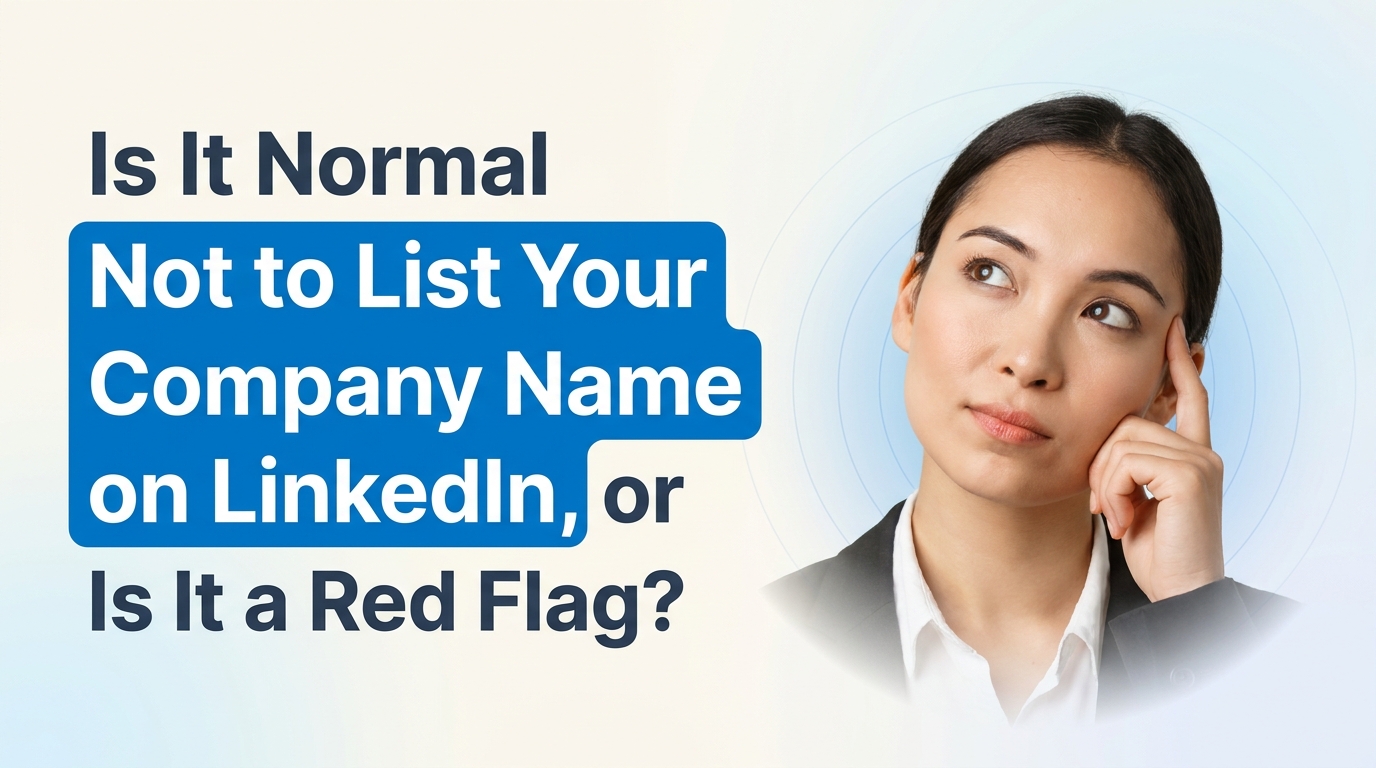
If you come across a LinkedIn profile where someone lists their current employer as something vague like “Product Based Org” instead of naming the actual company, it’s fair to pause and wonder what’s going on. Is that normal? Is it just a privacy choice? Or could it be a warning sign?
The short answer is: yes, it can be normal — but it can also be a red flag depending on the context.
Like a lot of things on LinkedIn, the answer usually sits somewhere in the middle. One profile detail alone does not prove someone is fraudulent. But if you’re evaluating whether a person is credible, trustworthy, or worth engaging with, it helps to look at the full picture instead of one line in their experience section.
Why would someone hide or avoid naming their company on LinkedIn?
There are actually several legitimate reasons someone might choose not to mention their employer by name.
- Privacy concerns: Some people do not want recruiters, competitors, or strangers to easily track their workplace.
- Company policy: Certain employers discourage public posting of specific roles or company affiliations, especially in sensitive industries like cybersecurity, defense, finance, or stealth startups.
- Job searching quietly: A person may be open to new roles and may not want their employer to notice activity around their profile.
- Freelance or contract ambiguity: Some professionals work through agencies, vendors, or confidential contracts and simplify the employer name to a broad label.
- Early-stage startups: If a business is very new, operating in stealth mode, or not public yet, an employee might intentionally keep things broad.
- Poor profile optimization: Some people just do not take LinkedIn seriously and write vague things without thinking about how it looks.
So yes, there are normal explanations. Not every vague employer field means something suspicious is happening.
How strong is your LinkedIn profile?
Paste your profile link and see your score right away, with clear fixes for your headline, About section and experience. No account needed.
Or open the LinkedIn profile evaluator
When should it feel a little suspicious?
This is where context matters. If the missing company name appears alongside other unusual profile signals, then your concern becomes more reasonable.
Ask yourself:
- Does the profile have very little work history or a confusing timeline?
- Is the person’s headline overly generic or stuffed with buzzwords?
- Do they have few real connections or almost no engagement?
- Is the profile photo obviously fake, stock-like, or inconsistent?
- Are there no recommendations, endorsements, or shared connections?
- Have they reached out with a suspicious pitch, job offer, investment message, or urgent request?
- Do they claim a senior title but provide no evidence of actual experience?
If the answer to several of those is yes, then the issue may not be the hidden company name by itself. It may be that the profile as a whole does not feel credible.
What does LinkedIn itself suggest about profile authenticity?
LinkedIn encourages members to present real identities and accurate professional information. That does not mean everyone has to fill out every field in full detail, but it does mean authenticity matters.
If you want to better understand profile best practices, LinkedIn’s own help resources are useful starting points. For example, their guidance around profile completeness and trust can help you compare what you’re seeing against what a normal professional profile usually looks like.
You can also explore wider discussions about spotting fake profiles online. Articles from cybersecurity and digital trust sources often explain how scammers build credibility through incomplete but polished-looking social profiles.
How can you tell the difference between privacy and fraud?
A good way to think about this is: privacy hides one detail; fraud usually creates a pattern.
Someone protecting their privacy might leave out the employer name, but they will often still have:
- A consistent career timeline
- A realistic summary of what they do
- Relevant skills and endorsements
- Mutual connections
- Thoughtful activity or comments
- A believable network in their industry
Someone using a fake or misleading profile often has more gaps. Their information may feel too vague, too polished, or oddly disconnected from how real professionals present themselves.
For example, “Product Based Org” is not a standard employer name. On its own, that could simply be lazy profile writing. But if that same person also claims to be a hiring manager, asks people to move conversations off LinkedIn quickly, or sends strange offers, then caution makes sense.
What should you do if you’re unsure?
If you’re trying to decide whether to trust or engage with this person, here’s a simple breakdown.
- Check their activity: Do they post, comment, or interact like a real person in their industry?
- Review mutual connections: Are they connected to real professionals you recognize?
- Look for consistency: Does their experience match their headline, skills, and education?
- Search outside LinkedIn: Sometimes a quick Google search, company website search, or portfolio check tells you a lot.
- Be cautious with direct messages: Especially if they ask for personal information, money, resumes, or off-platform contact right away.
- Trust your instincts: If the profile feels off, you do not owe anyone blind trust.
And honestly, that’s a pretty healthy way to use LinkedIn in general. Professional networking works best when you’re open, but also aware.
Could there be cultural or industry differences?
Yes, definitely. In some industries and regions, people are less formal or less detailed with LinkedIn profile setup. In tech especially, you’ll sometimes see profiles that focus more on role type than company identity. People might write things like “MNC,” “Stealth Startup,” “Fintech Firm,” or “Product Company” instead of a company name.
That does not always look polished, but it is not unheard of.
Still, if someone is using LinkedIn for business development, recruiting, thought leadership, or client trust, vague company naming can hurt credibility. People naturally want to know where someone works if they are making professional claims.
Why clear LinkedIn profiles matter so much
LinkedIn is not just a social platform. It is a trust platform. People use it to decide whether to respond to a message, accept a connection request, book a call, or consider a partnership.
That means small profile choices can have a big effect. A missing company name may not seem like a major issue to the profile owner, but to viewers, it can create friction. It raises questions like:
- Why are they hiding this?
- Are they actually employed there?
- Are they trying to look bigger than they are?
- Should I trust their outreach?
That’s why complete, accurate, and human-looking LinkedIn profiles tend to perform better. They reduce doubt. They make networking easier. They help real professionals avoid looking suspicious by accident.
So, is it legitimate or a sign of fraud?
The most balanced answer is this: it can be legitimate, but it should not be ignored.
If the only unusual thing is that the company name is hidden or replaced with a broad label like “Product Based Org,” then that alone is not enough to call it fraud.
But if that vague employer detail appears together with several other trust issues, then it is reasonable to be cautious.
In other words, do not judge the profile by one field alone. Judge it by the pattern.
Final thought
If you’re seeing more profiles like this, you’re not overthinking it by asking questions. LinkedIn works best when profiles are transparent enough to build trust. Vague company naming is sometimes harmless, but it can absolutely make a person look less credible.
If you’re a professional or brand trying to avoid this kind of confusion on your own profile, it helps to be intentional about how your LinkedIn presence is built. That includes your headline, experience section, employer naming, messaging tone, and overall trust signals.
At EXEED Digitals, we’ve seen how small LinkedIn profile details can affect brand perception, lead quality, and response rates. If your team wants support creating a clearer, more credible LinkedIn presence, you can explore their services here: EXEED Digitals Services. We usually help with these exact kinds of concerns, and our LinkedIn agency services have supported 100s of brands in building stronger trust and better performance on LinkedIn.
en