Should You Add Your Shopify Store Ownership to LinkedIn?
Discover why adding your Shopify store experience to LinkedIn can enhance your profile. Boost your career today with valuable insights!
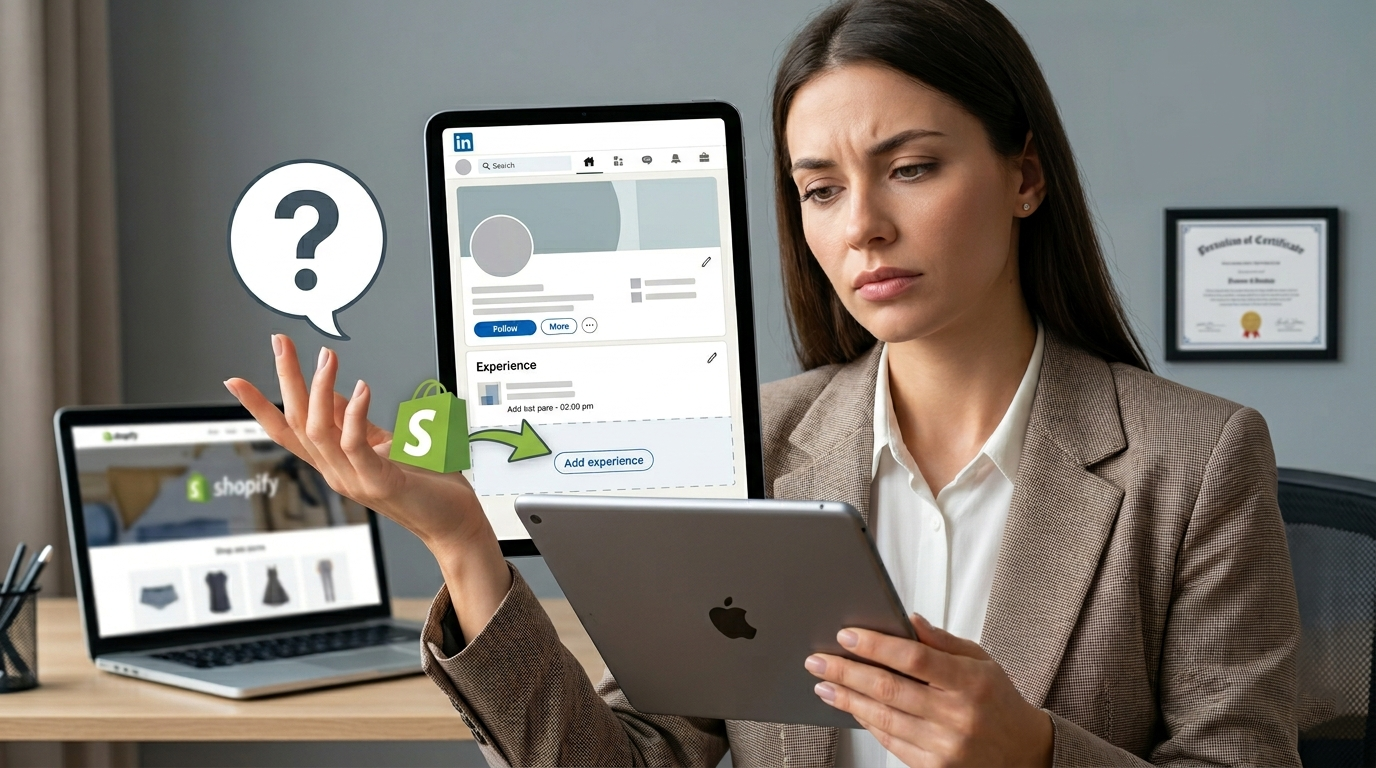
Yes, in most cases you probably should.
If you ran a Shopify store, handled your own marketing, made sales, stayed profitable, and learned how to attract customers, that is real experience. It does not become irrelevant just because you did not build a massive brand or become a millionaire. A lot of people on LinkedIn quietly leave out small business or self-employed experience because they think it will look unimpressive. Usually, the opposite is true.
What matters most is how you frame it. If you present it clearly, honestly, and with a focus on skills and outcomes, it can actually make your profile stronger.
Why This Experience Counts?
Running even a small Shopify store means you were not just “trying something online.” You were likely doing several jobs at once:
Product research
Store setup and optimization
Marketing campaigns
Paid ads or organic promotion
Customer communication
Analytics tracking
Basic sales strategy
Profitability management
That is hands-on business experience. Plenty of employers, recruiters, and clients respect that because it shows initiative and practical decision-making.
Think about it this way: if someone worked at a startup and had to wear multiple hats, people would usually see that as valuable. Running your own store is very similar.
A Better Question To Ask Is This: What Do You Want LinkedIn To Say About You?
Before adding anything, it helps to ask a few simple questions:
Are you trying to get a job in marketing, e-commerce, sales, or growth?
Do you want to show entrepreneurial experience?
Are you trying to build credibility around digital skills?
Do you want to attract freelance work or consulting opportunities?
If the answer to any of those is yes, your Shopify and marketing experience likely belongs on your profile.
LinkedIn is not just a resume site anymore. It is a professional identity platform. People use it to show what they have built, tested, learned, and improved. That includes independent projects and self-employment.
Will It Look Stupid If The Numbers Were Small?
Honestly, not if you write it well.
What usually makes experience look weak is not the size of the business. It is vague wording, inflated claims, or unclear results. Saying something like “CEO of global e-commerce empire” when it was a small store will raise eyebrows. But saying you launched and managed a profitable Shopify store is completely reasonable.
You do not need huge numbers to make the experience worthwhile. Profitability matters. Learning matters. Execution matters.
A few hundred dollars in profit may sound small when compared with viral success stories online, but in reality, many people never get to profitability at all. Being profitable shows you understood enough to make the model work, even on a smaller scale.
How To Add It To LinkedIn Without Overselling It?
The safest and strongest approach is to be specific.
You could list the role under your Experience section as something like:
Shopify Store Owner
E-commerce Store Owner
Founder, Shopify E-commerce Store
Self-Employed | E-commerce and Digital Marketing
Then in the description, focus on responsibilities and skills instead of hype.
For example:
Built and managed a Shopify e-commerce store from setup to launch
Created and tested product pages, pricing strategies, and store messaging
Ran digital marketing efforts across social media and/or paid channels
Monitored performance metrics including traffic, conversion rate, and profitability
Maintained profitable operations and gained hands-on experience in e-commerce growth
If you have stronger specifics, use them. For example:
Launched and operated a niche Shopify store, achieving consistent profitability
Managed end-to-end marketing, including content creation, ad testing, and customer retention efforts
Improved store performance through product positioning, landing page updates, and conversion-focused copy
That sounds professional because it is professional.
What If You Also Did Marketing for Other Projects?
Then definitely include that too, especially if you are trying to move into marketing roles.
Marketing is one of those areas where practical experience matters a lot. If you have actually run campaigns, tested creatives, written copy, worked on branding, or analyzed performance data, that is valuable whether you did it for your own project or someone else’s.
You can include that experience either:
As part of the Shopify role, if it was tied directly to your store
As a separate freelance or self-employed marketing role, if it was broader
The goal is to make your profile easy to understand. If someone lands on your page, they should quickly be able to tell what you did and what skills you built.
What Recruiters and Hiring Managers Often Want To See?
Most recruiters are not expecting everyone to have a perfect corporate background. Many actually like seeing independent work because it can signal:
Resourcefulness
Ownership
Problem-solving
Adaptability
Commercial awareness
According to LinkedIn’s own guidance on profile strength and showcasing experience, being clear about responsibilities and achievements matters more than sounding flashy. You can also look at LinkedIn’s profile tips here: LinkedIn Help.
If you want to understand how e-commerce roles are commonly described, Shopify also has useful resources on what goes into running an online business: Shopify Blog.
A Simple Breakdown: When You Should Add It?
You should probably add your Shopify and marketing experience if:
You actively ran the store yourself
You made real decisions around products, pricing, ads, or content
You generated sales or reached profitability
You learned transferable skills you want to be known for
You want to work in business, marketing, sales, branding, or e-commerce
You might leave it off or keep it shorter if:
It was extremely brief and you barely touched it
You do not want your profile associated with entrepreneurship
It distracts from a more relevant career direction
Even then, you could still mention it in your About section or Featured section instead of making it a major experience entry.
How To Avoid Making It Look Awkward?
Here are a few practical tips:
Be honest: do not exaggerate revenue, scale, or impact
Use clear language: avoid buzzwords that do not say much
Focus on outcomes: profitability, testing, growth, or lessons learned
Show the skills: marketing, copywriting, analytics, CRO, customer research
Keep it relevant: tailor the description to the work you want next
That last point matters a lot. If you want a marketing role, emphasize campaign work, audience targeting, content, and results. If you want e-commerce work, talk more about store operations, product pages, conversion strategy, and retention.
Example LinkedIn Entry You Could Use
Here is a clean, realistic example:
Shopify Store Owner | Self-Employed
[Dates]
Built and managed a Shopify store, overseeing product selection, store setup, and day-to-day operations
Handled digital marketing initiatives including content, promotional strategy, and customer acquisition efforts
Tested pricing, product positioning, and on-site messaging to improve conversions
Tracked store performance and maintained profitability while developing hands-on experience in e-commerce and marketing
This works because it is credible, readable, and skills-based.
One More Thing: Confidence Matters
A lot of people downplay self-directed experience because they compare themselves to extreme success stories online. That usually is not helpful. Professional value is not only about scale. It is also about evidence that you can build, test, learn, and execute.
If you created something, marketed it, sold it, and made it profitable, that is not embarrassing. That is experience.
If you want to improve how that experience shows up on LinkedIn, it can help to study strong profile examples, watch profile optimization breakdowns on YouTube, or review guidance from career experts.
You may also find career advice from Harvard Business Review useful when thinking about how to present unconventional experience: Harvard Business Review.
Final Thoughts
So, should you add your experience as a Shopify store owner and in marketing?
Yes, if it reflects real work you did and skills you want people to see.
You do not need to be a millionaire for the experience to be legitimate. You just need to present it honestly and in a way that highlights what you actually learned and accomplished. LinkedIn profiles are stronger when they tell a clear story, and your Shopify experience can absolutely be part of that story.
Read more on our blog and follow us on LinkedIn:
Evaluate your LinkedIn profile with exeedin
exeedin scores your LinkedIn profile and shows you exactly what to improve to stand out. Get your free profile evaluation in minutes. Evaluate my profile.