Why Do Scam Accounts on LinkedIn Pretend to Be Friendly Professionals?
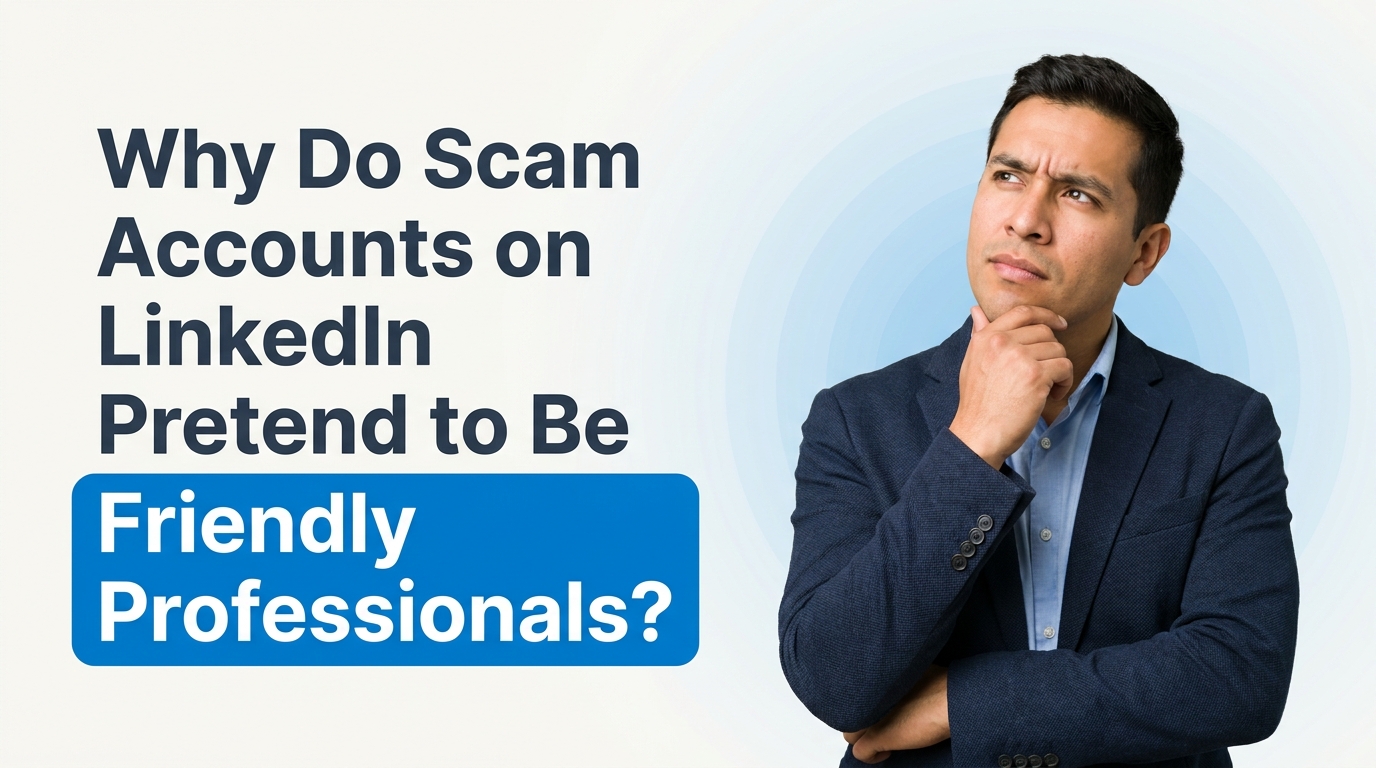
If you have been getting LinkedIn connection requests from profiles that seem polished, attractive, and oddly eager to move the conversation to WhatsApp, you are not imagining things. This is a very common pattern, and yes, it is usually a scam or the beginning of one.
A lot of people run into this and ask the same thing: What exactly are these accounts trying to do? The short answer is that they are usually trying to build trust quickly, move you off LinkedIn, and then guide you into some kind of fraud, manipulation, or data collection scheme.
It is frustrating because it changes how you use the platform. Instead of simply accepting relevant connections, you start second-guessing every profile. That gets tiring fast, especially when LinkedIn is supposed to be a professional networking space.
So what is the story behind these connection requests?
In many cases, these accounts follow a familiar script:
Step 1: Send a connection request with a decent-looking profile photo and a believable job title.
Step 2: Start a light, casual conversation that feels a little too personal for LinkedIn.
Step 3: Ask about your weekend, your hobbies, or whether you are married.
Step 4: Suggest moving the chat to WhatsApp, Telegram, or another private messaging app.
Step 5: Once you are off-platform, the real goal starts to show up.
That goal can be different depending on the scammer. Sometimes they want money. Sometimes they want personal information. Sometimes they want to pitch a fake investment opportunity. And sometimes they are setting up a longer confidence scam, often called a romance scam or a pig butchering scam.
These scams are designed to feel natural. That is why the opening messages are often harmless and conversational. The person may seem friendly, patient, and interested in your life. That is not accidental. It is part of the setup.
What are they usually trying to do?
Here are the most common goals behind these fake LinkedIn accounts:
1. Move you off LinkedIn where there is less oversight
LinkedIn has reporting tools, moderation systems, and scam detection. WhatsApp and similar platforms feel more private and immediate, which makes it easier for scammers to keep the conversation going without interruption.
2. Build emotional trust
Some scammers are not in a rush. They are willing to spend days or weeks chatting. Why? Because a person who trusts them is more likely to share personal details, click a link, or believe an investment story.
3. Push fake investments or crypto schemes
One very common path is friendly conversation that slowly turns into money talk. They may say they have a side business, a family member with investment expertise, or a successful crypto strategy. If that sounds random, it is. But it works on enough people that scammers keep doing it.
4. Gather personal or professional information
Even if they do not ask for money right away, they may be collecting useful details about your job, company, habits, email, phone number, and social profiles. That information can be used later for phishing, impersonation, or social engineering.
5. Lead into blackmail or account compromise
In more aggressive cases, scammers try to get compromising content, login details, or access to your phone number and messaging accounts. That can turn into blackmail, impersonation, or identity abuse.
Why do these profiles often follow the same pattern?
You mentioned a very specific type of profile, and that matters. Scam networks often reuse formulas that have already worked. They test profile photos, industries, messaging styles, and demographics to see what gets the best response rate.
That means the same themes show up again and again:
Attractive headshots
International-sounding backgrounds
Jobs that are hard to verify quickly
Friendly but slightly generic messages
Fast attempts to move off-platform
It is important to say this clearly: the problem is not a person’s gender or ethnicity. The issue is the behavior pattern. Real professionals of every background use LinkedIn normally every day. The red flags are things like vague profiles, rushed intimacy, and pressure to continue the chat somewhere else.
How can you tell if a LinkedIn account is fake?
You do not need to investigate every profile like a detective, but a quick check can save you a lot of hassle. Ask yourself:
Does the profile have very few connections for someone in a senior role?
Is the work history vague, overly polished, or inconsistent?
Does the profile photo look unusually styled or stock-like?
Are there almost no posts, comments, endorsements, or mutual connections?
Did the message turn personal too quickly?
Are they trying to get your phone number right away?
Do they avoid talking about actual work or industry topics?
If you answer yes to several of these, be cautious. One sign alone does not prove anything, but a cluster of them usually tells the story.
What should you do when this happens?
Here is the simple, low-stress approach:
Do not move the conversation to WhatsApp or Telegram. If someone has a real business reason to speak with you, LinkedIn messages or company email should be fine at first.
Do not share your number, personal email, or private details. Not early on, and not just because they seem nice.
Check the profile before replying. Thirty seconds is often enough.
Report suspicious accounts to LinkedIn. This helps the platform remove bad actors faster.
Block when needed. You do not owe anyone continued access to you.
Trust the weird feeling. If the interaction feels off, it probably is.
If you already shared your phone number, do not panic. Just stop engaging, block the person, and watch for suspicious messages or phishing attempts. If you clicked anything or sent sensitive information, update passwords and enable two-factor authentication on your important accounts.
Why this feels so annoying now
Honestly, the most frustrating part is that scam behavior creates hesitation around normal networking. You should not have to question every connection request from a stranger. But because LinkedIn has become more valuable for recruiting, sales, personal branding, and business development, scammers now treat it like any other platform with a large user base.
That is why it helps to have a personal filter rather than a personal bias. In other words, do not assume a profile is fake because of how the person looks. Instead, look for behavior: poor profile depth, forced friendliness, random personal questions, and a quick jump to WhatsApp.
A good rule of thumb for staying safe
If you want one practical rule, use this:
If a new LinkedIn connection seems more interested in personal access than professional context, slow everything down.
You can ask a simple question like:
What made you want to connect?
What project or industry topic are you working on?
Can you send details by company email?
Scammers usually do poorly when the conversation stays professional and specific.
Helpful resources if you want to learn more
If you want to read more about online scam patterns, social engineering, and professional platform safety, these are worth a look:
Final thoughts
So, what are these LinkedIn scam accounts trying to do? Usually some mix of trust-building, information gathering, off-platform manipulation, and eventually financial fraud. The flirty or overly friendly tone is often just the bait. The request to move to WhatsApp is usually the real tell.
If this keeps happening to you, you are not being paranoid. It is a known pattern, and a lot of professionals are dealing with the same thing. The best response is calm, simple, and consistent: verify profiles, keep things on-platform, avoid sharing personal contact details too quickly, and report suspicious behavior.
Write better LinkedIn content with EXEED AI
EXEED AI is an AI tool that helps you ideate, draft, and schedule content for your LinkedIn. Turn raw ideas into polished posts and stay consistent without the guesswork. Try EXEED AI.