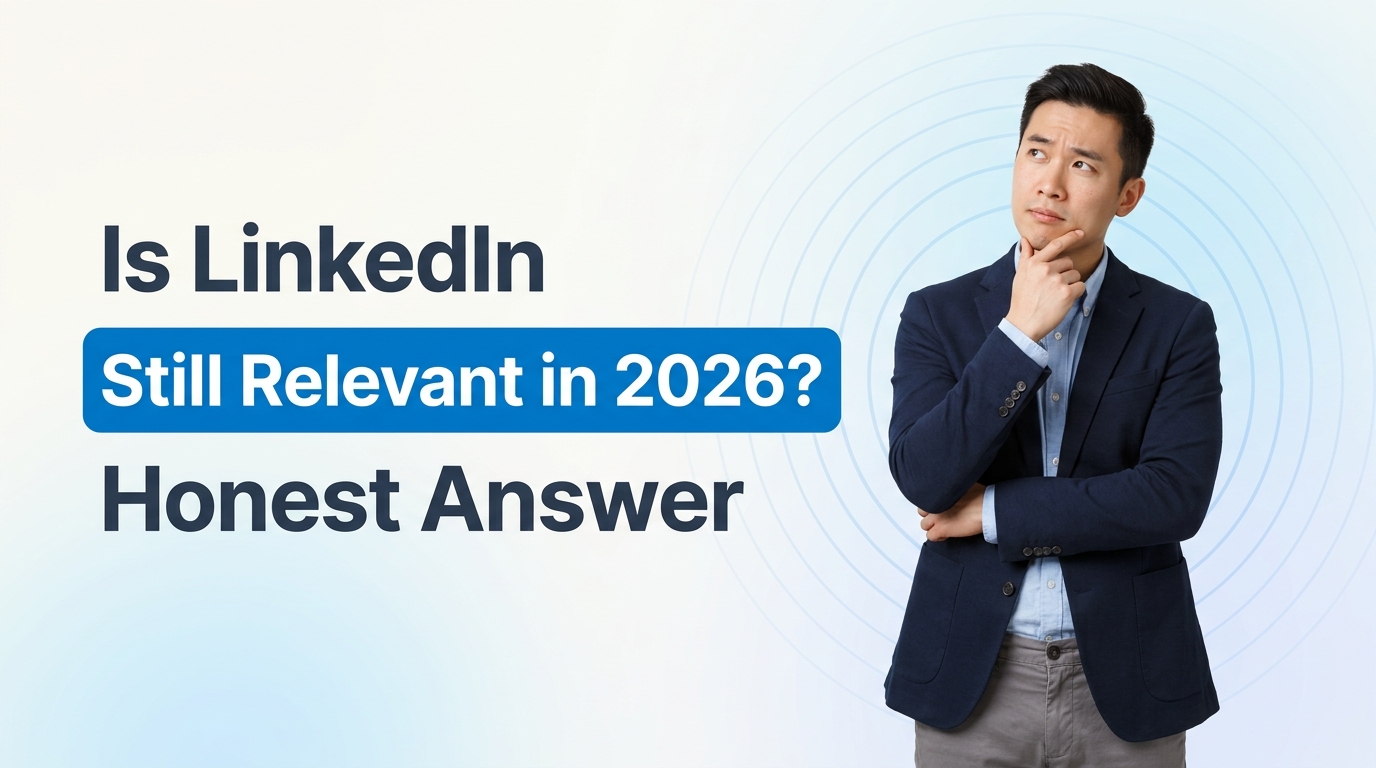
Is LinkedIn Still Relevant in 2026? Honest Answer
Yes, but it now works as a content platform with over a billion members, so personal posts get more reach. See how the shift works and how to get results.
If you have scrolled through LinkedIn lately and thought, "Wait, is this Facebook now?", you are not alone. Someone recently asked this exact question on Reddit, and honestly, it deserves a proper answer. The feed does look different. There are posts about weddings, parenting lessons, vacations, and personal milestones sitting right next to job announcements and industry insights.
So is LinkedIn still relevant? Short answer: yes, very much so. But the way it works has changed and understanding that shift is the difference between wasting your time on the platform and actually getting results from it. Let's break it all down.
What Changed About LinkedIn?
LinkedIn started as a digital resume and networking directory. You uploaded your work history, connected with colleagues, and maybe checked in when you were job hunting. That version of LinkedIn is long gone.
Today, LinkedIn is a full content platform with over one billion members according to LinkedIn's own data. The algorithm rewards engagement, and engagement comes from content that feels human. That is exactly why you are seeing more personal posts. People figured out that stories about their lives get more reach than dry corporate updates, so the content naturally shifted in that direction.
Is that a bad thing? Not necessarily. It depends on how it is done, and that brings us to the personal branding question.
How strong is your LinkedIn profile?
Paste your profile link and see your score right away, with clear fixes for your headline, About section and experience. Free to start, no account needed.
Or open the free LinkedIn profile checker
Is Personal Branding Really the Focus on LinkedIn Now?
Pretty much, yes. Personal branding has become the dominant strategy on LinkedIn, and there are solid reasons behind it:
People trust people, not logos. Posts from individual profiles consistently outperform posts from company pages. LinkedIn's algorithm and its users both favor human voices.
Hiring has changed. Recruiters and clients now check your content, not just your resume. A strong presence acts as social proof before you ever get on a call.
Trust drives business. In B2B especially, buyers research the people behind a company. A founder or marketer with a visible, credible presence shortens the sales cycle.
Edelman and LinkedIn's research on thought leadership found that a majority of decision makers say strong thought leadership content directly influences who they choose to work with. You can read more about that in the LinkedIn B2B Institute's research.
How Personal Is Too Personal?
Here is where the Reddit poster's frustration makes sense. There is a line between being personable and turning your LinkedIn into a diary, and a lot of people cross it.
A useful way to think about it: personal stories should serve a professional point. Sharing that you became a parent and what it taught you about time management? That works. Sharing every detail of your personal life with no connection to your work or industry? That is where audiences start tuning out.
Some quick guidelines that hold up well:
Lead with value, wrap it in story. The personal element is the hook, the professional insight is the payoff.
Ask yourself who benefits. If a post only benefits your ego, skip it. If a reader walks away with something useful, post it.
Stay roughly on theme. You do not need to be robotic, but your audience should be able to describe what you talk about in one sentence.
Vulnerability works, oversharing does not. Talking about a failed campaign and what you learned builds trust. Airing grievances or private matters usually backfires.
Should You Post Actively on LinkedIn If You Are New to Marketing?
This was the heart of the original question, and the answer is a clear yes, but with a smarter approach than most beginners take.
Here is why posting early in your career is one of the highest leverage things you can do:
You learn marketing by doing marketing. Writing posts, testing hooks, reading your analytics, and adjusting is literally hands-on marketing practice. You become your own case study.
You build proof of work. When you apply for roles or pitch clients, a body of thoughtful content shows how you think. That is worth more than any bullet point on a CV.
Compounding starts early. Audiences take time to build. Starting now, even imperfectly, beats starting perfectly in two years.
Should Personal Branding Be Your Main Focus as a Beginner?
Here is a slightly contrarian take: no, not exactly. When you are just starting out, "building a personal brand" is the wrong framing because you do not have a brand yet. You have curiosity and a learning journey. That is actually your advantage.
Instead of trying to position yourself as an expert, try this approach, often called learning in public:
Document do not preach. Share what you are learning, experiments you are running, and mistakes you are making. Beginners documenting honestly often outperform experts lecturing.
Engage before you broadcast. Spend your first month commenting thoughtfully on posts from marketers you respect. Comments build visibility and relationships faster than posts when you have zero audience.
Curate with commentary. Found a great campaign breakdown or an interesting stat? Share it with your own two-sentence take. You add value without needing original expertise yet.
Be consistent, not constant. Two or three quality posts a week beats daily filler. Consistency signals reliability to both the algorithm and your audience.
Over six to twelve months, this naturally becomes a personal brand. The difference is that it is built on genuine substance rather than manufactured authority, and people can tell the difference.
What Actually Works on LinkedIn Right Now?
A few practical points worth knowing before you dive in:
Hooks matter enormously. The first two lines decide whether anyone clicks "see more." Spend as much time on your opening as on the rest of the post.
Native content wins. LinkedIn deprioritizes posts with external links in the body. If you need to share a link, many creators put it in the comments instead.
Dwell time is the metric. The algorithm rewards posts people actually spend time reading, so structure your posts with white space and short paragraphs.
Comments are currency. Replying to every comment in the first hour significantly boosts reach, and it builds real relationships.
Track what works. Look at your analytics monthly. Double down on the topics and formats that resonate, drop what does not.
So, Is LinkedIn Still Relevant? The Honest Verdict
LinkedIn is not what it used to be, and that is mostly fine. It has evolved from a static resume database into the largest professional content platform in the world. Yes, some of the content has gotten too personal and some of it is cringe. Every platform has noise. But underneath the noise, LinkedIn is still where hiring managers look, where B2B deals start, and where careers get built in public.
For someone new to marketing, it might be the single best free tool available. You get a live audience, real feedback, a portfolio that builds itself, and a network that compounds over time. The trick is to be strategic about it: document your learning, engage generously, keep personal stories tied to professional value, and show up consistently.
Check out what people think and how they reacted to this question on Reddit:
One Last Thing That Makes This Easier
Full transparency here: staying consistent on LinkedIn is the hard part, especially when you are also learning marketing, working, or job hunting. That is exactly the problem we built exeedin to solve. It is a LinkedIn SaaS designed to help you build a genuine presence on the platform without burning hours every day figuring out what to post and when.
If you are just starting your LinkedIn journey and want to make the process smoother, take a look at exeedin.com. Showing up consistently is what separates the people who ask "is LinkedIn still relevant?" from the people who are quietly proving that it is.