LinkedIn Voices Mustafa Suleyman
Explore Mustafa Suleyman’s work in frontier AI, Humanist AI, AI governance, model development, and the future of human control over advanced systems.
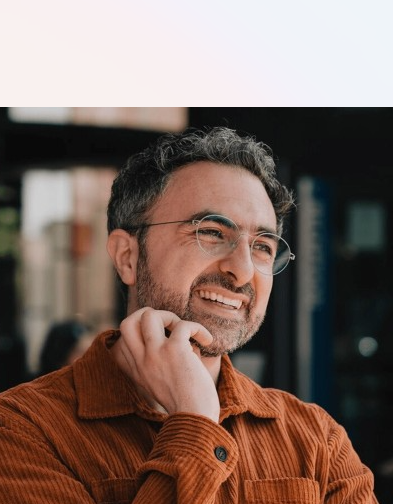
Artificial intelligence is advancing at a pace that is reshaping how we think about technology, work, and human capability. Few leaders have been as closely involved in this shift as Mustafa Suleyman, whose work spans AI research, product development, and the broader questions surrounding the future of intelligent systems.
As CEO of Microsoft AI, Suleyman continues to shape the development of frontier AI while exploring how these systems can remain useful, responsible, and under human control.
Who is Mustafa Suleyman
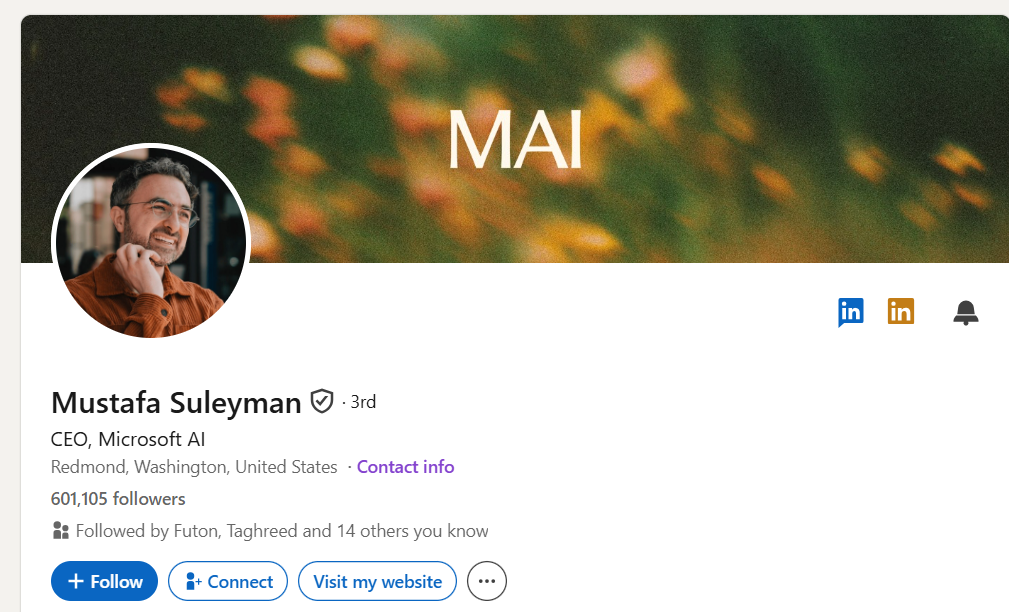
Mustafa Suleyman is the CEO of Microsoft AI and a technology entrepreneur focused on artificial intelligence. He previously co-founded DeepMind and Inflection AI and served as VP of AI Product Management & AI Policy at Google. He also serves as a non-executive director at The Economist and is a Senior Fellow at the Belfer Center for Science and International Affairs at Harvard Kennedy School.
Niche & Specialization
Frontier artificial intelligence and advanced AI systems.
AI safety, governance, and human oversight.
AI product development and model strategy.
Agentic AI and autonomous systems.
The societal and economic implications of increasingly capable AI.
A central theme in Suleyman’s work is what he describes as Humanist AI the idea that AI systems should remain subordinate to human interests and subject to meaningful human control. His recent communication emphasizes interpretability, correctability, transparency, and the ability for people to oversee and shut down AI systems when necessary.
He also explores the social consequences of increasingly human-like AI agents. His discussion of Seemingly Conscious AI examines how agency, personality, memory, emotion, and social understanding can cause people to attribute consciousness to AI systems, potentially creating emotional dependence and affecting human autonomy.
Target Audience
Suleyman’s audience includes technology professionals, AI researchers, business leaders, policymakers, and people interested in the wider implications of advanced artificial intelligence. His content is particularly relevant to
AI and technology professionals following developments in frontier models, agents, and AI products.
Business leaders considering how increasingly capable AI systems may affect organizations and products.
Policymakers and governance professionals examining questions around AI safety, oversight, and accountability.
Researchers exploring AI capabilities, human-AI interaction, and the social effects of advanced systems.
Technology professionals and the wider public seeking perspectives on the opportunities and risks associated with rapidly advancing AI.
Career Journey & Achievements
Suleyman’s career has centered on artificial intelligence and its broader implications. He co-founded DeepMind, an AI company that became closely associated with advances in machine learning and artificial intelligence. He later co-founded Inflection AI, where he served as CEO from 2022 to 2024.
In 2020, Suleyman joined Google as VP of AI Product Management & AI Policy, bringing together product development and policy considerations around artificial intelligence. He subsequently moved to Microsoft, where he became CEO of Microsoft AI in March 2024.
At Microsoft AI, his work has included the development and release of MAI models, including MAI-Thinking-1, MAI-Image-2.5, and MAI-Code-1-Flash. His communication around these systems frequently connects model capability with questions of control, customization, verification, and human oversight.
Suleyman is also an author. His book The Coming Wave examines the rapid development of powerful technologies and their potential consequences for society and institutions. Alongside his technology leadership, he serves on The Economist’s board and as a Senior Fellow at Harvard Kennedy School’s Belfer Center.
Content Strategy & Teaching Approach
Suleyman’s LinkedIn content combines technical developments with broader questions about how AI should be developed and used. Rather than discussing models solely through their capabilities, he frequently connects technical progress to governance, human autonomy, safety, and social consequences.
His posts also use concrete examples and measurable model results when discussing new AI systems. Announcements around Microsoft AI models include benchmarks, parameter counts, context windows, performance-per-dollar figures, and applications, giving his audience technical reference points for understanding the systems being developed.
Another recurring approach is framing large technological shifts through accessible concepts. His writing about exponential growth in AI uses examples from computing, training data, energy, and hardware to explain why he believes AI capabilities may continue expanding rapidly. Alongside these capability-focused discussions, he continues to emphasize the question of what society should build and how humans should remain involved in directing it.
Posts on LinkedIn
Metrics & Impact
600,777 followers on LinkedIn.
More than 6,600 reactions on his featured post announcing new MAI models.
Seven MAI models announced in one of his recent Microsoft AI updates, including MAI-Thinking-1, MAI-Image-2.5, and MAI-Code-1-Flash.
35B active parameters and a 256K context window for MAI-Thinking-1, according to the model information shared in his post.
51% on SWE Bench Pro for MAI-Code-1-Flash, according to the results he shared.
Conduct for MAI Models.
Media Appearance
Why He Matters
Suleyman’s work sits at the intersection of AI development, product strategy, and questions about how increasingly capable systems should interact with people. His public communication addresses both sides of this development expanding technical capabilities and the frameworks needed to keep humans involved in decisions about how those capabilities are used.
His emphasis on Humanist AI, AI oversight, and the social effects of increasingly human-like systems provides a perspective on the relationship between technological progress and human agency. Through his leadership at Microsoft AI, entrepreneurial background, writing, and public commentary, he contributes to ongoing discussions about the development and governance of advanced artificial intelligence.
Profile Summary
Followers
600,777 on LinkedIn
Startup
Inflection AI
Mission
Developing AI that remains subordinate to humans and serves human interests, with a focus on capability, safety, and human control.
Recognition
Co-founder of DeepMind and Inflection AI; CEO of Microsoft AI; board member of The Economist; Senior Fellow at Harvard Kennedy School’s Belfer Center.