What Chris Donnelly Gets Right About LinkedIn Growth
Chris Donnelly’s LinkedIn advice is useful because it connects reach to revenue, profile setup, and repeatable content systems. Here is the practical playbook founders and professionals can apply from his video.
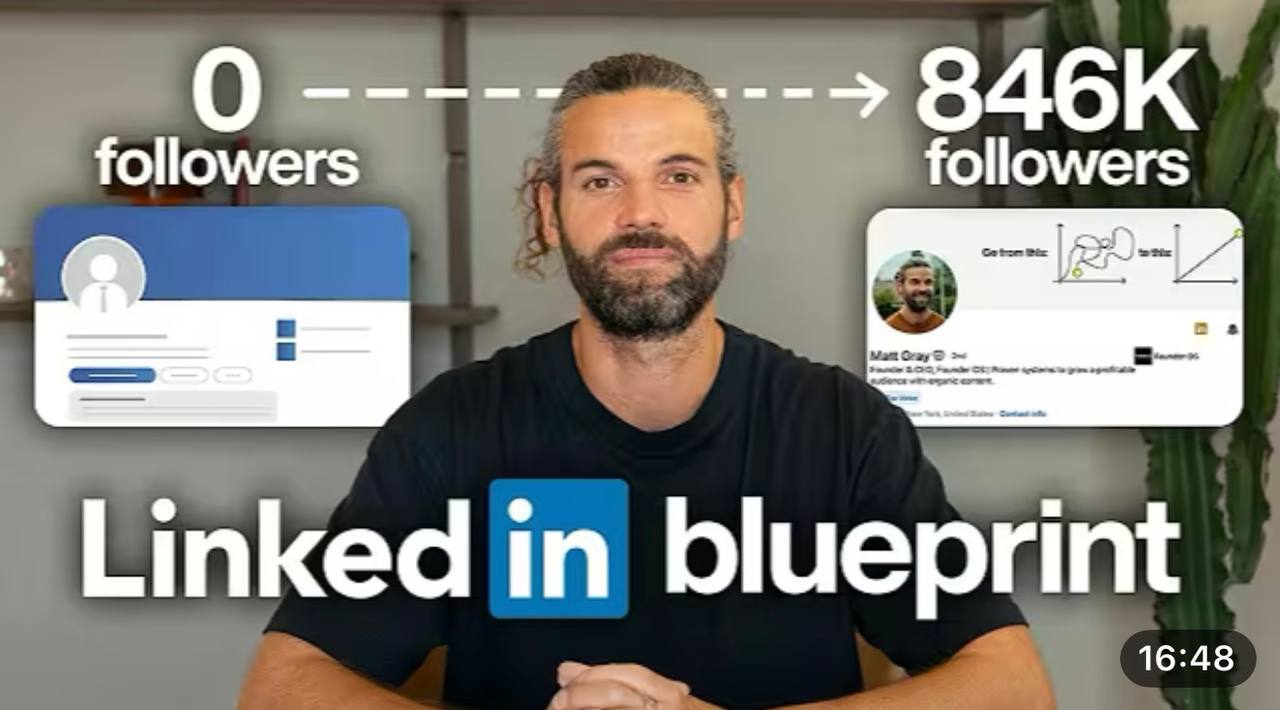
In this video, Chris Donnelly explains how he approached LinkedIn growth as a system, not a streak of random posts. The headline claim is big: hundreds of thousands of followers, tens of millions of organic views, and no paid ads. What matters more than the headline numbers, though, is the operating model behind them.
If you are serious about LinkedIn, the useful part of Chris Donnelly’s framework is simple: build a profile that converts attention, publish content people want to save and share, and create enough early engagement for LinkedIn to keep distributing the post.
This article breaks that down into practical steps you can use without copying his style line for line.
Start with a profitable profile
Chris Donnelly makes a strong point here: your profile is not just a digital CV. On LinkedIn, your profile is your storefront. If a post performs well, people click your name. If the profile is vague, you lose the momentum you just earned.
He highlights a few profile elements that matter most:
- A clear banner, with a visible promise or call to action.
- A memorable one line identity, built around a word you want to be known for.
- A value driven headline, so people immediately understand who you help and how.
- A strategic featured section, pointing people to your best next step.
That idea of owning a word is especially useful. He gives examples of creators who become associated with a specific concept. You do not need a clever slogan. You need a consistent association.
A better way to write your headline
Most LinkedIn headlines read like this:
Founder | Consultant | Speaker | Helping businesses grow
That tells people very little. A stronger version sounds like this:
I help B2B founders turn LinkedIn content into qualified conversations.
Or:
Sharing practical systems for sales teams that want more replies on LinkedIn.
Your profile should answer three questions fast:
- Who are you for?
- What result do you help with?
- Why should someone follow or contact you?
If your content gets attention but your profile does not convert that attention into follows, leads, or newsletter signups, you will feel busy without seeing business results. If that sounds familiar, this exeedin piece on why engagement can still fail to bring in clients is worth reading next.
Content should be built for saves, shares, and reposts
One of the sharpest observations in the video is that reposts are a major distribution signal. Chris Donnelly treats shareability as a design choice, not an accident.
He says value dense images are especially powerful. His logic is easy to understand: on LinkedIn, a strong visual works like a thumbnail and a summary at the same time. It helps the post stop the scroll, and it gives people something useful enough to send to a colleague.
What a shareable post usually includes
- A clear topic, understood in seconds.
- A useful takeaway, not just a vague opinion.
- A simple visual structure, so the image can be scanned quickly.
- A reason to pass it on, such as a checklist, framework, or lesson.
If you post text only, that can still work. But if you teach frameworks, processes, or lessons learned, a clean visual often gives the idea more reach.
A simple test is this: would someone on your target audience’s team screenshot this and send it in Slack or WhatsApp? If the answer is no, the post may be too generic.
The four content types he uses most
Chris Donnelly groups his content around a few repeatable formats. That is a smart move because format discipline makes content easier to produce and easier for your audience to recognize.
1. Behind the scenes content
This is where you explain what happened, what you tried, what failed, and what changed. It works because it feels real, and it carries proof.
Useful opening lines:
- When we changed our outreach process, reply quality improved.
- I learned this after reviewing a month of posts that underperformed.
- What surprised me most about founder content was this.
2. Value packed images
This is the most tactical format in the video. A written framework turned into a visual can dramatically improve shareability.
Examples:
- A one page checklist
- A hiring framework
- A content workflow
- A lead qualification scorecard
3. Deep work systems
This matters because audiences are tired of high level advice. People follow experts for the how, not only the what.
A weaker post says:
Be consistent and post valuable content.
A stronger post says:
Here is the weekly system I use to collect ideas, draft posts, and turn one client question into three LinkedIn posts.
4. Personal stories
Chris Donnelly argues that your story is part of your competitive advantage. That is true on LinkedIn because many people can teach similar topics, but very few can tell your specific story with your exact perspective.
Personal stories also soften the common LinkedIn problem of sounding overpolished. They show judgment, not just information.
If you want more ideas on turning lived experience into a real market position, this article on turning informal LinkedIn advising into a real personal brand or service fits well here.
Your first three lines matter most
Chris Donnelly stresses the importance of the opening lines, and he is right. If the first few lines do not create movement, the rest of the post does not matter.
His structure is practical:
- Create curiosity.
- Introduce a concrete claim or tension.
- Reward the reader with immediate value.
Mini templates you can adapt
Template 1: Observation
I reviewed our last 20 LinkedIn posts and found one pattern.
The posts with the clearest promise got the most profile visits.
Here is the headline formula we are using now.
Template 2: Contrarian insight
Most founders treat LinkedIn like a publishing platform.
The better approach is to treat it like a trust building funnel.
That changes how you write every CTA.
Template 3: Personal lesson
When I stopped writing for everyone, replies improved.
I started writing for one buyer, with one recurring problem.
Here is the prompt I use before drafting any post.
The point is not to sound dramatic. The point is to make the next line impossible to ignore.
CTAs work better when they match the post
One of the most useful details in the video is the idea of a tightly coupled CTA. In plain English, the next step should match the topic of the post.
If your post is about deep work, offer a deep work checklist. If your post is about AI tools, offer a fuller tools list. Relevance improves clicks because the offer feels like a direct continuation of the post.
That is much stronger than ending every post with a generic line like:
Follow me for more.
Better examples:
- Comment checklist if you want the exact review process.
- Want the full framework? It is linked in my featured section.
- If you found this useful, repost it so your team can use it too.
Simple, direct, and connected to the subject.
Early engagement is part of distribution
Another key point from Chris Donnelly is that LinkedIn growth is multiplayer. He talks about needing a strong burst of engagement soon after posting.
The broader lesson is less about exact numbers and more about orchestration. If nobody sees or interacts with your post early, LinkedIn has less reason to keep showing it.
There are clean ways to improve this:
- Post for a clearly defined audience.
- Write on recurring problems they already care about.
- Build real creator and peer relationships off platform.
- Publish at times when your audience is active.
- Ask for a specific action, like a repost or thoughtful comment.
This does not mean fake engagement. It means community, consistency, and a content angle people recognize as useful.
If your bigger goal is pipeline, not just impressions, you may also like this guide on improving LinkedIn reply rates with high intent leads and trigger based outreach.
Review patterns every month
A lot of people post, glance at likes, and move on. Chris Donnelly recommends a monthly review of what performed best, which is one of the simplest ways to improve.
Look for patterns like:
- Which hooks earned the most comments?
- Which topics led to profile visits?
- Which formats got the most reposts?
- Which posts led to direct messages or email signups?
You do not need advanced dashboards to start. A basic spreadsheet is enough. Track the post topic, the hook style, the format, and the result. Then double down on what repeatedly works.
That mindset matters because LinkedIn growth usually comes from refinement, not reinvention.
A simple way to apply this playbook this week
- Rewrite your headline so it explains who you help and what result you help create.
- Update your banner with one clear message and one clear action.
- Choose three content pillars you can return to every week.
- Create one value dense visual that teaches a process or checklist.
- Write stronger first three lines for your next post.
- Use a CTA that matches the post topic.
- Review results after a month and repeat what worked.
That is the real takeaway from Chris Donnelly’s approach. The goal is not to chase the algorithm with random tricks. The goal is to make your profile clearer, your posts more useful, and your distribution more intentional.
How exeedin can help
If you want help turning these ideas into a repeatable content workflow, exeedin can help you brainstorm topics, write stronger LinkedIn posts in English and Arabic, and keep your messaging consistent with your audience and offer. It also supports posting and scheduling through the official LinkedIn API, which makes it easier to plan content without losing control of your voice.
Frequently asked questions
What is the biggest lesson from Chris Donnelly’s LinkedIn strategy?
The biggest lesson is that LinkedIn growth works better when your profile, content, and CTA all support the same business goal. Reach matters, but conversion matters more.
Do I need images in every LinkedIn post?
No. Text posts can still perform well. But if you teach frameworks, systems, or step by step ideas, a strong image can make the post easier to understand and more likely to be shared.
How often should I review my LinkedIn performance?
A monthly review is a practical starting point. Look for repeat patterns in hooks, formats, topics, and CTAs, then build more posts around what consistently works.
How do I make my LinkedIn profile more profitable?
Clarify who you help, the result you help create, and the next step you want visitors to take. Your banner, headline, about section, and featured links should all point in the same direction.