What Should You Do When Your LinkedIn Posts Get No Engagement but You Still Want to Keep Showing Up?
A small or passive network, topics that are useful but not likeable, and timing, hooks and format all limit reach. Zero likes doesn't mean bad content.
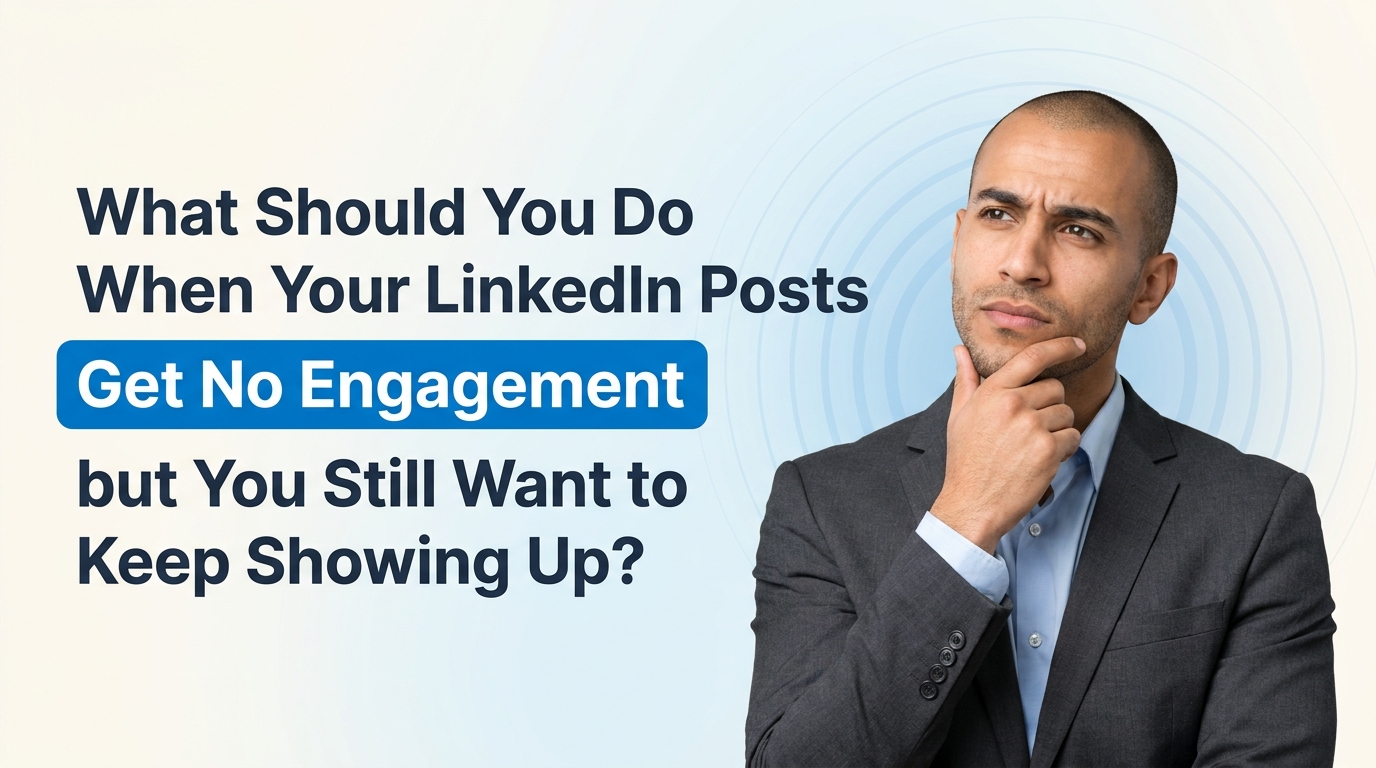
If you are posting on LinkedIn, putting real effort into your thoughts, your writing, your visuals, and your learning, and then seeing little to no engagement, it can feel personal. Even when you know that likes do not define your value, it still stings. That reaction is human. A lot of people quietly go through the same thing, especially when they are new to LinkedIn, still building a network, or trying to share content before they have much visibility.
So if you are wondering, “Should I keep posting, change what I am doing, or just stop altogether?” the honest answer is this: you probably do not need to disappear. You likely need a better framework, more patience, and a healthier way to judge progress.
First, are you doing something wrong?
Not necessarily. Based on the situation described, what you are doing actually makes sense. You are trying to build a profile around finance, learning, and personal values. That is a good foundation. You are also sharing things that reflect curiosity and growth rather than only chasing attention. That part matters.
But here is the part many people do not say clearly enough: good content and good effort do not automatically lead to immediate LinkedIn engagement.
There are a few reasons for that:
- You are still new, so your network may be small or passive.
- Your connections may not know you well enough yet to interact consistently.
- Some topics, especially technical finance topics, are useful but not always highly “likeable.”
- LinkedIn rewards conversations, not just polished notes or informative slides.
- Timing, hook, formatting, and audience match all affect visibility.
So no, zero likes on one post does not mean your content is bad. It may simply mean the post did not travel.
Get 10 hooks for your next post
Type what your post is about and get 10 opening lines from different proven angles. Free, no signup.
Or open the free LinkedIn hook generator
Why does it feel worse when you put in real effort?
Because effort creates emotional investment. If you spend hours making a post, checking the facts, improving the layout, choosing images, and trying to make it helpful, you naturally hope people will notice. When they do not, the silence feels bigger than the numbers.
That is not vanity. That is just how people work.
A helpful question to ask yourself is: “Am I upset because the content failed, or because I wanted proof that I am moving in the right direction?” Often it is the second one. Engagement can feel like validation that your career identity is taking shape.
What does LinkedIn actually reward?
LinkedIn is not just a place for information. It is a place for relevance, relationships, and readability. That means useful content matters, but so does the way people emotionally and practically connect with it.
For example, a post about P-Notes may be accurate and helpful, but if it reads like a note sheet rather than a conversation, many people scroll past it. That does not mean the topic is weak. It means the packaging may need work.
Try breaking your posts into these types:
- Personal insight posts: What you are learning, struggling with, or changing your mind about.
- Educational posts: A finance concept explained simply and clearly.
- Career-building posts: Reflections on programs, scholarships, interviews, or industry trends.
- Conversation posts: A short opinion with a genuine question at the end.
If every post is heavily designed or built like a mini document, people may appreciate it but still not engage. Sometimes a simple, thoughtful text post performs better because it feels easier to respond to.
So should you continue posting?
Yes, but not in the same emotionally draining way.
Continue posting if your goal is any of the following:
- To document what you are learning in finance
- To build credibility over time
- To make your profile more visible to recruiters and peers
- To create a body of work that reflects your thinking
But do not continue if every post feels like a test of your worth.
That is the shift: post to build, not to be instantly rewarded.
What can you do differently from here?
Here is a practical breakdown that can help without making LinkedIn feel fake.
1. Make your posts easier to engage with
Instead of only sharing notes, try using a format like this:
- Start with one strong opening line
- Explain one concept, not five
- Share why it matters in real life
- End with a simple question
For example: “I was learning about P-Notes today and realized they raise a bigger question about accessibility, regulation, and market participation. Here is the simplest way I understand them...” That feels more human than sounding like a textbook.
2. Focus less on design and more on clarity
Good visuals help, but they are not the main reason people engage. If you are spending too much time on fonts, layout, and aesthetics, ask yourself whether that energy would be better spent on the first three lines of the post. On LinkedIn, the opening matters a lot.
3. Build engagement before expecting engagement
This is one of the biggest missing pieces for many people. If you do not know many people on LinkedIn, and you are mostly posting without interacting, your content may not gain traction. Start commenting thoughtfully on posts from finance professionals, students, analysts, and recruiters in your space.
Not generic comments like “Great post.” Real comments. Add perspective. Ask a question. Disagree respectfully. Over time, your name becomes familiar.
LinkedIn itself regularly shares guidance on profile building and engagement strategy here: LinkedIn Marketing Blog.
4. Measure better signals
Likes are the easiest metric to see, but not always the most useful. Pay attention to:
- Profile views
- Connection requests
- Comments, even if few
- People from your target industry viewing your content
- Whether your posts are getting clearer and more consistent
A post can look “quiet” and still help position you better professionally.
5. Create a realistic posting rhythm
You do not need to post every day. In fact, that can make disappointment feel more frequent. Try posting 2 to 3 times a week with intention. Give each post room to breathe. Then spend the rest of your time reading, commenting, and learning what people in your niche respond to.
What if you feel like deleting everything?
You can, but you probably do not need to. Before deleting, ask:
- Are these posts truly harmful to my image?
- Or are they simply early attempts while I am learning?
- Would I judge someone else this harshly for trying?
Usually, the urge to vanish comes from embarrassment, not from strategy. Most people are far less focused on your post history than you think. It is okay to leave those posts up as part of your growth. It shows initiative.
How do other people get so much engagement?
That is a fair question, and the answer is usually a mix of factors:
- They have been active longer
- They already have stronger networks
- They know what kind of content their audience wants
- They comment often, so people return the attention
- Some of them are also better at storytelling than pure information-sharing
This does not mean you should copy them. It means you should study them. Look at what gets comments. Are they teaching? Telling a story? Asking a clear question? Making one idea easy to understand? That kind of observation can help a lot.
If you want a useful breakdown of how LinkedIn content works, HubSpot has a solid overview here: LinkedIn Marketing Strategy Guide. For video-based tips, this YouTube resource may also help: LinkedIn Content Strategy on YouTube.
A better mindset going forward
Try this instead of “Is this getting likes?”
- Is this helping me become clearer about what I know?
- Is this making my profile look more thoughtful and active?
- Is this attracting the kind of people I want to learn from?
- Is my content improving month by month?
That mindset is steadier. It gives you something more useful than temporary validation.
Final thought
If you are feeling discouraged, the answer is not to pretend you do not care. You do care, and that is fine. The better goal is to care more wisely. Keep posting, but post with a system. Keep learning, but do not expect every useful post to be popular. And keep showing up, because consistency often matters more than one post performing well.
If LinkedIn feels confusing, slow, or discouraging, you are not alone. Many people with strong ideas struggle more with distribution than ability. That is exactly why strategy matters. At EXEED Digitals, we usually support people and brands through these exact concerns, from content direction and positioning to engagement-building and profile growth. Our LinkedIn agency has helped 100s of brands build stronger visibility, better conversations, and more meaningful results on LinkedIn without sounding forced or robotic.
en