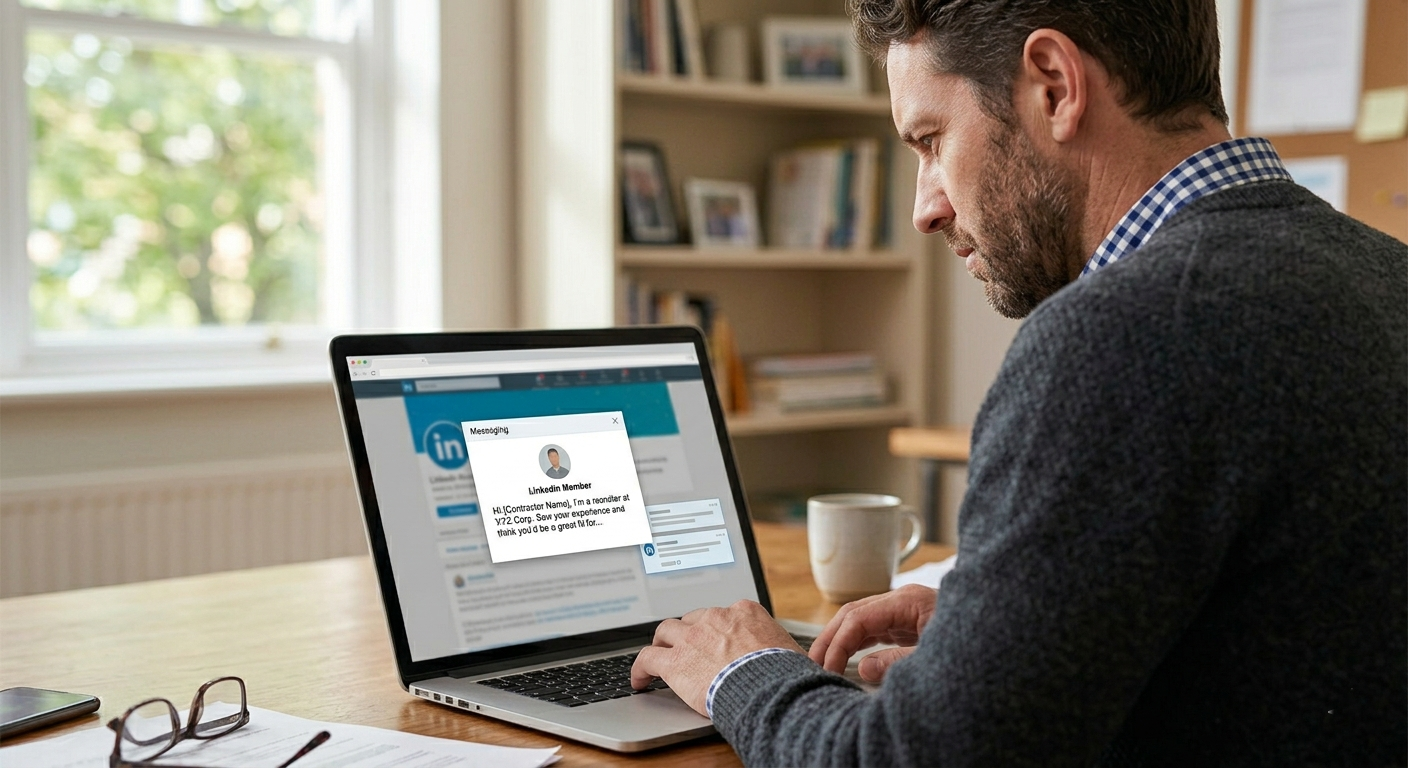
If you’re a contractor and a LinkedIn employee, recruiter, or platform representative keeps trying to reach you by email and then by direct message, it can feel a little off. Especially if you did not ask for help, do not work in HR, and already have mixed feelings about LinkedIn as a recruitment platform. So the short answer is this: you do not have to respond if you do not want to, but it helps to understand why they may be contacting you before deciding what to do next.
A lot of people run into this. One message can feel normal. Two emails plus a platform DM can start to feel pushy. If you are wondering, “Should I tell her I hate LinkedIn for recruiting?” the better question may be: what outcome do you want from replying?
Let’s break it down in a practical way.
Why Might a LinkedIn Person Be Contacting You?
There are a few common reasons this happens, and not all of them are shady.
Sales outreach: If you are listed as a contractor, consultant, founder, hiring manager, or someone involved in business decisions, you may be getting contacted about LinkedIn products such as Recruiter, job ads, premium tools, or account support.
Mistaken role targeting: Sometimes outreach lists are wrong. A person may assume you work in HR, talent, operations, or leadership because of your title or company association.
Customer success or account support: If your company has used LinkedIn services before, someone may be reaching out to discuss features, renewals, or usage.
Recruitment-related contact: Even if you are not in HR, they may think you influence hiring or partnerships.
Automated prospecting: Some outreach feels personal, but it is actually part of a larger sales sequence.
This is one reason the message can feel weird. The sender may know very little about your actual role.
First Question To Ask Yourself: Do You Owe a Reply?
Honestly, no. Not every message needs an answer.
If someone has contacted you a few times and you are not interested, you have three reasonable options:
Ignore it if you do not want to engage.
Send a short boundary-setting reply if you want the outreach to stop.
Ask directly why they are contacting you if you are curious and want clarity before deciding.
You do not need to explain your whole relationship with LinkedIn. You also do not need to debate the quality of the platform unless you actually want to.
Should You Tell Them You Hate LinkedIn As a Recruitment Platform?
You can, but it may not be the most useful first response.
If your goal is to stop being contacted, a simple and neutral message usually works better than venting. Something like this keeps it clean:
“Hi, thanks for reaching out. I’m a contractor and not the right contact for HR or recruiting-related conversations. Please remove me from future outreach on this topic.”
That is polite, direct, and gives them what they need.
If you want to express that the platform is not a fit for you, you can still do it without turning it into an argument:
“Thanks for the message. I’m not involved in hiring, and LinkedIn is not a recruiting channel I use. Please contact someone else at the company if needed.”
That gets the point across without inviting a back-and-forth.
How Do You Tell If The Message is Legitimate?
Before replying, it is worth checking whether the contact looks real. Ask yourself:
Does the sender have a complete LinkedIn profile?
Do they have a company email address that matches LinkedIn’s domain?
Is the message specific, or does it feel copied and pasted?
Are they asking for something sensitive?
Are they pushing you to click a strange link or move the conversation off-platform too quickly?
LinkedIn has its own guidance on recognizing suspicious activity and protecting your account. You can review safety resources here: LinkedIn Help: Staying Safe on LinkedIn.
If anything feels off, trust that instinct. You can ignore, block, or report the message if needed.
A Simple Framework For Deciding What To Do
If you are stuck, this quick breakdown helps:
If the contact is harmless but irrelevant: reply once and redirect or opt out.
If the contact is repetitive and annoying: ask not to be contacted again.
If the contact seems suspicious: do not engage; report it.
If the contact might be useful: ask what they need in one sentence.
Here is a clean script if you want clarity:
“Hi, I’m not in HR. Can you clarify what this is regarding?”
That puts the ball back in their court and lets you decide from there.
Why This Kind Of Outreach Annoys So Many People?
You are definitely not alone if LinkedIn outreach makes you tired.
A lot of users feel that the platform blurs the line between networking, recruiting, selling, and cold outreach. That can make a normal message feel intrusive, especially when it follows you from email to DMs. There is also the issue of role confusion. Contractors, freelancers, and consultants often get treated like default decision-makers, even when that is not accurate.
If this keeps happening, it may be worth reviewing your profile wording. Sometimes small edits reduce irrelevant messages. For example, if your headline or about section accidentally makes you sound like a hiring lead, account owner, or operations contact, changing that can help.
LinkedIn also offers settings that help manage visibility and communications. You can check relevant support pages here: LinkedIn Help Center.
What Not To Do?
When you are annoyed, it is easy to fire off a sharp reply. Usually that just creates more friction. A few things to avoid:
Do not over-explain. You do not owe your work history or platform opinions to a stranger.
Do not click random links if the contact feels unusual.
Do not assume intent immediately. Some outreach is sloppy, not malicious.
Do not engage in a long debate if your main goal is to end the conversation.
Think of it like texting someone you do not really know: short, clear, done.
Examples Of Replies You Can Actually Use
Here are a few low-drama options depending on your mood:
Polite and final: “Thanks for reaching out. I’m not the right person for this, and I’m not interested. Please remove me from future outreach.”
Curious but cautious: “Hi, can you clarify why you’re contacting me? I’m a contractor, not HR.”
Firm boundary: “I’m not involved in recruiting and don’t want follow-up on this topic.”
No reply: perfectly acceptable if you simply want to move on.
Is This Normal on LinkedIn?
Yes, pretty normal. That does not mean you have to like it.
LinkedIn is widely used for prospecting, hiring, sales, and account-based outreach. According to LinkedIn’s business resources, the platform is built around professional engagement, which naturally includes direct contact. You can read more about how businesses use LinkedIn in their official resources: LinkedIn Marketing Solutions.
If you prefer video explainers, YouTube has practical walkthroughs on LinkedIn privacy and messaging controls, like this Video:
The Bottom Line
If a LinkedIn person is trying to contact you and you are not sure why, the safest and simplest move is to stay calm, verify the contact, and decide whether replying serves you. You do not need to be rude, and you do not need to be available. A short response is enough if you want the outreach to stop. And if you truly dislike LinkedIn as a recruitment platform, that is a fair opinion, but it is usually more effective to set a boundary than to unload frustration on the messenger.
Read more on our blog and follow us on LinkedIn:
Write better LinkedIn content with EXEED AI
EXEED AI is an AI tool that helps you ideate, draft, and schedule content for your LinkedIn. Turn raw ideas into polished posts and stay consistent without the guesswork. Try EXEED AI.