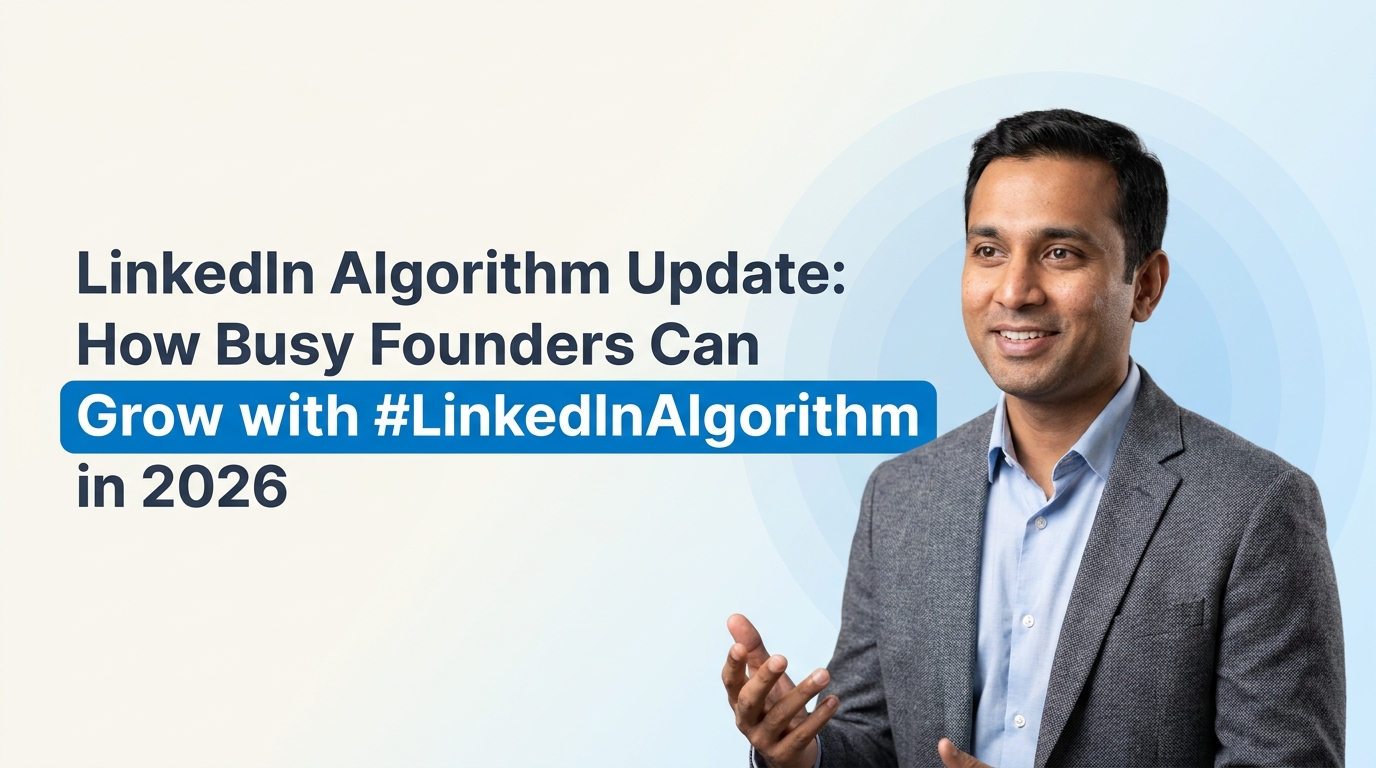
LinkedIn Algorithm Update: How Busy Founders Can Grow with #LinkedInAlgorithm in 2026
LinkedIn now ranks posts by interest and relevance, cutting generic and recycled content. A focused post for the right readers wins. See the system.
The latest LinkedIn Algorithm Update changes a simple assumption many creators have relied on for years: posting something broadly relatable and hoping it earns likes is no longer a dependable growth strategy.
LinkedIn is moving toward a more intelligent, interest-based feed. Its newer ranking systems use generative recommenders and large language models (LLMs) to better understand what a post is actually about, who may find it useful, and how a member’s professional interests evolve over time. The platform has also said it is reducing generic, recycled, click-driven content and inauthentic engagement tactics. ([news.linkedin.com](https://news.linkedin.com/2026/ImprovingTheFeed?utm_source=openai))
For founders and busy professionals, this is good news—if you adapt. You do not need to publish every day, chase viral formats, or spend your evenings staring at a blank document. You need useful ideas, a clear point of view, and a repeatable system for showing up consistently. Here is how to build one.
What the LinkedIn Algorithm Update Means for Your Content
LinkedIn’s feed is becoming less of a popularity contest and more of a relevance engine. Rather than relying only on surface-level signals such as broad engagement, the platform is improving its ability to connect content with people whose interests, work, skills, experience, and engagement patterns suggest they will care about it. ([news.linkedin.com](https://news.linkedin.com/2026/ImprovingTheFeed?utm_source=openai))
That means a focused post for 300 right-fit readers can be more valuable than a vague post seen by thousands of people who will never become customers, partners, candidates, or peers.
For example, a B2B founder might write about a painful workflow their customers keep struggling with. A people leader could share a lesson from redesigning a hiring process. A consultant may explain one mistake they see clients make before a major launch. These posts are specific, professionally useful, and easy for LinkedIn’s systems—and the right readers—to understand.
#LinkedInAlgorithm Now Rewards Clarity Over Cleverness
The practical lesson from the #LinkedInAlgorithm conversation is not to obsess over hacks. It is to make every post unmistakably clear:
Who is this for? Name the role, stage, industry, or problem.
What is it about? Stay centered on one idea instead of combining five.
Why should someone care? Offer an insight, framework, example, lesson, or useful decision.
What makes it yours? Add lived experience, an informed opinion, or a real observation.
Clarity is not boring. It is considerate. It helps busy people decide whether your post deserves their attention—and it gives the feed a stronger understanding of where your content belongs.
Get 10 hooks for your next post
Type what your post is about and get 10 opening lines from different proven angles. Free, no signup.
Or open the free LinkedIn hook generator
Stop Creating Generic Posts for Everyone
Generic motivational posts, recycled templates, and “comment if you agree” prompts are increasingly risky bets. LinkedIn has specifically described efforts to show less engagement bait and repetitive, low-substance content, while making real perspectives and actionable ideas more visible. ([news.linkedin.com](https://news.linkedin.com/2026/ImprovingTheFeed?utm_source=openai))
Instead of writing, “Consistency is the key to success,” turn the thought into something useful:
“The two content systems that helped me publish while running a company.”
“Why founders should document customer objections before writing LinkedIn posts.”
“A 15-minute Friday ritual for turning this week’s meetings into next week’s content.”
The difference is specificity. Your audience does not need another slogan; it needs a shortcut, a decision-making tool, or language for a challenge it already recognizes.
A Practical LinkedIn Content Strategy for Busy Professionals
Consistency matters, but consistency does not mean producing from scratch every day. The most sustainable approach is to create a simple content engine that turns the expertise already inside your business into a steady calendar.
1. Build around three to five content pillars
Choose recurring subjects that sit at the intersection of your expertise and your audience’s needs. A founder might use customer insights, lessons from building, industry opinions, operating systems, and personal leadership stories. A consultant might use client patterns, frameworks, case lessons, contrarian takes, and behind-the-scenes process.
These pillars prevent the “What should I post?” problem from returning every Monday morning.
2. Capture ideas while you work
Your best content ideas are often hidden in ordinary work: a customer call, an objection from a prospect, a team decision, a failed experiment, a book note, or a question someone asked you twice in one week. Capture these in a running list. The goal is not polished writing; it is collecting raw material before you forget it.
3. Open with a strong, honest hook
A hook should create relevance, not manufacture drama. Try a surprising lesson, a sharp observation, a useful promise, or a direct statement of the reader’s problem. Then deliver on it quickly. If the post promises a framework, give the framework. If it challenges conventional advice, explain why.
4. Write for conversation, not manipulation
End with a question only when you genuinely want perspectives from experienced people. Better conversations come from specific prompts such as, “What signal tells you a customer is ready to buy?” rather than generic requests for agreement. LinkedIn is actively addressing automated comments and engagement pods, so authentic participation is a better long-term strategy than manufactured activity. ([news.linkedin.com](https://news.linkedin.com/2026/ImprovingTheFeed?utm_source=openai))
5. Schedule in batches
Set aside one focused session each week to turn ideas into posts, refine them, and schedule them. This removes daily decision fatigue and makes it far easier to remain visible when business gets busy.
How Exeedin Makes Consistent LinkedIn Growth More Realistic
The challenge for most founders is not a lack of expertise. It is a lack of time to package that expertise into consistent, relevant LinkedIn content. Exeedin is built to close that gap.
Start with Exeedin’s idea finder when your notes are empty or your content pillars feel stale. Explore a Templates Library of ready-to-use post templates organized by niche to spot formats, angles, and topics relevant to your audience—without copying someone else’s voice. Use the hook generator to find a sharper opening, then turn your raw insight into a polished post with the AI post copywriter.
From there, you can write, post, and schedule content directly from Exeedin. Rather than bouncing between a notes app, an AI tool, a spreadsheet, and LinkedIn, you can fill your content calendar in minutes from one workflow. Exeedin also offers profile evaluation, helping ensure that the people who discover your posts arrive at a profile that clearly communicates who you help and why they should follow or contact you.
For busy professionals, that can mean saving about nine hours each week on LinkedIn content creation—time you can put back into customers, product, your team, or simply doing better work worth sharing.
Final Takeaway: Relevance Wins the LinkedIn Algorithm Update
The LinkedIn Algorithm Update is not a reason to panic or post more noise. It is an invitation to become more useful. Focus on a defined audience, write from real professional experience, make your topic clear, and create a system that keeps you consistent without taking over your week.
If you want to build that system faster, try exeedin. Use it to find ideas, create stronger hooks and posts, evaluate your profile, and fill your LinkedIn content calendar in minutes—so you can grow your presence without turning content creation into a second full-time job.